Department of Surgery, Miller School of Medicine, University of Miami, Miami, FL, USA.
Division of Translational Medicine, Research Branch, Sidra Medicine, Doha, Qatar.
Oncogene. 2018 Nov;37(46):6011-6024. doi: 10.1038/s41388-018-0388-8. Epub 2018 Jul 10.
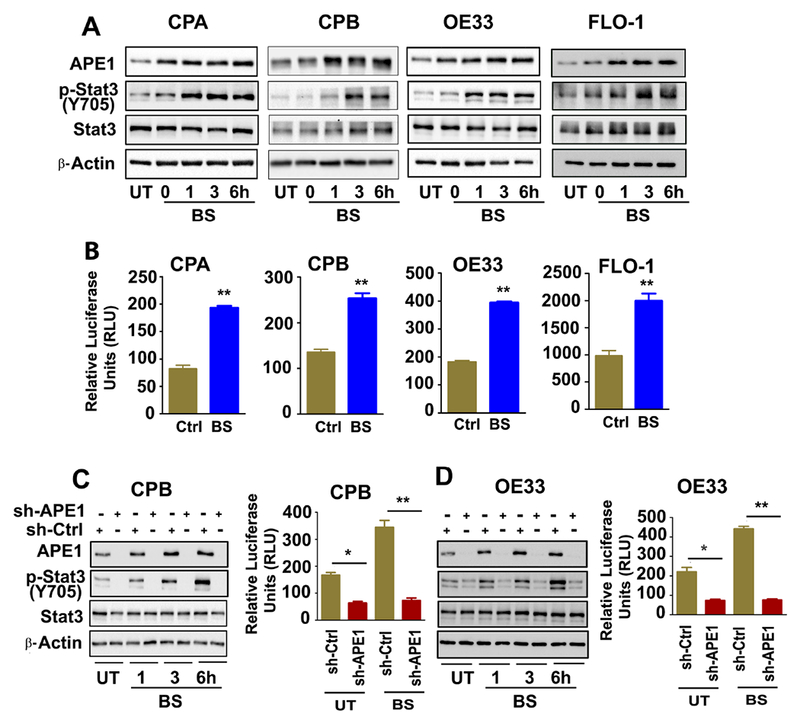
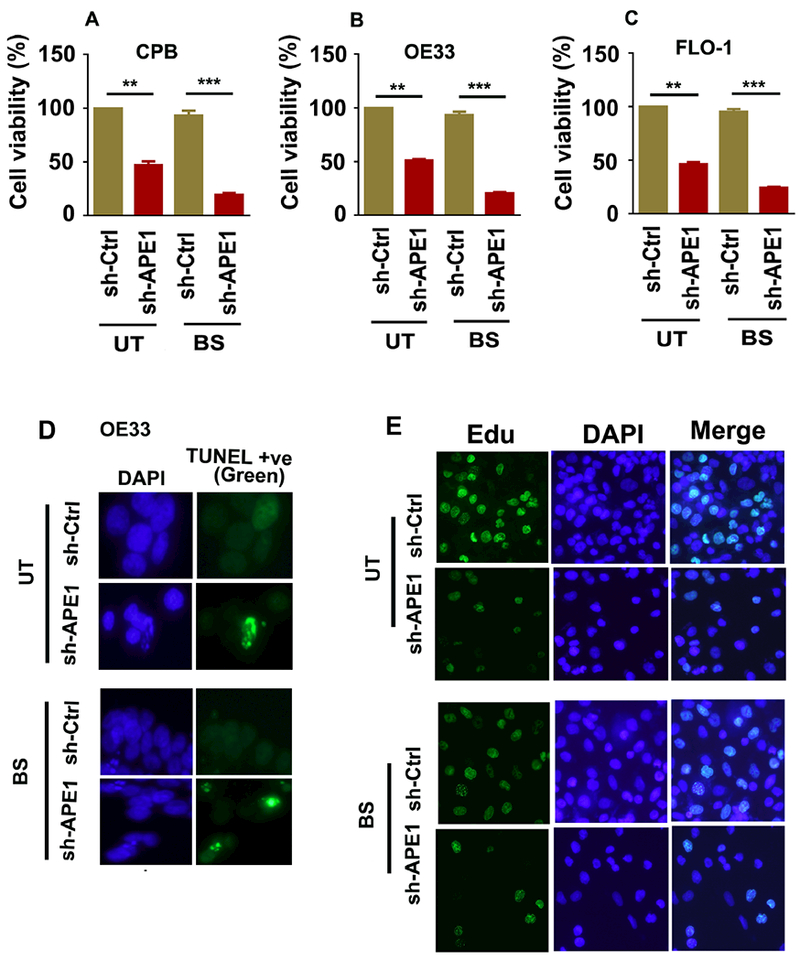
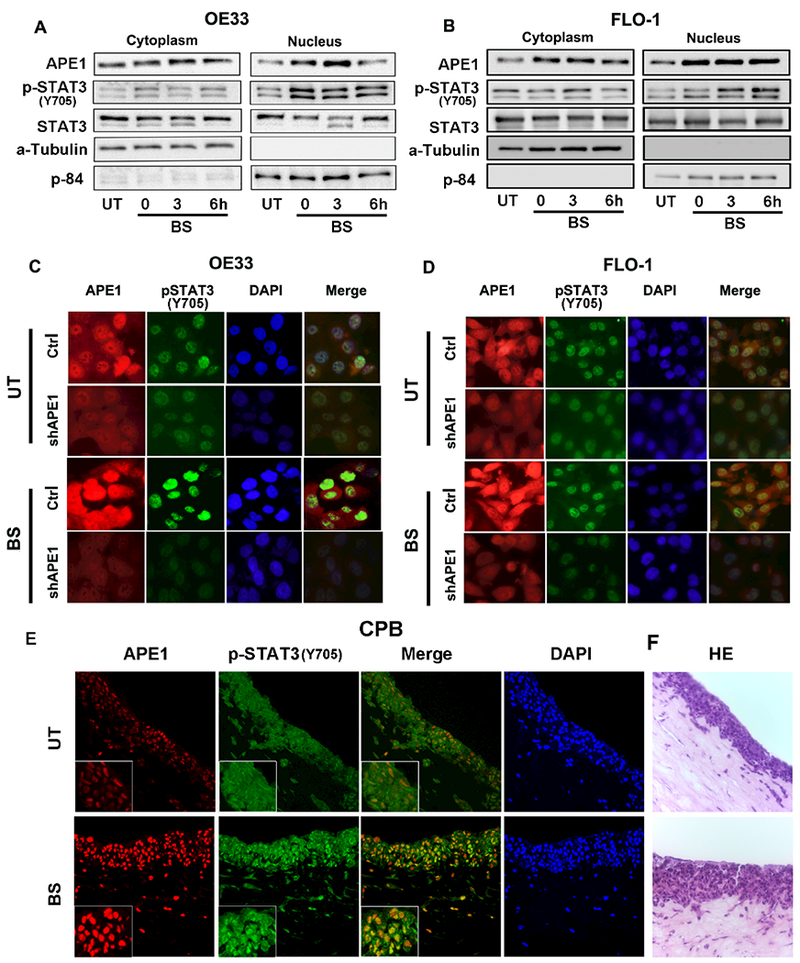
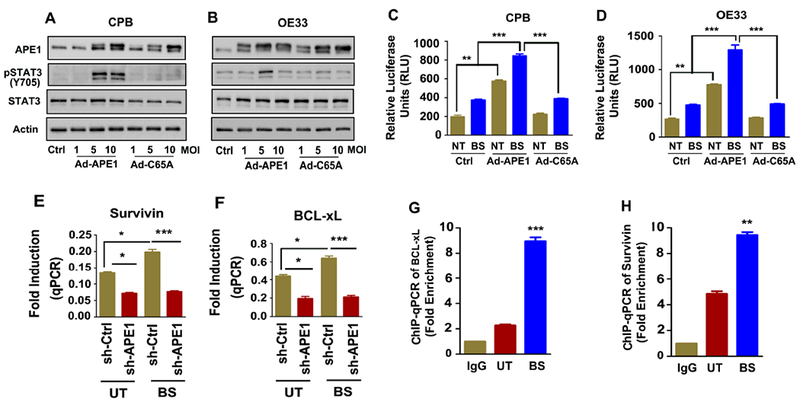
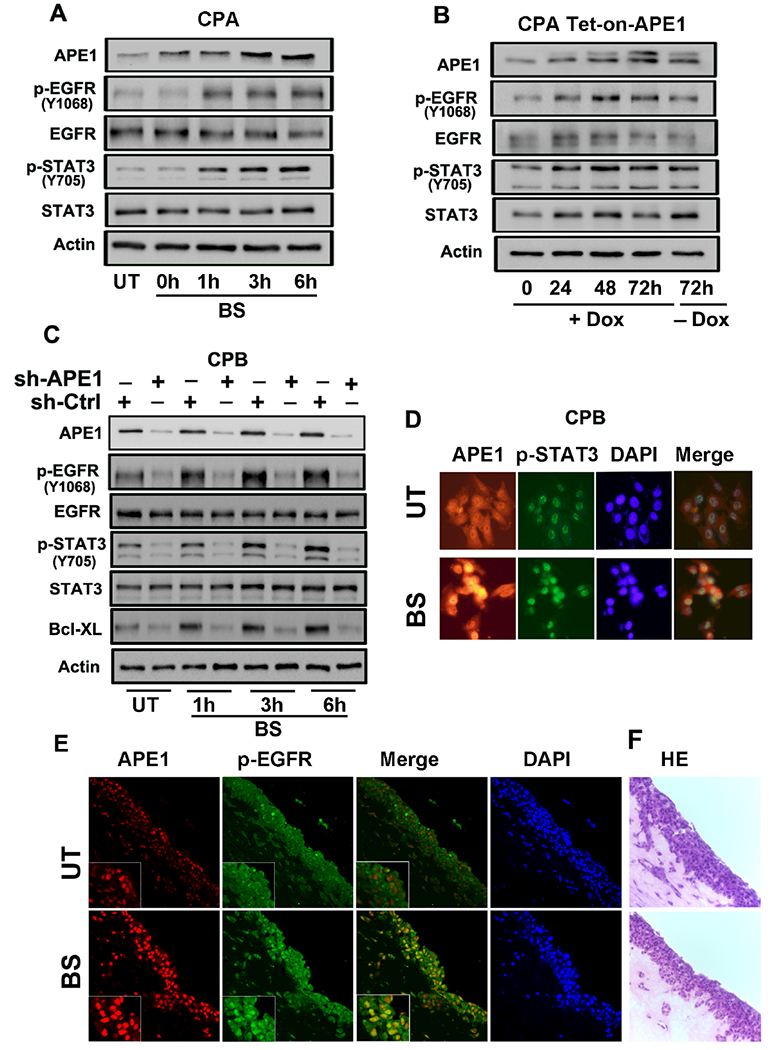
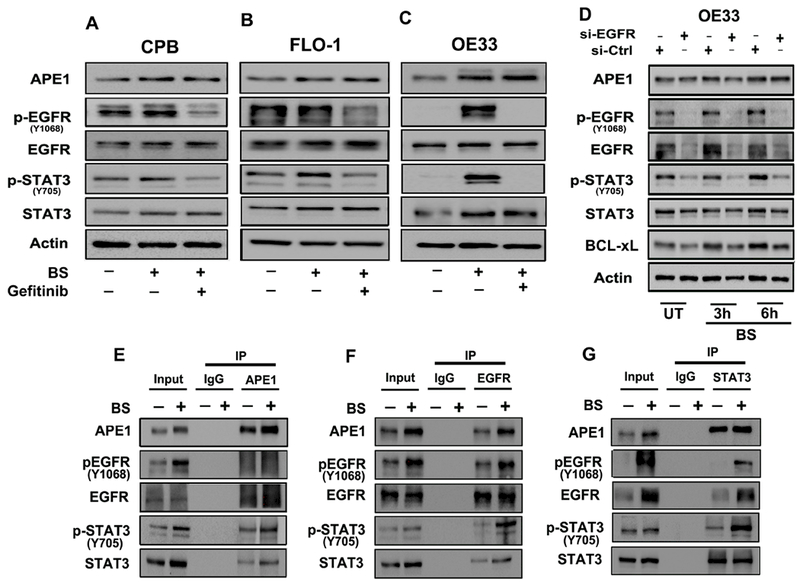
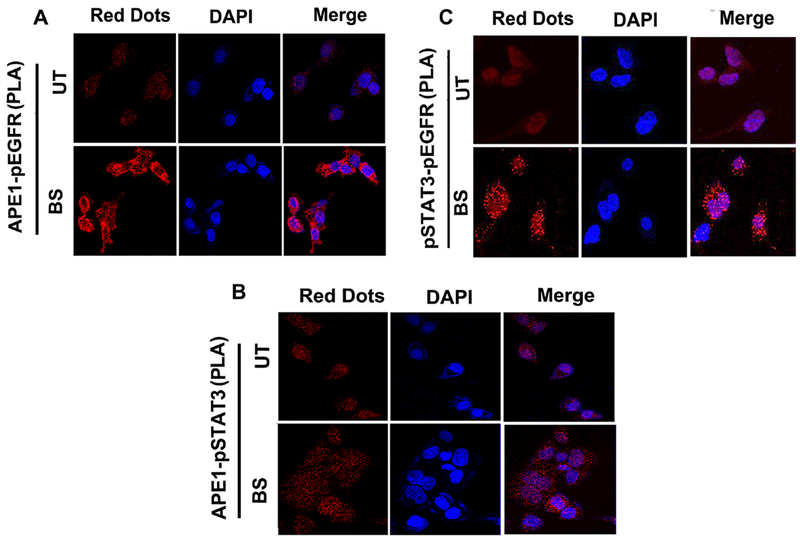
The development of Barrett's esophagus (BE) and its progression to esophageal adenocarcinoma (EAC) is highly linked to exposure to acidic bile salts due to chronic gastroesophageal reflux disease (GERD). In this study, we investigated the role of Apurinic/apyrimidinic endonuclease 1/redox effector factor-1 (APE1/REF-1) in STAT3 activation in response to acidic bile salts. Our results indicate that APE1 is constitutively overexpressed in EAC, whereas its expression is transiently induced in response to acidic bile salts in non-neoplastic BE. Using overexpression or shRNA knockdown of APE1, we found that APE1 is required for phosphorylation, nuclear localization, and transcriptional activation of STAT3. By using an APE1 redox-specific mutant (C65A) and APE1 redox inhibitor (E3330), we demonstrate that APE1 activates STAT3 in a redox-dependent manner. By using pharmacologic inhibitors and genetic knockdown systems, we found that EGFR is a required link between APE1 and STAT3. EGFR phosphorylation (Y1068) was directly associated with APE1 levels and redox function. Co-immunoprecipitation and proximity ligation assays indicated that APE1 coexists and interacts with the EGFR-STAT3 protein complex. Consistent with these findings, we demonstrated a significant induction in mRNA expression levels of STAT3 target genes (IL-6, IL-17A, BCL-xL, Survivin, and c-MYC) in BE and EAC cells, following acidic bile salts treatment. ChIP assays indicated that acidic bile salts treatment enhances binding of STAT3 to the promoter of its target genes, Survivin and BCL-xL. Inhibition of APE1/REF-1 redox activity using E3330 abrogated STAT3 DNA binding and transcriptional activity. The induction of APE1-STAT3 axis in acidic bile salts conditions provided a survival advantage and promoted cellular proliferation. In summary, our study provides multiple pieces of evidence supporting a critical role for APE1 induction in activating the EGFR-STAT3 signaling axis in response to acidic bile salts, the main risk factor for Barrett's carcinogenesis.
巴雷特食管(BE)的发展及其向食管腺癌(EAC)的进展与慢性胃食管反流病(GERD)导致的酸性胆盐暴露密切相关。在这项研究中,我们研究了脱嘌呤/脱嘧啶内切酶 1/氧化还原效应因子 1(APE1/REF-1)在酸性胆盐刺激下 STAT3 激活中的作用。我们的结果表明,APE1 在 EAC 中持续过表达,而非肿瘤性 BE 中对酸性胆盐的反应呈瞬时诱导。通过过表达或 shRNA 敲低 APE1,我们发现 APE1 是 STAT3 磷酸化、核定位和转录激活所必需的。通过使用 APE1 氧化还原特异性突变体(C65A)和 APE1 氧化还原抑制剂(E3330),我们证明 APE1 以依赖氧化还原的方式激活 STAT3。通过使用药理学抑制剂和基因敲低系统,我们发现 EGFR 是 APE1 和 STAT3 之间的必需联系。APE1 水平和氧化还原功能与 EGFR 磷酸化(Y1068)直接相关。共免疫沉淀和临近连接分析表明,APE1 与 EGFR-STAT3 蛋白复合物共存并相互作用。与这些发现一致,我们证明在 BE 和 EAC 细胞中,酸性胆盐处理后,STAT3 靶基因(IL-6、IL-17A、BCL-xL、Survivin 和 c-MYC)的 mRNA 表达水平显著诱导。ChIP 分析表明,酸性胆盐处理增强了 STAT3 与 Survivin 和 BCL-xL 靶基因启动子的结合。使用 E3330 抑制 APE1/REF-1 氧化还原活性可阻断 STAT3 DNA 结合和转录活性。在酸性胆盐条件下诱导 APE1-STAT3 轴提供了生存优势并促进了细胞增殖。总之,我们的研究提供了多方面的证据,支持 APE1 诱导在酸性胆盐刺激下激活 EGFR-STAT3 信号轴在巴雷特癌发生中的关键作用,酸性胆盐是巴雷特癌发生的主要危险因素。