Chemical Research Laboratory, University of Oxford, Oxford, UK.
OMass Technologies, Kidlington, UK.
Nature. 2018 Jul;559(7714):423-427. doi: 10.1038/s41586-018-0325-6. Epub 2018 Jul 11.
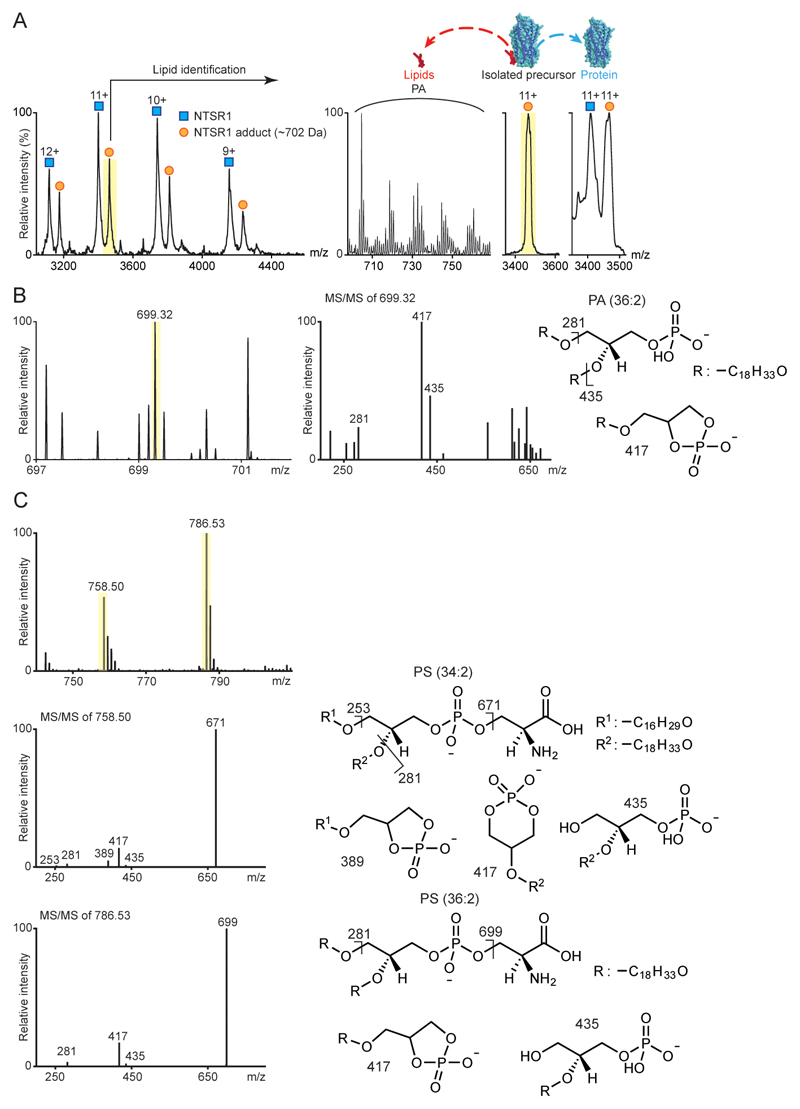
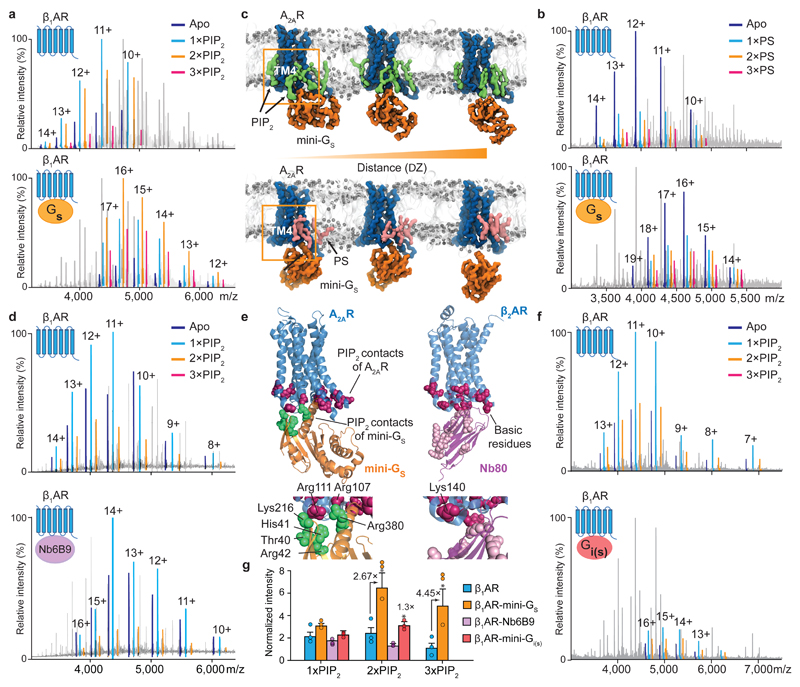
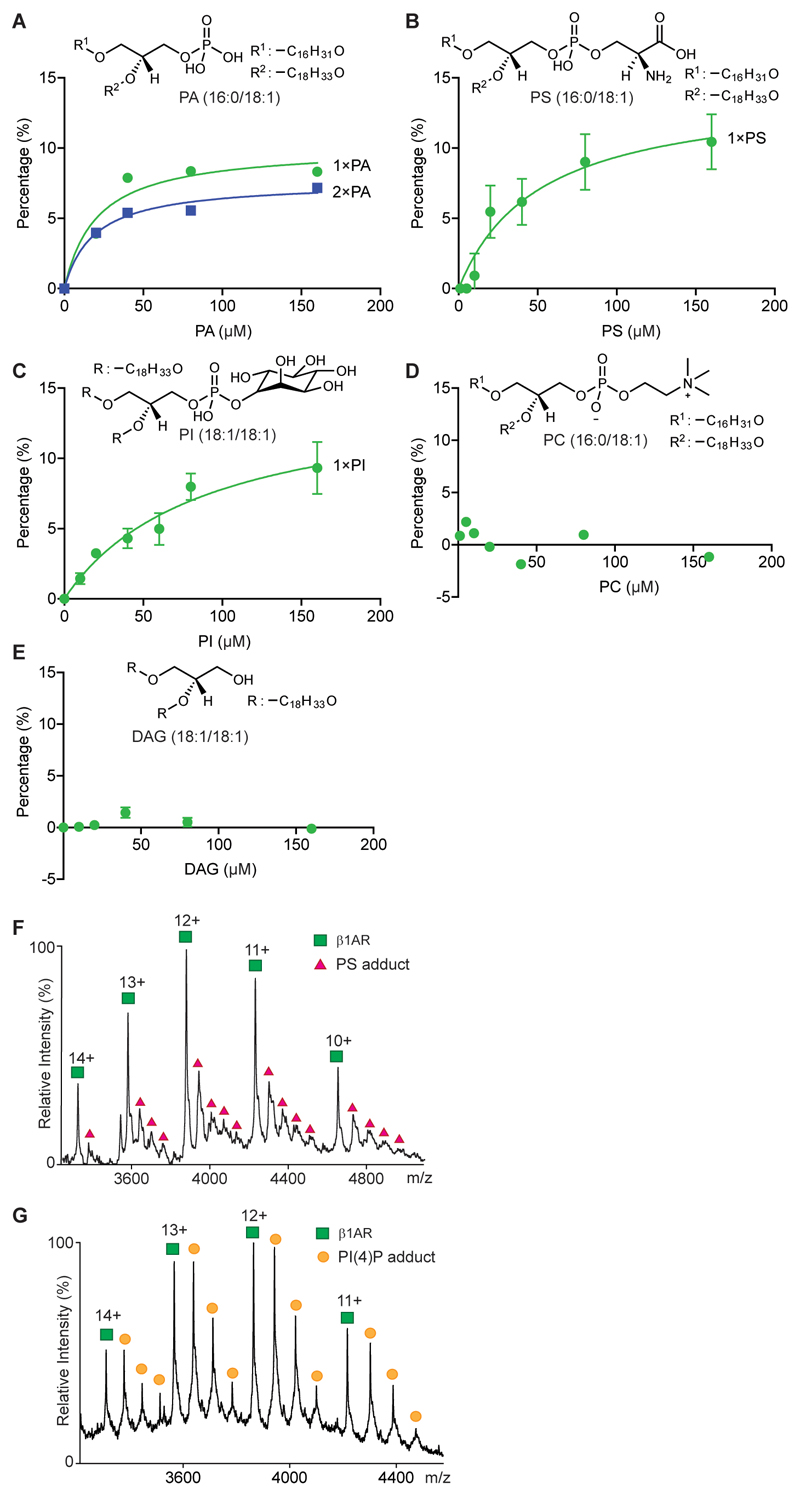
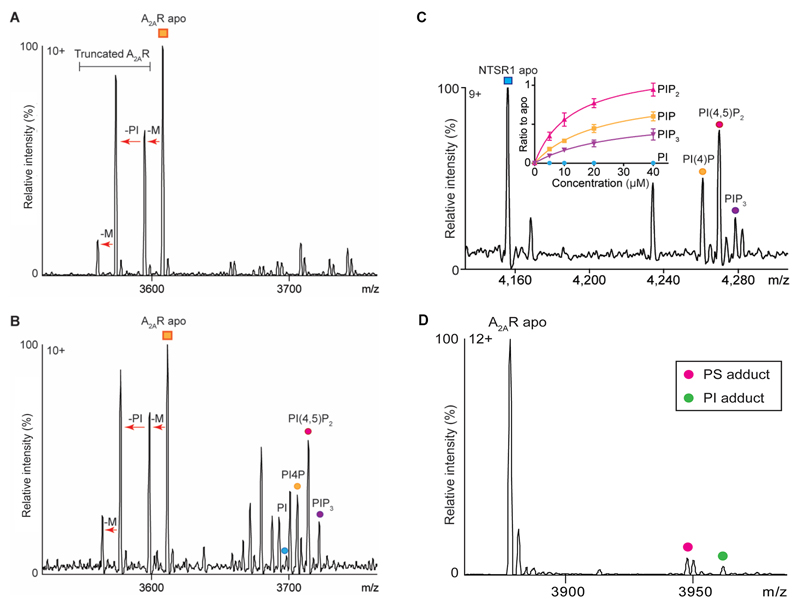
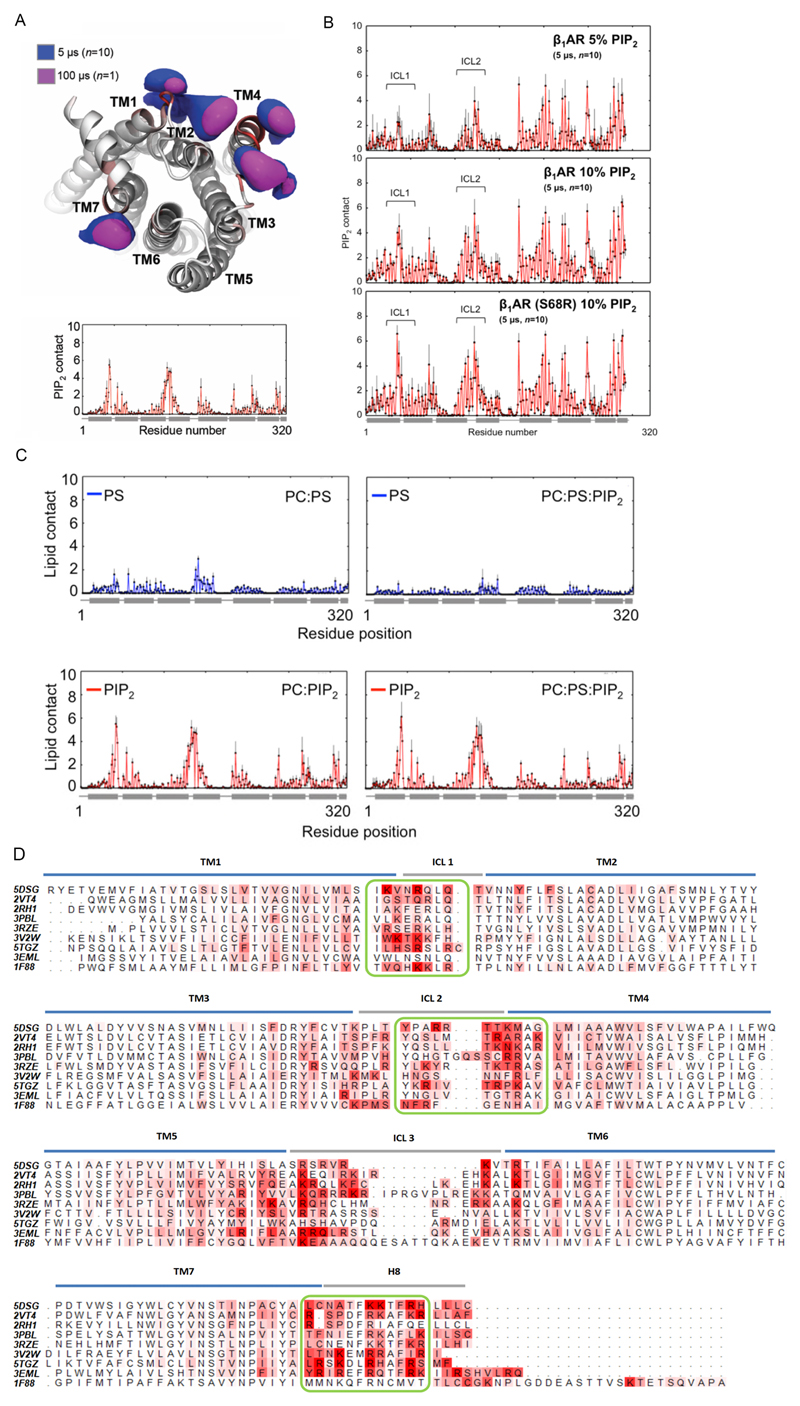
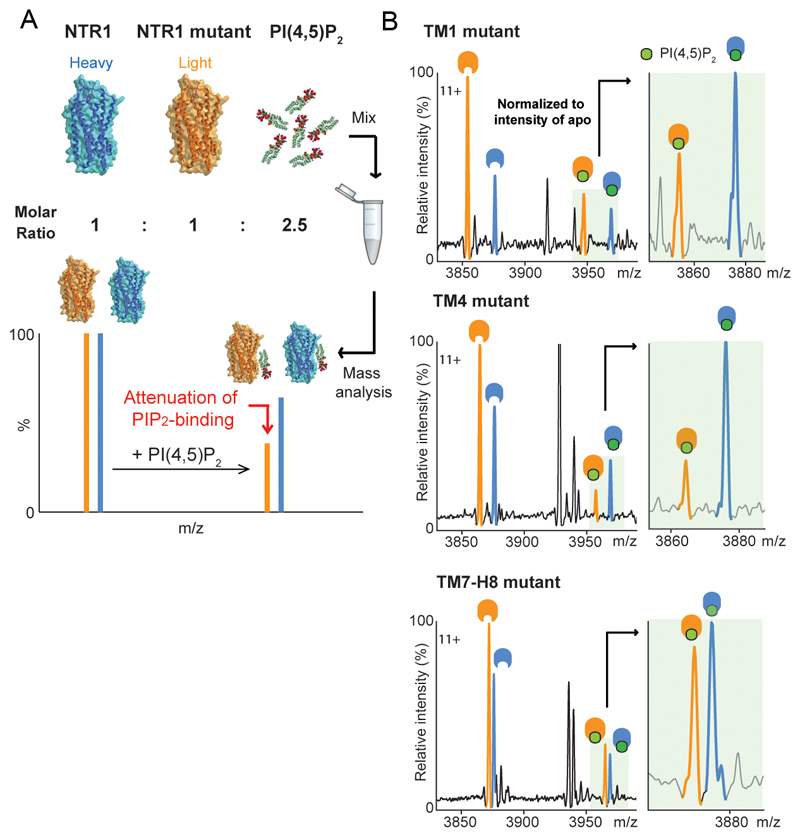
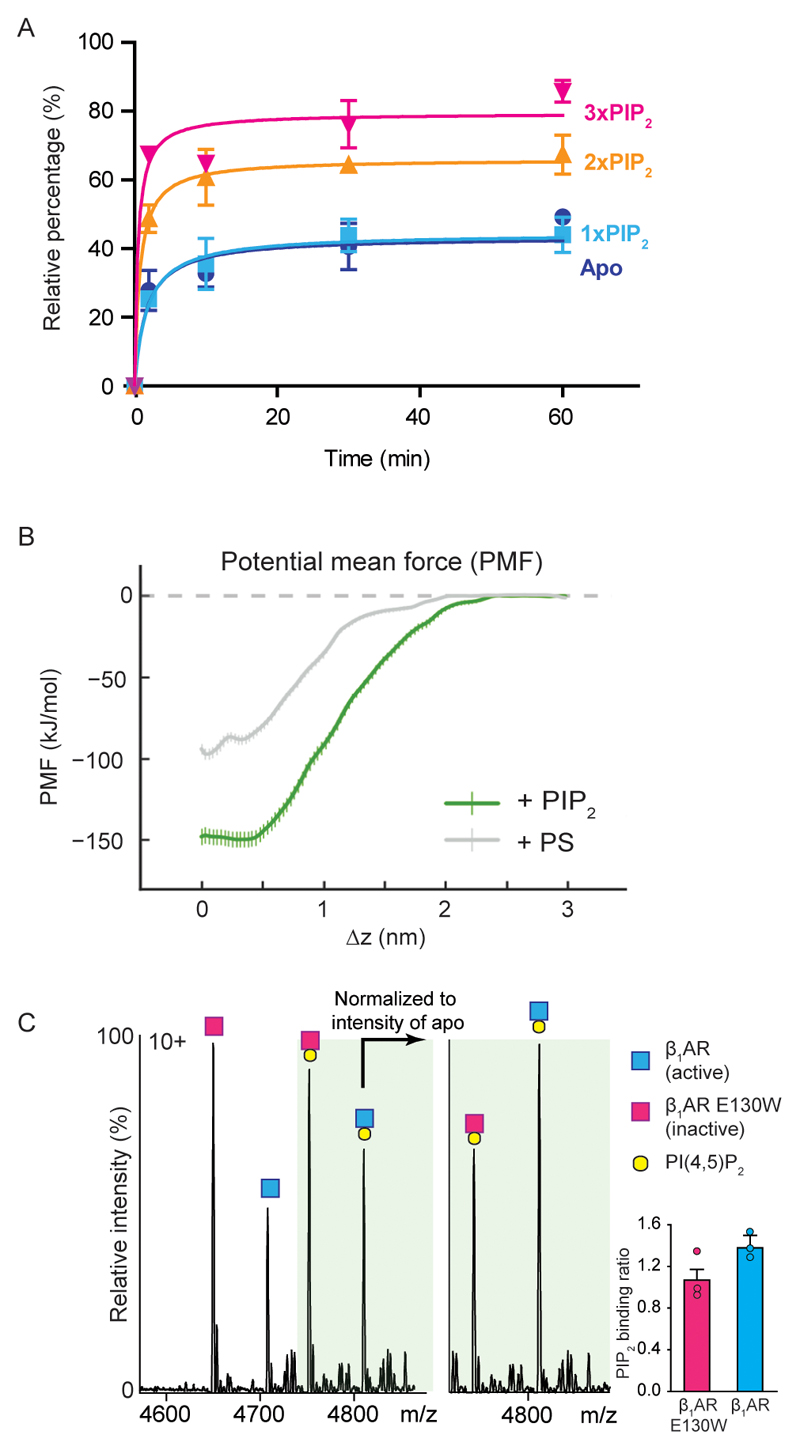
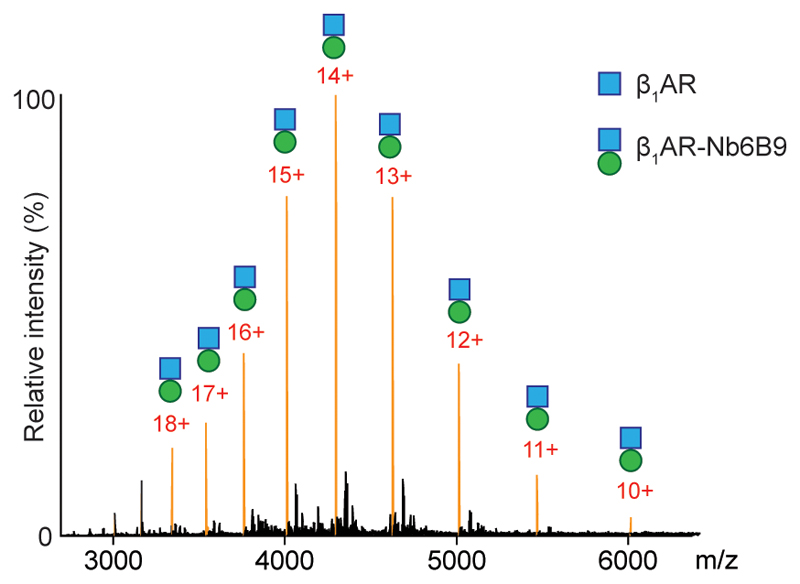
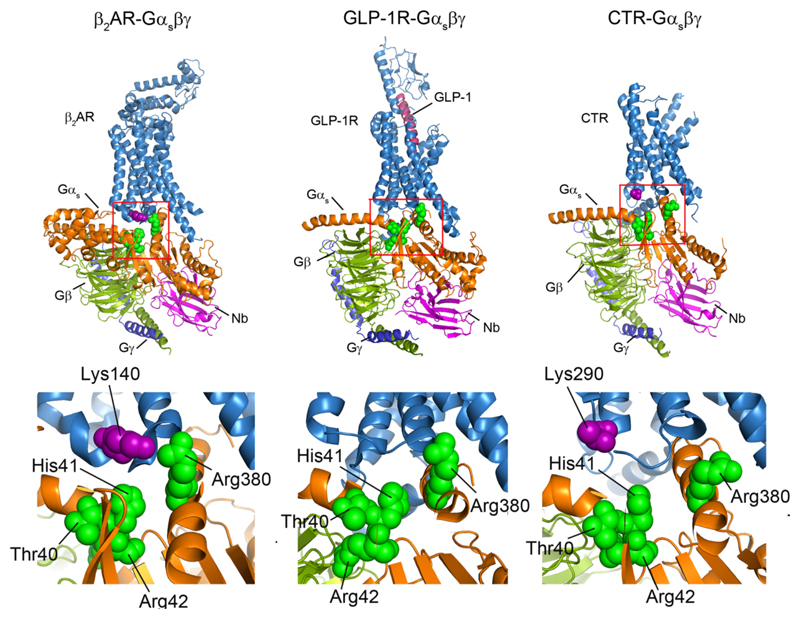
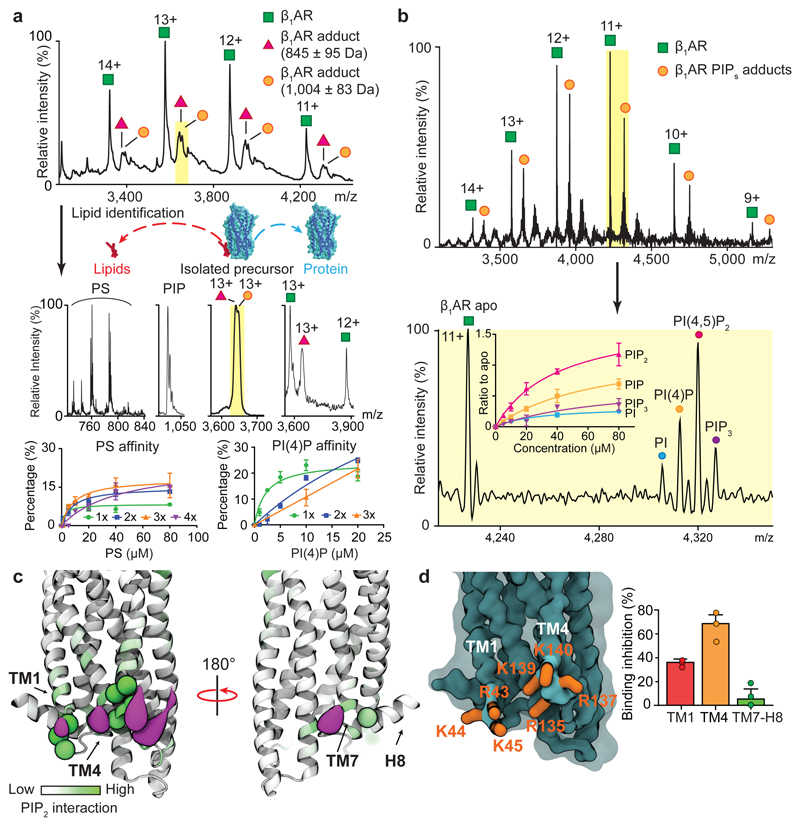
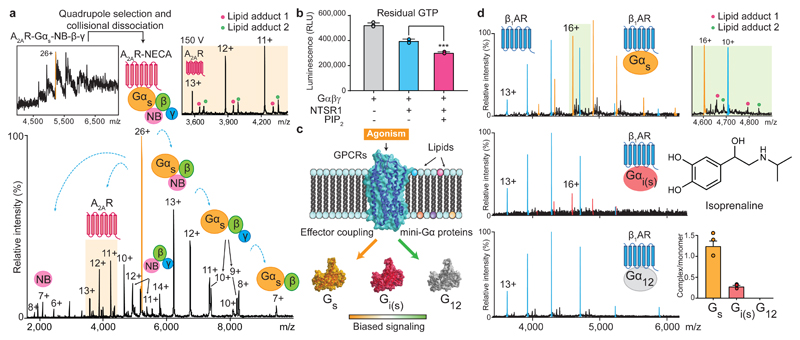
G-protein-coupled receptors (GPCRs) are involved in many physiological processes and are therefore key drug targets. Although detailed structural information is available for GPCRs, the effects of lipids on the receptors, and on downstream coupling of GPCRs to G proteins are largely unknown. Here we use native mass spectrometry to identify endogenous lipids bound to three class A GPCRs. We observed preferential binding of phosphatidylinositol-4,5-bisphosphate (PtdIns(4,5)P) over related lipids and confirm that the intracellular surface of the receptors contain hotspots for PtdIns(4,5)P binding. Endogenous lipids were also observed bound directly to the trimeric Gαβγ protein complex of the adenosine A receptor (AR) in the gas phase. Using engineered Gα subunits (mini-Gα mini-Gα and mini-Gα), we demonstrate that the complex of mini-Gα with the β adrenergic receptor (βAR) is stabilized by the binding of two PtdIns(4,5)P molecules. By contrast, PtdIns(4,5)P does not stabilize coupling between βAR and other Gα subunits (mini-Gα or mini-Gα) or a high-affinity nanobody. Other endogenous lipids that bind to these receptors have no effect on coupling, highlighting the specificity of PtdIns(4,5)P. Calculations of potential of mean force and increased GTP turnover by the activated neurotensin receptor when coupled to trimeric Gαβγ complex in the presence of PtdIns(4,5)P provide further evidence for a specific effect of PtdIns(4,5)P on coupling. We identify key residues on cognate Gα subunits through which PtdIns(4,5)P forms bridging interactions with basic residues on class A GPCRs. These modulating effects of lipids on receptors suggest consequences for understanding function, G-protein selectivity and drug targeting of class A GPCRs.
G 蛋白偶联受体(GPCRs)参与许多生理过程,因此是关键的药物靶点。尽管 GPCRs 的详细结构信息已经可用,但脂质对受体的影响以及 GPCR 与 G 蛋白下游偶联的情况在很大程度上仍是未知的。在这里,我们使用天然质谱法来鉴定与三种 A 类 GPCR 结合的内源性脂质。我们观察到磷脂酰肌醇-4,5-二磷酸(PtdIns(4,5)P)优先结合于相关脂质,并证实受体的细胞内表面含有 PtdIns(4,5)P 结合的热点。内源性脂质也被观察到直接结合在气体相中腺苷 A 受体(AR)的三聚体 Gαβγ 蛋白复合物上。使用工程化的 Gα 亚基(mini-Gα mini-Gα 和 mini-Gα),我们证明 mini-Gα 与β肾上腺素能受体(βAR)的复合物通过结合两个 PtdIns(4,5)P 分子而稳定。相比之下,PtdIns(4,5)P 不会稳定βAR 与其他 Gα 亚基(mini-Gα 或 mini-Gα)或高亲和力纳米抗体之间的偶联。结合这些受体的其他内源性脂质对偶联没有影响,突出了 PtdIns(4,5)P 的特异性。当与三聚体 Gαβγ 复合物偶联时,神经降压素受体的平均力势能和 GTP 周转率的计算结果以及 PtdIns(4,5)P 的存在提供了进一步的证据,表明 PtdIns(4,5)P 对偶联具有特异性影响。我们通过计算识别出与 PtdIns(4,5)P 形成桥接相互作用的关键残基,这些残基位于同源 Gα 亚基上,与 A 类 GPCR 上的碱性残基相互作用。这些脂质对受体的调节作用表明,对于理解 A 类 GPCR 的功能、G 蛋白选择性和药物靶向具有重要意义。