Centre for Tropical Medicine and Global Health, Nuffield Department of Medicine Research Building, University of Oxford, Old Road Campus, Roosevelt Drive, Oxford, OX3 7FZ, UK.
Mahidol-Oxford Tropical Medicine Research Unit, Faculty of Tropical Medicine, Mahidol University, 3/F, 60th Anniversary Chalermprakiat Building, 420/6 Rajvithi Road, Bangkok, 10400, Thailand.
Malar J. 2018 Jul 11;17(1):259. doi: 10.1186/s12936-018-2405-3.
Malaria claims hundreds of thousands of lives each year, most of them children. A "malaria-free world" is the World Health Organization's vision, but elimination from the southeast Asian Region is hampered by factors including anti-malarial resistance and systematic underreporting. Malaria is a significant public health problem in Bangladesh and while there have been recent gains in control, there is large spatial and temporal heterogeneity in the disease burden. This study aims to determine the pattern and stability of malaria hotspots in Bangladesh with the end goal of informing intervention planning for elimination.
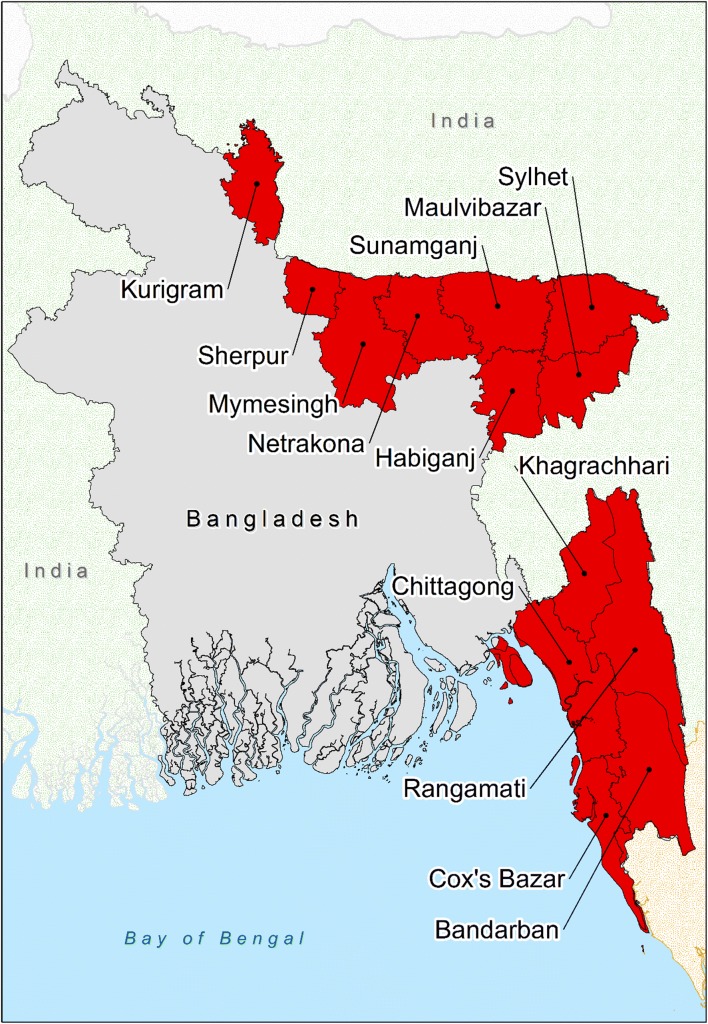
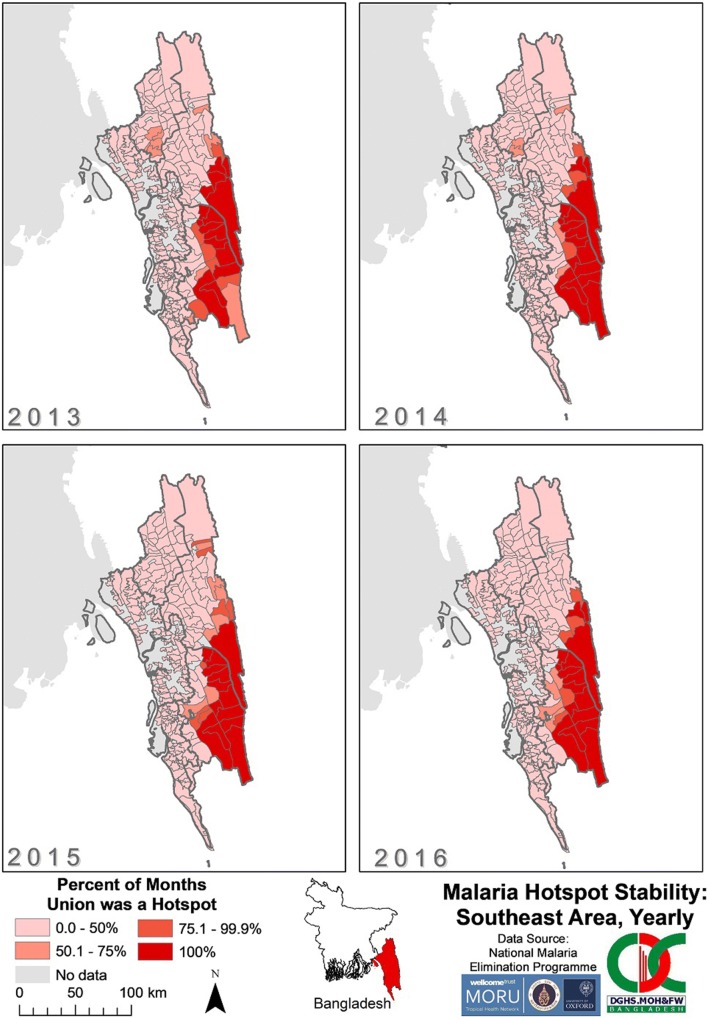
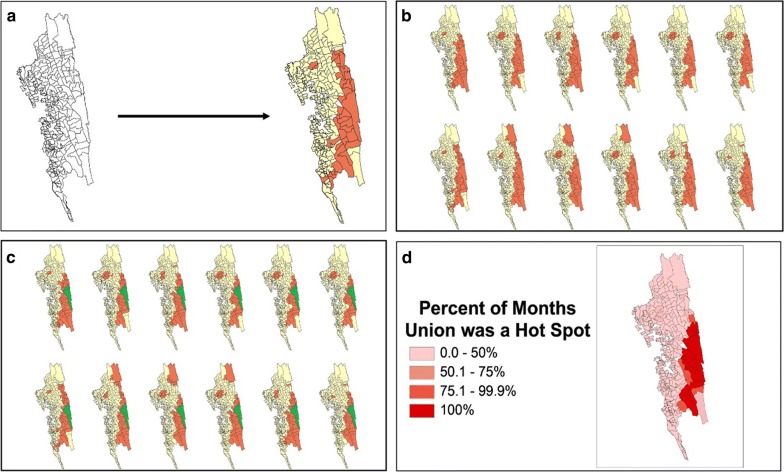
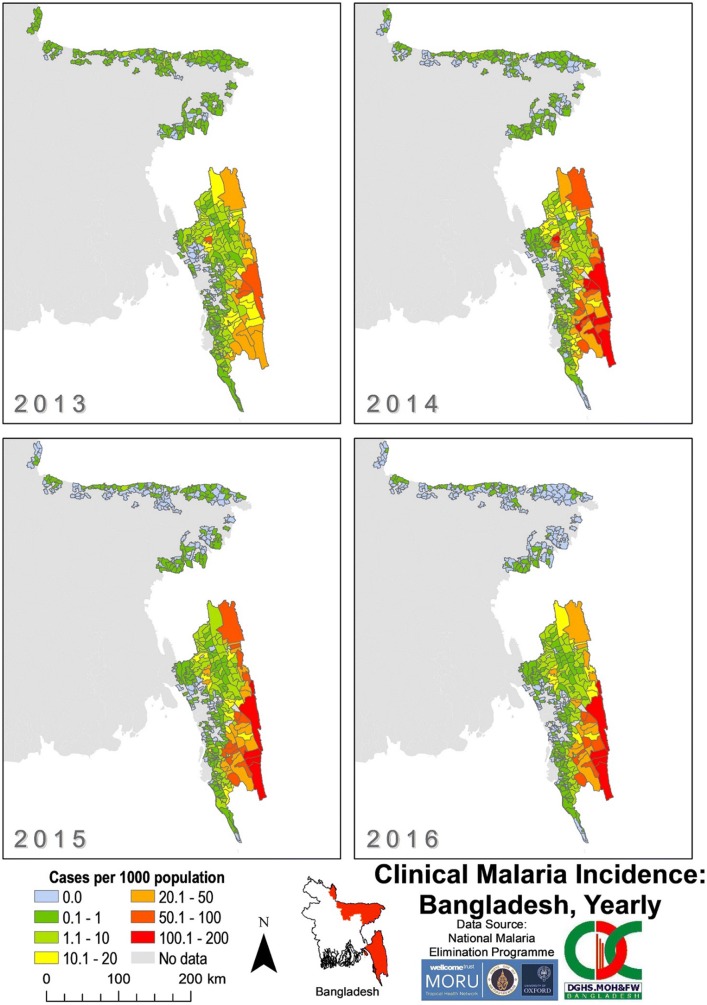
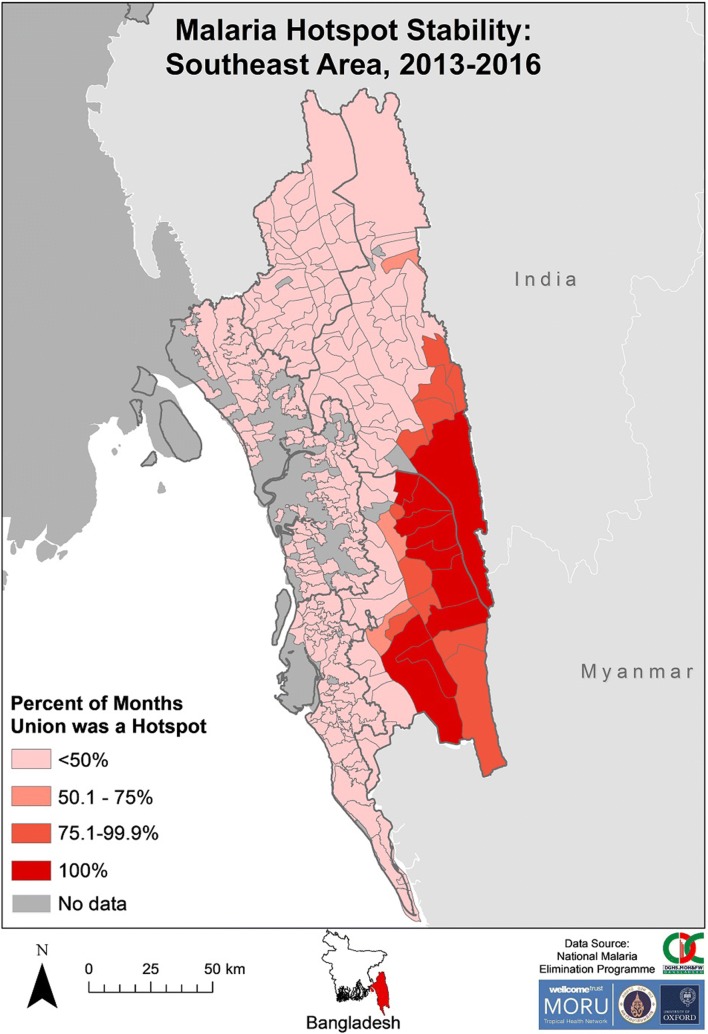
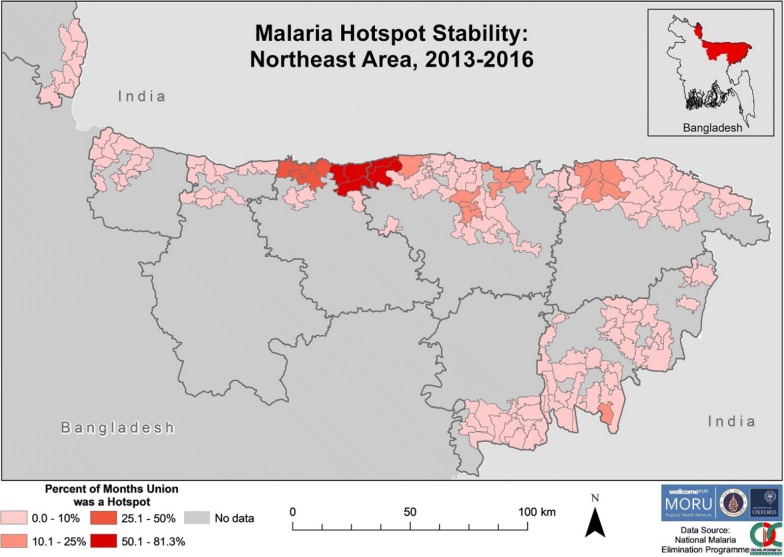
Malaria in Bangladesh exhibited highly seasonal, hypoendemic transmission in geographic hotspots, which remained conserved over time. The southeast areas of the Chittagong Hill Tracts were identified as malaria hotspots for all 4 years examined. Similarly, areas in Sunamganj and Netrakona districts in the Northeast were hotspots for 2013-2016. Highly stable hotspots from 1 year predicted the following year's hotspot locations in the southeast of Bangladesh. Hotspots did not appear to act as sources of spread with no evidence of consistent patterns of contiguous spread or recession of hotspots as high or low transmission seasons progressed.
Areas were identified with temporal and spatial clustering of high malaria incidence in Bangladesh. Further studies are required to understand the vector, sociodemographic and disease dynamics within these hotspots. Given the low caseloads occurring in the low transmission seasons, and the conserved nature of malaria hotspots, directing resources towards these areas may be an efficient way to achieve malaria elimination in Bangladesh.
每年有数十万人因疟疾而丧生,其中大多数是儿童。世界卫生组织的愿景是“无疟疾世界”,但由于抗疟药物耐药性和系统漏报等因素,东南亚区域无法实现消除疟疾。疟疾是孟加拉国的一个重大公共卫生问题,尽管最近在控制方面取得了进展,但疾病负担在空间和时间上存在很大的异质性。本研究旨在确定孟加拉国疟疾热点的模式和稳定性,最终目的是为消除疟疾的干预规划提供信息。
孟加拉国的疟疾呈高度季节性、低流行度的地理热点传播,且随着时间的推移保持稳定。在整个研究期间,吉大港山区东南部地区被确定为疟疾热点。同样,在 2013 年至 2016 年期间,在东北部的孙纳姆甘杰和诺阿卡利区也存在热点地区。从一年高度稳定的热点地区可以预测下一年孟加拉国东南部的热点地区。热点地区似乎没有起到传播源的作用,没有证据表明热点地区连续传播或衰退的模式一致,随着高或低传播季节的进展。
在孟加拉国确定了疟疾发病率高的时空聚集区域。需要进一步研究这些热点地区的病媒、社会人口和疾病动态。鉴于低传播季节的低病例数以及疟疾热点的保守性,将资源集中在这些地区可能是在孟加拉国实现消除疟疾的有效途径。