Cellular and Molecular Toxicology Laboratory, Center for Environment, Health and Welfare Research, Korea Institute of Science and Technology (KIST), 5, Hwarang-ro 14-gil, Seongbuk-gu, Seoul, 02792, Republic of Korea.
Department of Life Sciences, College of Life Sciences and Biotechnology, Korea University, 145 Anam-ro, Seongbuk-gu, Seoul, 02841, Republic of Korea.
Sci Rep. 2018 Jul 12;8(1):10497. doi: 10.1038/s41598-018-28813-z.
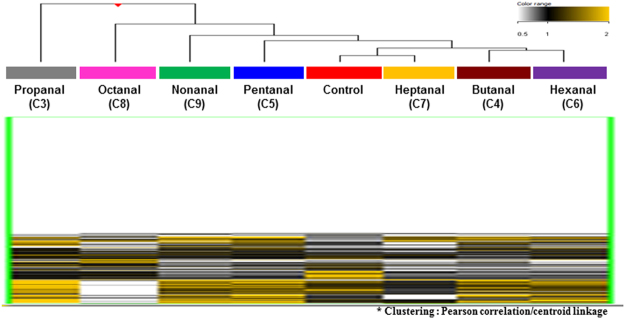
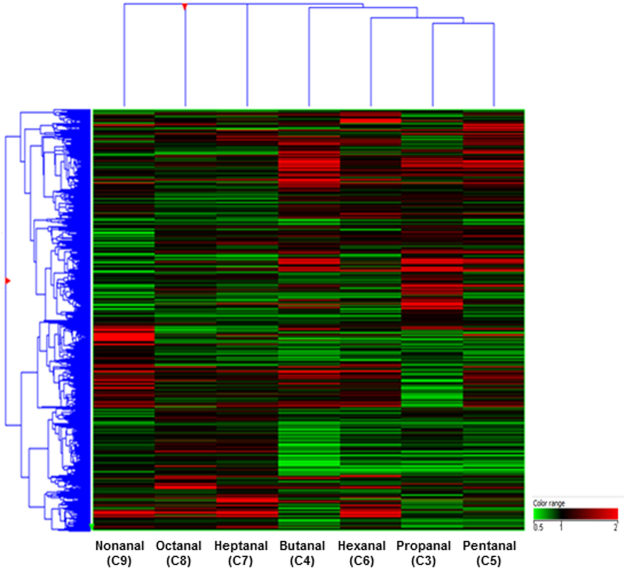
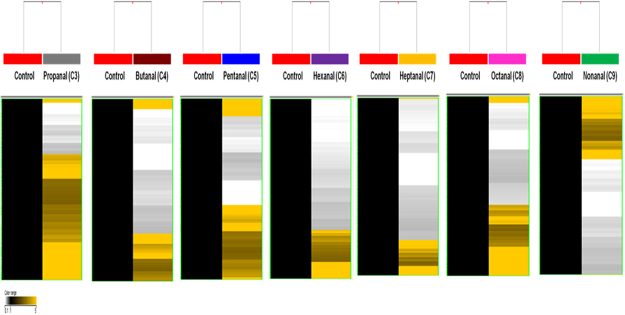
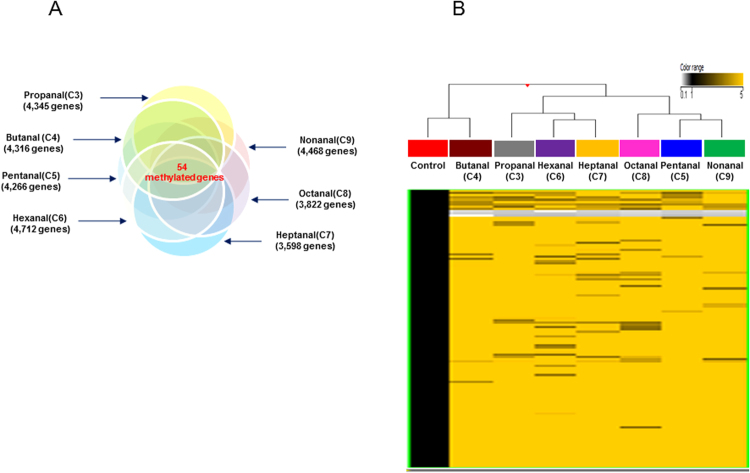
Recent studies have investigated the epigenetic effects of environmental exposure to chemicals on human health. The associations of DNA methylation, environmental exposure and human diseases have been widely demonstrated. However, the use of gene methylation patterns as a predictive biomarker for exposure to environmental toxicants is relatively poorly understood. Here, we focused on low-molecular-weight saturated aliphatic aldehydes (LSAAs), which are important environmental risk factors in humans as major indoor air pollutants. Based on DNA methylation profiling in gene promoter regions, we analysed DNA methylation profiles following exposure of A549 cells to seven LSAAs (propanal, butanal, pentanal, hexanal, heptanal, octanal, and nonanal) to identify LSAA-characterized methylated sites and target genes, as well as to investigate whether exposure to LSAAs contributes to inducing of pulmonary toxicity. Additionally, by integrating DNA methylation and mRNA expression profile analyses, we identified core anti-correlated target genes. Gene ontology analysis of these target genes revealed several key biological processes. These findings suggest that alterations in DNA methylation by exposure to LSAAs provide novel epigenetic biomarkers for risk assessments. This DNA methylation-mRNA approach also reveals potential new mechanistic insights into the epigenetic actions of pulmonary toxicity.
最近的研究调查了环境化学暴露对人类健康的表观遗传效应。已经广泛证明了 DNA 甲基化、环境暴露和人类疾病之间的关联。然而,将基因甲基化模式用作环境毒物暴露的预测生物标志物的用途还相对不太了解。在这里,我们专注于低分子量饱和脂肪族醛 (LSAAs),它们是人类的重要环境风险因素,也是主要的室内空气污染物。基于基因启动子区域的 DNA 甲基化分析,我们分析了 A549 细胞暴露于七种 LSAAs(丙醛、丁醛、戊醛、己醛、庚醛、辛醛和壬醛)后的 DNA 甲基化谱,以鉴定 LSAAs 特征性甲基化位点和靶基因,并研究暴露于 LSAAs 是否会导致肺毒性。此外,通过整合 DNA 甲基化和 mRNA 表达谱分析,我们确定了核心反相关的靶基因。对这些靶基因的基因本体论分析揭示了几个关键的生物学过程。这些发现表明,LSAAs 暴露导致的 DNA 甲基化改变为风险评估提供了新的表观遗传生物标志物。这种 DNA 甲基化-mRNA 方法还揭示了肺毒性的表观遗传作用的潜在新的机制见解。