Department of Pharmacology and Toxicology, Indiana University School of Medicine 635 Barnhill Drive MS A401, Indianapolis, IN, 46202, USA.
Department of Neurosciences, University of Toledo College of Medicine 3000 Arlington Avenue MS 1007, Toledo, OH, 43614, Spain.
Sci Rep. 2018 Jul 12;8(1):10558. doi: 10.1038/s41598-018-28970-1.
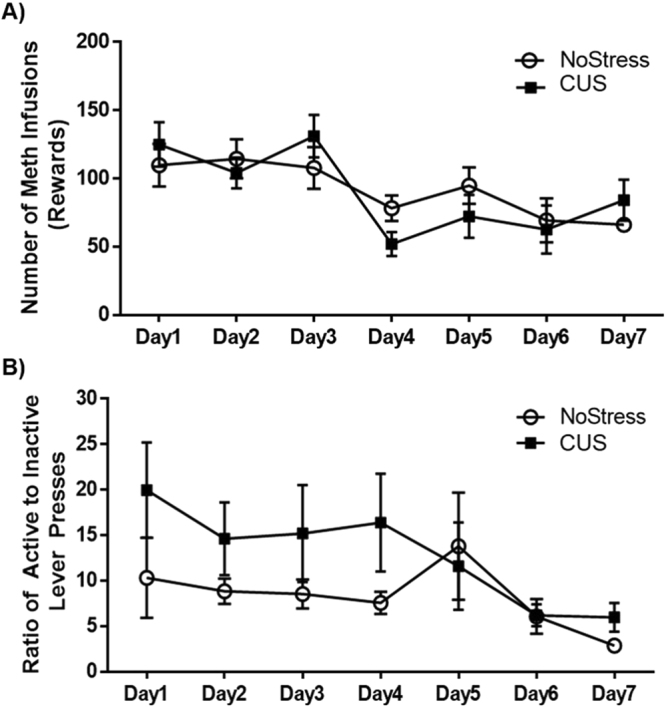
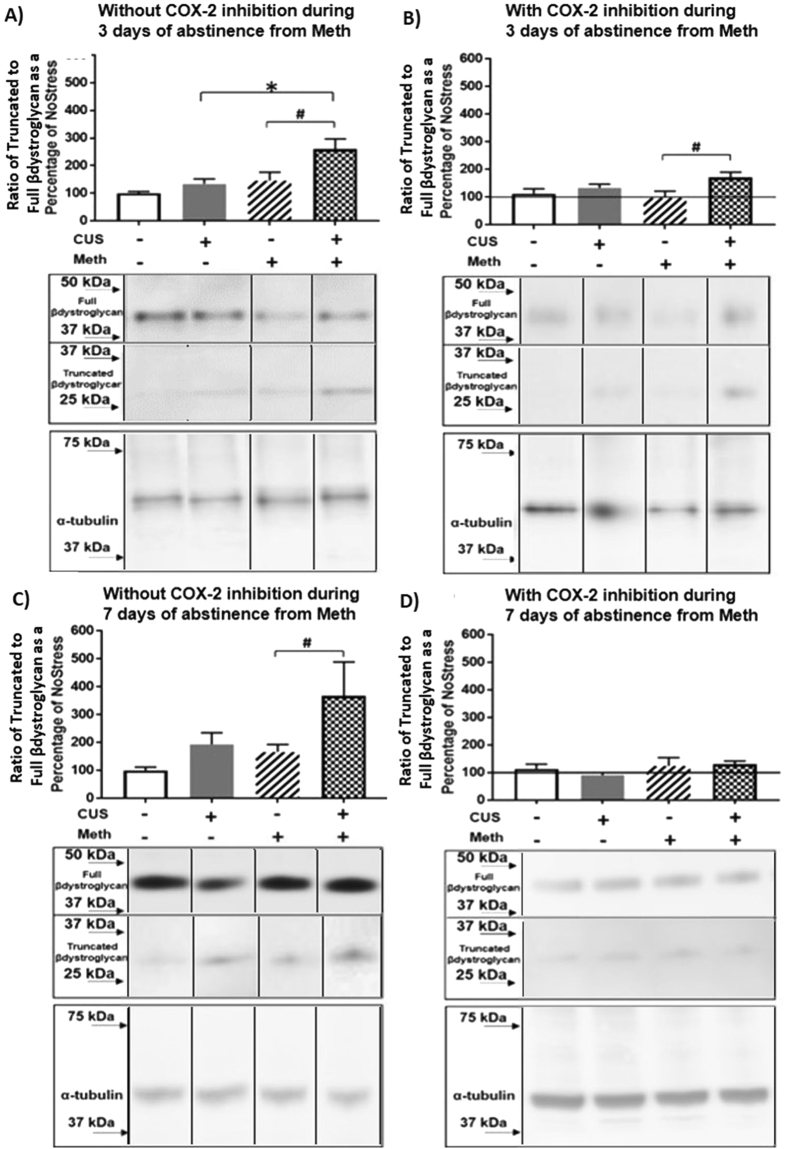
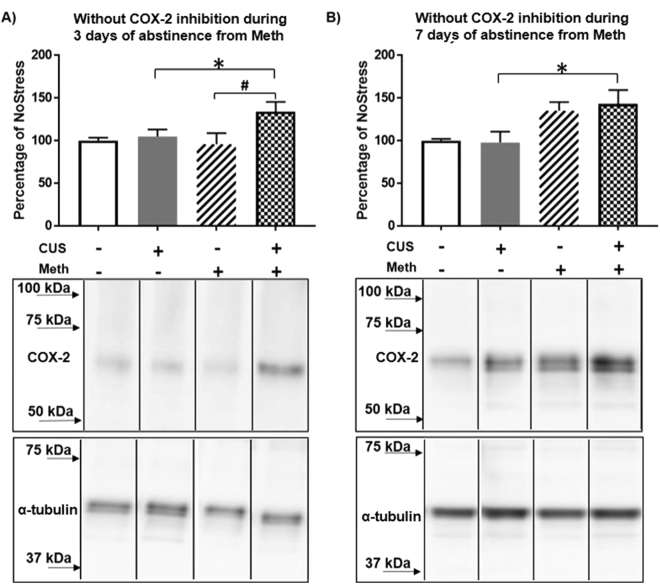
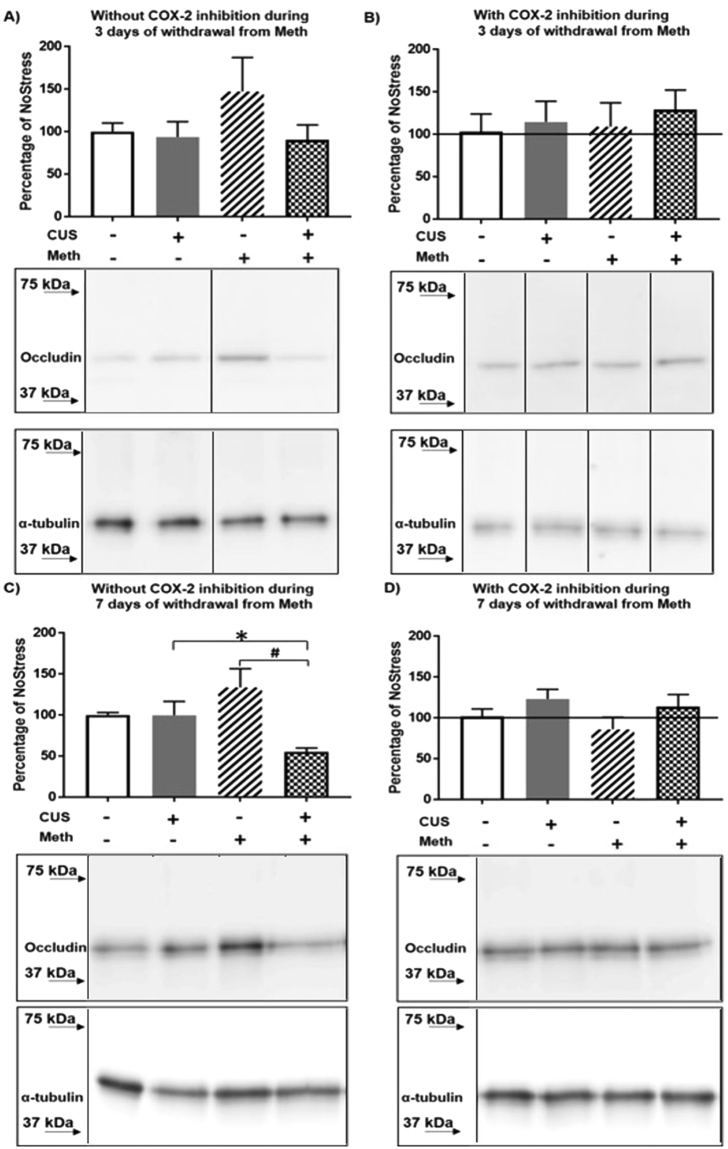
Cerebrovascular damage caused by either exposure to stress or the widely abused drug, methamphetamine (Meth) is known but stress and drug abuse frequently occur in tandem that may impact their individual cerebrovascular effects. This study examined their co-morbid cerebrovascular effects during abstinence from self-administered Meth after the exposure to chronic unpredictable stress (CUS). Exposure to CUS prior to unrestricted Meth self-administration had no effect on Meth intake in rats; however, the pro-inflammatory mediator cyclooxygenase-2 (COX-2) and the breakdown of cell-matrix adhesion protein β-dystroglycan in isolated cerebral cortical capillaries were increased after 3 days of abstinence and persisted for 7 days. These changes preceded decreases in occludin, a key structural protein component of the blood-brain barrier. The decrease in occludin was blocked by the COX-2 specific inhibitor nimesulide treatment during abstinence from Meth. The changes in COX-2, β-dystroglycan, and occludin were only evident following the serial exposure to stress and Meth but not after either one alone. These results suggest that stress and voluntary Meth intake can synergize and disrupt cerebrovasculature in a time-dependent manner during abstinence from chronic stress and Meth. Furthermore, COX-2 inhibition may be a viable pharmacological intervention to block vascular changes after Meth exposure.
由应激暴露或广泛滥用的药物(冰毒)引起的脑血管损伤是已知的,但应激和药物滥用经常同时发生,这可能会影响它们各自的脑血管效应。本研究在慢性不可预测应激(CUS)暴露后,从自我管理的冰毒戒除中检查了它们共同的脑血管效应。在不受限制的冰毒自我给药之前暴露于 CUS 对大鼠的冰毒摄入量没有影响;然而,在 3 天的禁欲后,分离的大脑皮质毛细血管中的促炎介质环加氧酶-2(COX-2)和细胞基质粘附蛋白β-肌营养不良蛋白的降解增加,并持续 7 天。这些变化发生在紧密连接蛋白 occludin 减少之前,后者是血脑屏障的关键结构蛋白成分。在冰毒戒除期间,COX-2 特异性抑制剂尼美舒利治疗阻断了 occludin 的减少。只有在连续暴露于应激和冰毒后才会出现 COX-2、β-肌营养不良蛋白和 occludin 的变化,而单独暴露于其中一种则不会。这些结果表明,应激和自愿吸食冰毒可以协同作用,并在慢性应激和冰毒戒除期间以时间依赖的方式破坏脑血管。此外,COX-2 抑制可能是阻止冰毒暴露后血管变化的可行药理学干预措施。