Intramural Research Program, National Institute on Drug Abuse, NIH, DHHS, Baltimore, MD, USA.
Neurobiol Dis. 2013 Oct;58:132-43. doi: 10.1016/j.nbd.2013.05.009. Epub 2013 May 30.
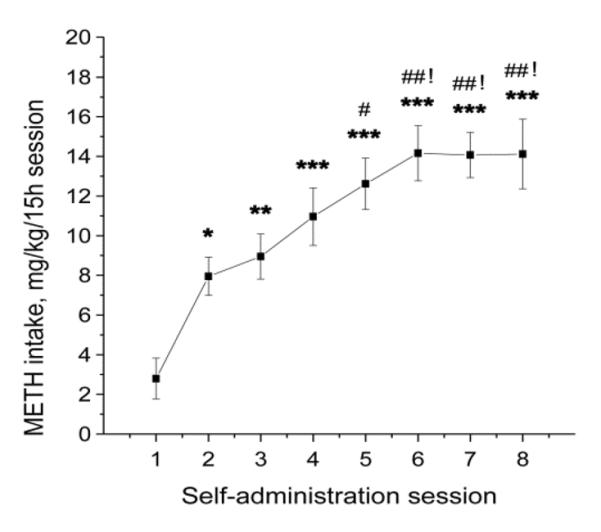
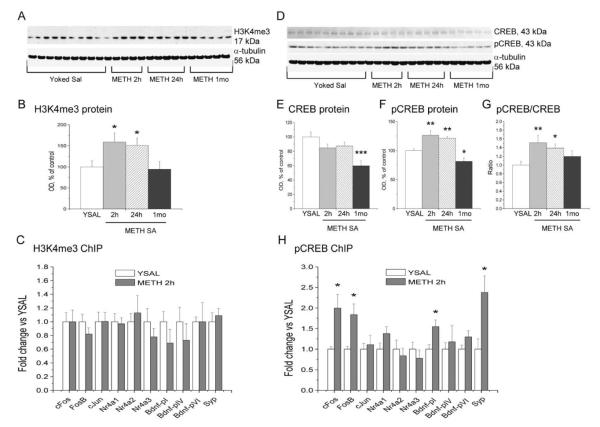
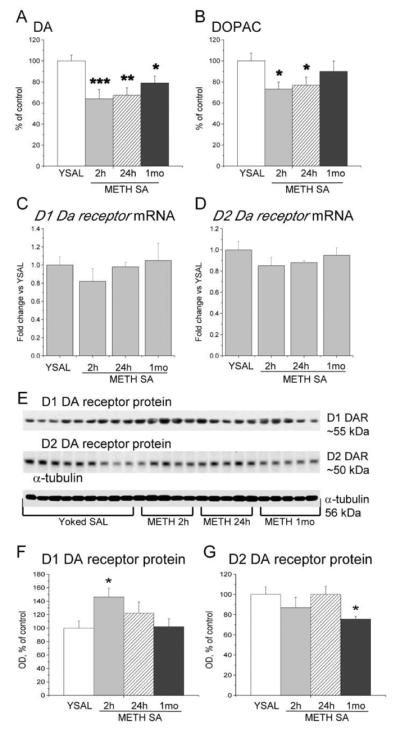
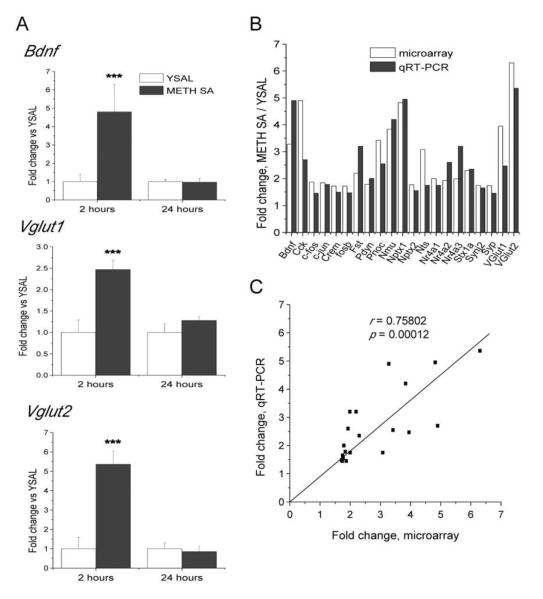
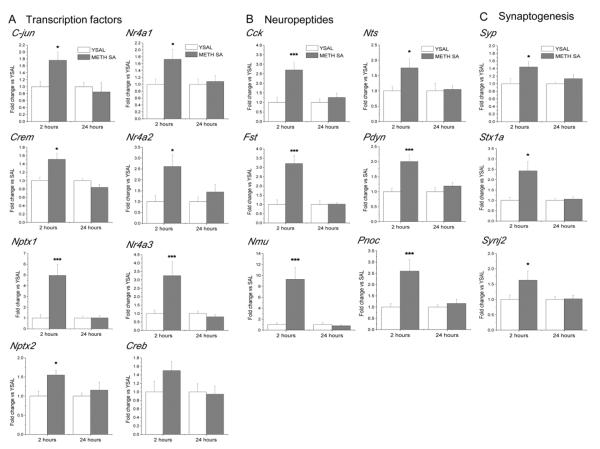
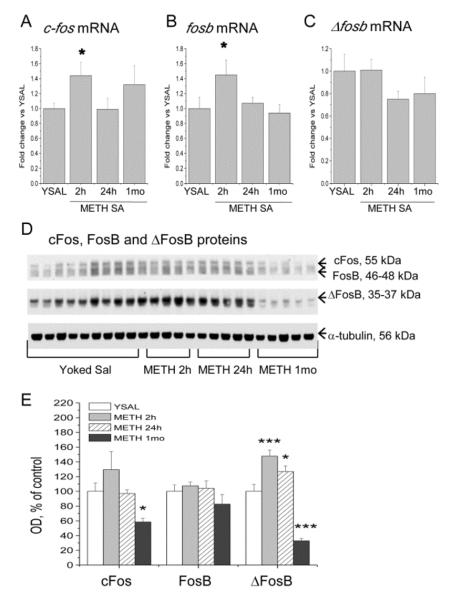
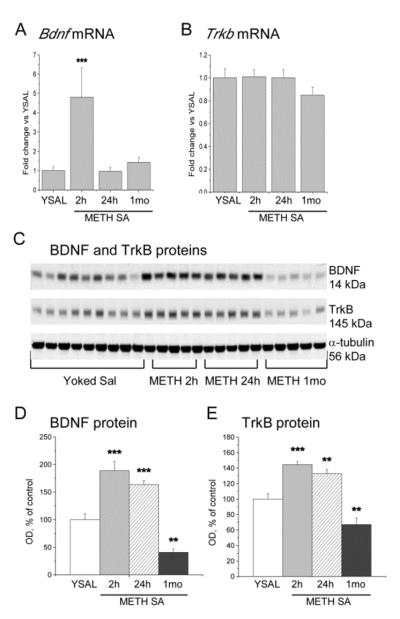
Neuroplastic changes in the dorsal striatum participate in the transition from casual to habitual drug use and might play a critical role in the development of methamphetamine (METH) addiction. We examined the influence of METH self-administration on gene and protein expression that may form substrates for METH-induced neuronal plasticity in the dorsal striatum. Male Sprague-Dawley rats self-administered METH (0.1mg/kg/injection, i.v.) or received yoked saline infusions during eight 15-h sessions and were euthanized 2h, 24h, or 1month after cessation of METH exposure. Changes in gene and protein expression were assessed using microarray analysis, RT-PCR and Western blots. Chromatin immunoprecipitation (ChIP) followed by PCR was used to examine epigenetic regulation of METH-induced transcription. METH self-administration caused increases in mRNA expression of the transcription factors, c-fos and fosb, the neurotrophic factor, Bdnf, and the synaptic protein, synaptophysin (Syp) in the dorsal striatum. METH also caused changes in ΔFosB, BDNF and TrkB protein levels, with increases after 2 and 24h, but decreases after 1month of drug abstinence. Importantly, ChIP-PCR showed that METH self-administration caused enrichment of phosphorylated CREB (pCREB), but not of histone H3 trimethylated at lysine 4 (H3K4me3), on promoters of c-fos, fosb, Bdnf and Syp at 2h after cessation of drug intake. These findings show that METH-induced changes in gene expression are mediated, in part, by pCREB-dependent epigenetic phenomena. Thus, METH self-administration might trigger epigenetic changes that mediate alterations in expression of genes and proteins serving as substrates for addiction-related synaptic plasticity.
背侧纹状体中的神经可塑性变化参与了从偶然使用到习惯性使用药物的转变,并且可能在 methamphetamine(METH)成瘾的发展中发挥关键作用。我们研究了 METH 自我给药对基因和蛋白质表达的影响,这些表达可能成为背侧纹状体中 METH 诱导的神经元可塑性的基础。雄性 Sprague-Dawley 大鼠进行 METH(0.1mg/kg/注射,静脉内)自我给药或接受配对盐水输注,在停止 METH 暴露后的 2h、24h 或 1 个月时处死。使用微阵列分析、RT-PCR 和 Western blot 评估基因和蛋白质表达的变化。染色质免疫沉淀(ChIP) followed by PCR 用于检查 METH 诱导转录的表观遗传调控。METH 自我给药导致背侧纹状体中转录因子 c-fos 和 fosb、神经营养因子 Bdnf 和突触蛋白 synaptophysin(Syp)的 mRNA 表达增加。METH 还导致ΔFosB、BDNF 和 TrkB 蛋白水平发生变化,在 2h 和 24h 后增加,但在药物戒断 1 个月后减少。重要的是,ChIP-PCR 显示,METH 自我给药导致在停止药物摄入 2h 后,c-fos、fosb、Bdnf 和 Syp 启动子上的磷酸化 CREB(pCREB)而不是组蛋白 H3 赖氨酸 4 三甲基化(H3K4me3)富集。这些发现表明,METH 诱导的基因表达变化部分是由 pCREB 依赖性表观遗传现象介导的。因此,METH 自我给药可能引发介导与成瘾相关的突触可塑性的基因和蛋白质表达改变的表观遗传变化。