Department of Biological Sciences, University of Alberta, Edmonton, AB, Canada.
Front Immunol. 2018 Jun 28;9:1144. doi: 10.3389/fimmu.2018.01144. eCollection 2018.
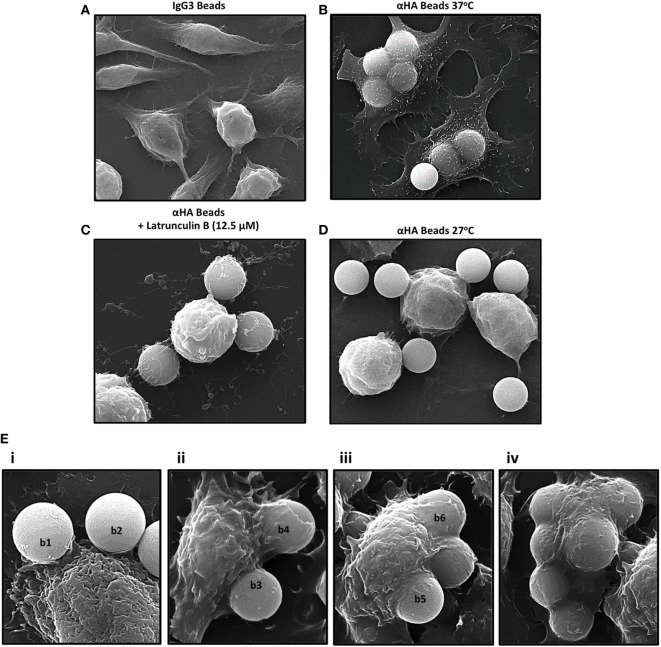
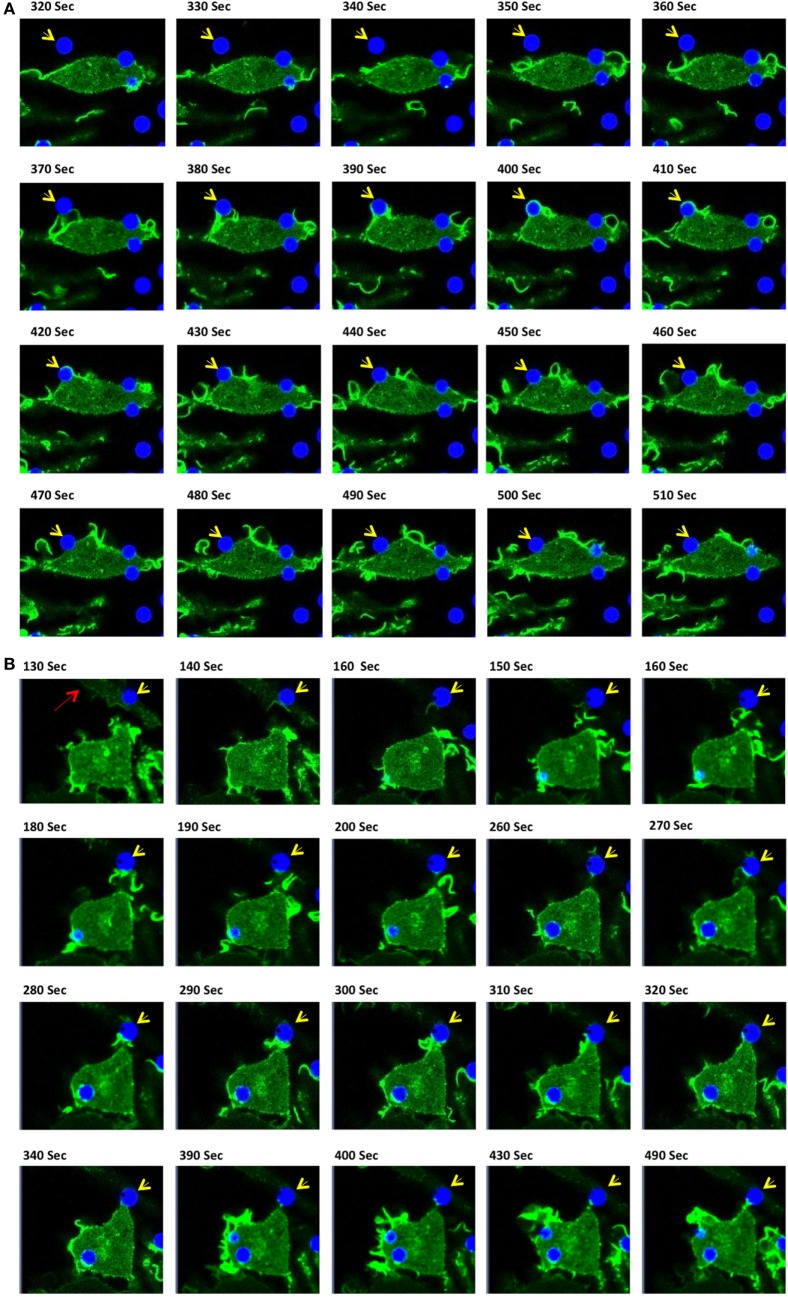
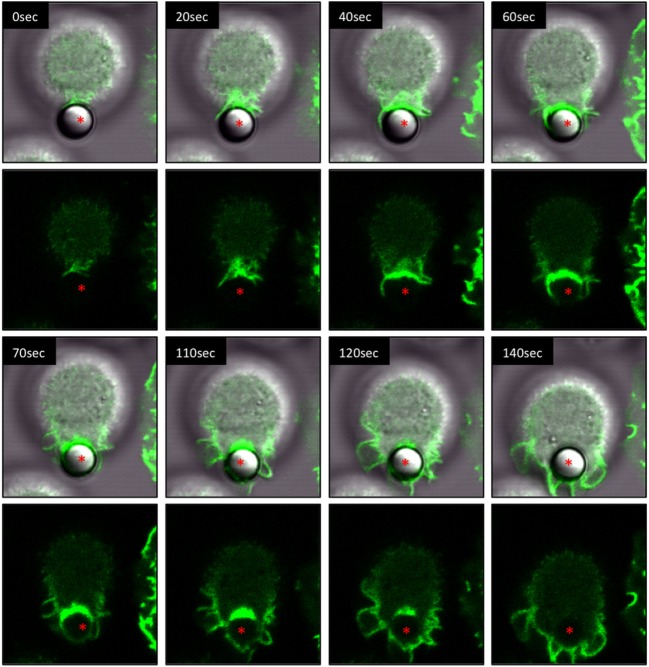
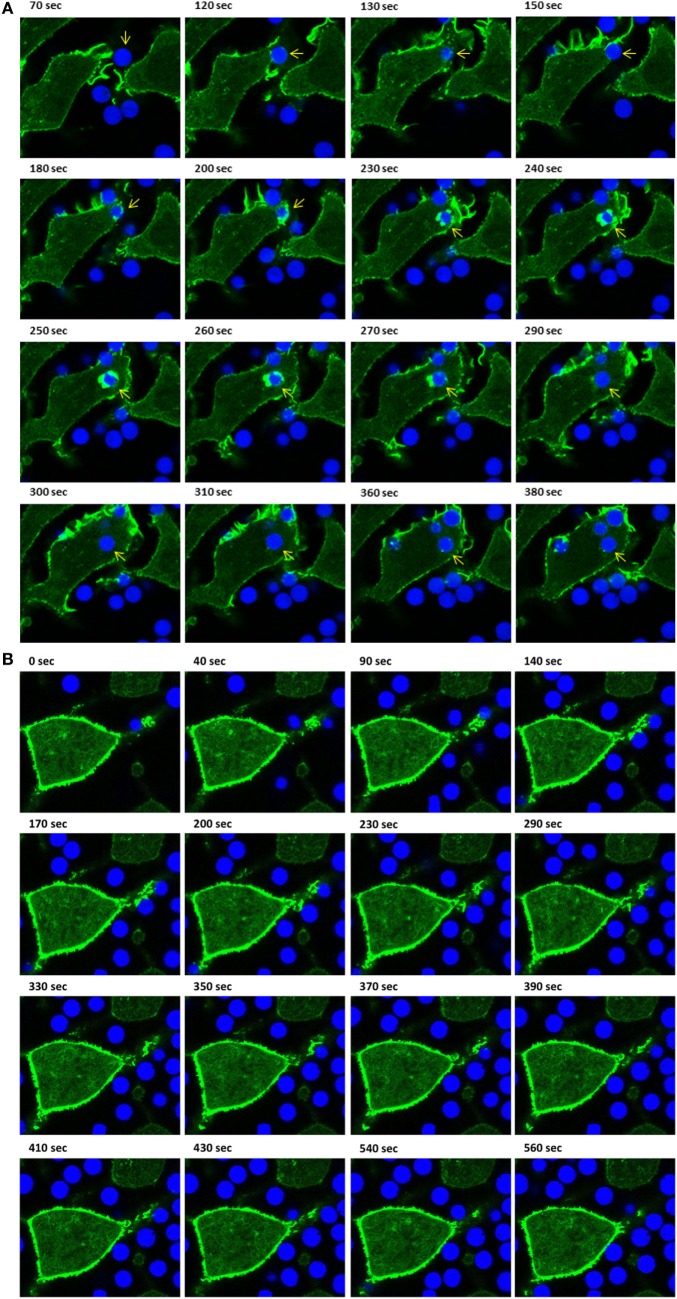
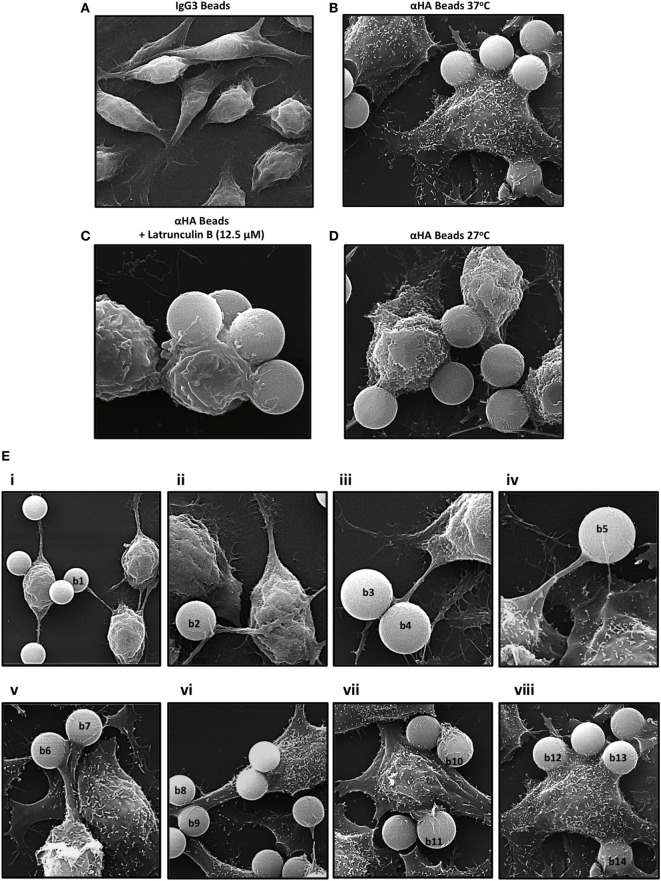
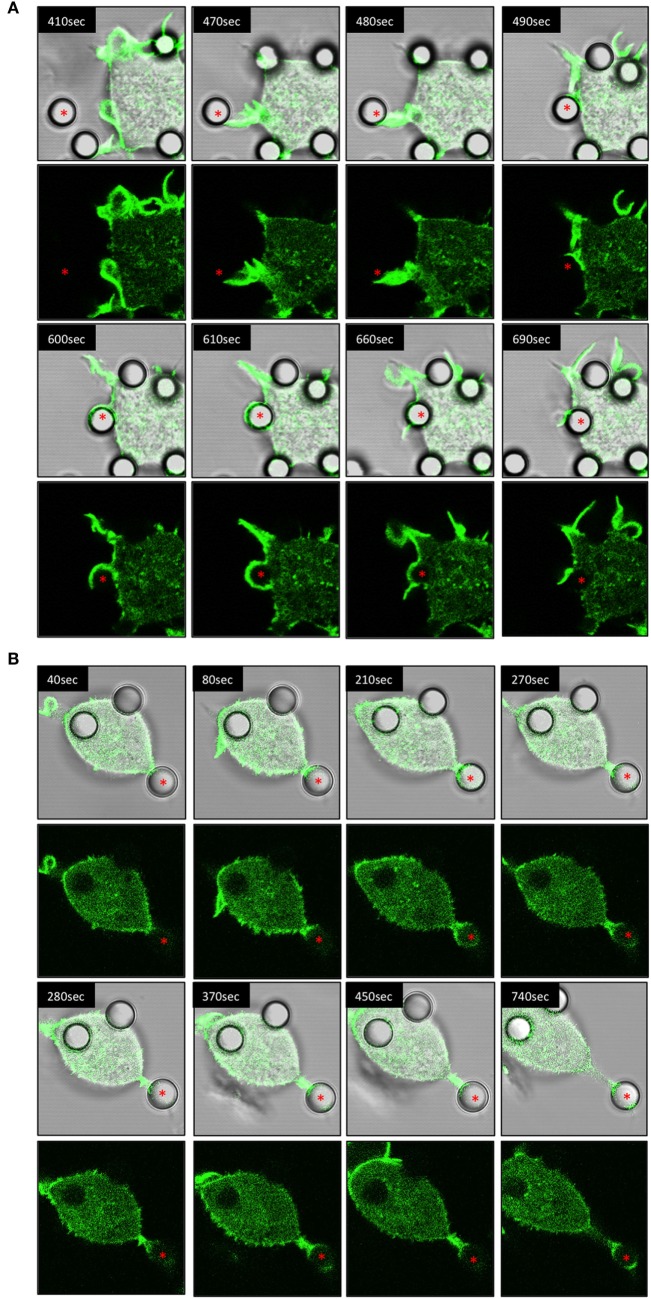
Phagocytosis evolved from a fundamental nutrient acquisition mechanism in primitive unicellular amoeboids, into a dynamic and complex component of innate immunity in multicellular organisms. To better understand the cellular mechanisms contributing to phagocytic processes across vertebrates, our research has focused on characterizing the involvement of innate immune proteins originally identified in channel catfish () called leukocyte immune-type receptors (IpLITRs). These unique teleost proteins share basic structural as well as distant phylogenetic relationships with several immunoregulatory proteins within the mammalian immunoglobulin superfamily. In the present study, we use a combination of live-cell confocal imaging and high-resolution scanning electron microscopy to further examine the classical immunoreceptor tyrosine-based activation motif (ITAM)-dependent phagocytic pathway mediated by the chimeric construct IpLITR 2.6b/IpFcRγ-L and the functionally diverse immunoreceptor tyrosine-based inhibitory motif-containing receptor IpLITR 1.1b. Results demonstrate that IpLITR 1.1b-expressing cells can uniquely generate actin-dense filopodia-like protrusions during the early stages of extracellular target interactions. In addition, we observed that these structures retract after contacting extracellular targets to secure captured microspheres on the cell surface. This activity was often followed by the generation of robust secondary waves of actin polymerization leading to the formation of stabilized phagocytic cups. At depressed temperatures of 27°C, IpLITR 2.6b/IpFcRγ-L-mediated phagocytosis was completely blocked, whereas IpLITR 1.1b-expressing cells continued to generate dynamic actin-dense filopodia at this lower temperature. Overall, these results provide new support for the hypothesis that IpLITR 1.1b, but not IpLITR 2.6b/IpFcRγ-L, directly triggers filopodia formation when expressed in representative myeloid cells. This also offers new information regarding the directed ability of immunoregulatory receptor-types to initiate dynamic membrane structures and provides insights into an alternative ITAM-independent target capture pathway that is functionally distinct from the classical phagocytic pathways.
吞噬作用源自原始单细胞变形虫的基本营养获取机制,演变为多细胞生物固有免疫的动态和复杂组成部分。为了更好地理解脊椎动物吞噬过程中的细胞机制,我们的研究集中于描述最初在斑点叉尾鮰()中鉴定的固有免疫蛋白白细胞免疫型受体(IpLITRs)的参与。这些独特的硬骨鱼蛋白与哺乳动物免疫球蛋白超家族中的几种免疫调节蛋白具有基本的结构和遥远的系统发育关系。在本研究中,我们使用活细胞共焦成像和高分辨率扫描电子显微镜的组合,进一步研究由嵌合构建体 IpLITR 2.6b/IpFcRγ-L 介导的经典免疫受体酪氨酸基激活基序(ITAM)依赖性吞噬途径以及功能多样的含免疫受体酪氨酸基抑制基序的受体 IpLITR 1.1b。结果表明,IpLITR 1.1b 表达细胞在细胞外靶相互作用的早期阶段可以独特地产生富含肌动蛋白的丝状伪足样突起。此外,我们观察到这些结构在与细胞外靶接触后缩回,以将捕获的微球固定在细胞表面上。这种活性通常伴随着肌动蛋白聚合的强大二次波的产生,导致稳定的吞噬杯的形成。在 27°C 的低温下,IpLITR 2.6b/IpFcRγ-L 介导的吞噬作用完全被阻断,而表达 IpLITR 1.1b 的细胞在较低温度下继续产生动态富含肌动蛋白的丝状伪足。总体而言,这些结果为以下假设提供了新的支持,即表达在代表性髓样细胞中的 IpLITR 1.1b 而不是 IpLITR 2.6b/IpFcRγ-L 直接触发丝状伪足的形成。这也提供了关于免疫调节受体类型启动动态膜结构的定向能力的新信息,并深入了解与经典吞噬途径功能不同的替代 ITAM 独立的靶标捕获途径。