de Anda-Jáuregui Guillermo, Espinal-Enríquez Jesús, Drago-García Diana, Hernández-Lemus Enrique
Computational Genomics Division, National Institute of Genomic Medicine, 14610 Mexico City, Mexico.
Centro de Ciencias de la Complejidad, Universidad Nacional Autónoma de México, 04510 Mexico City, Mexico.
Int J Genomics. 2018 May 29;2018:9585383. doi: 10.1155/2018/9585383. eCollection 2018.
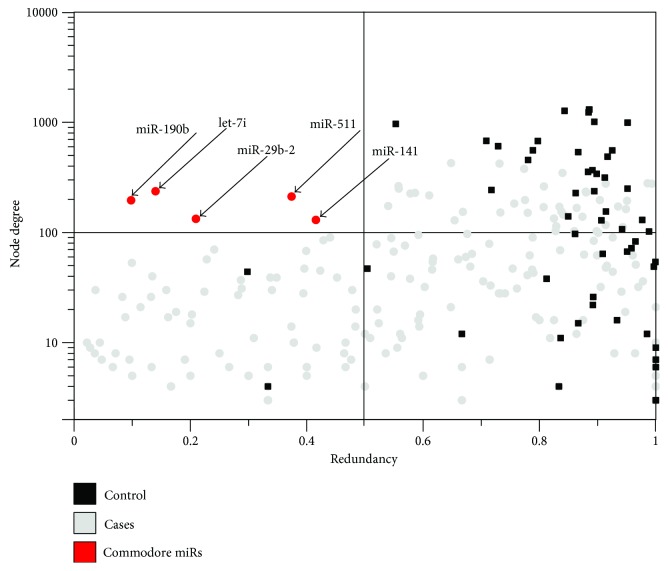
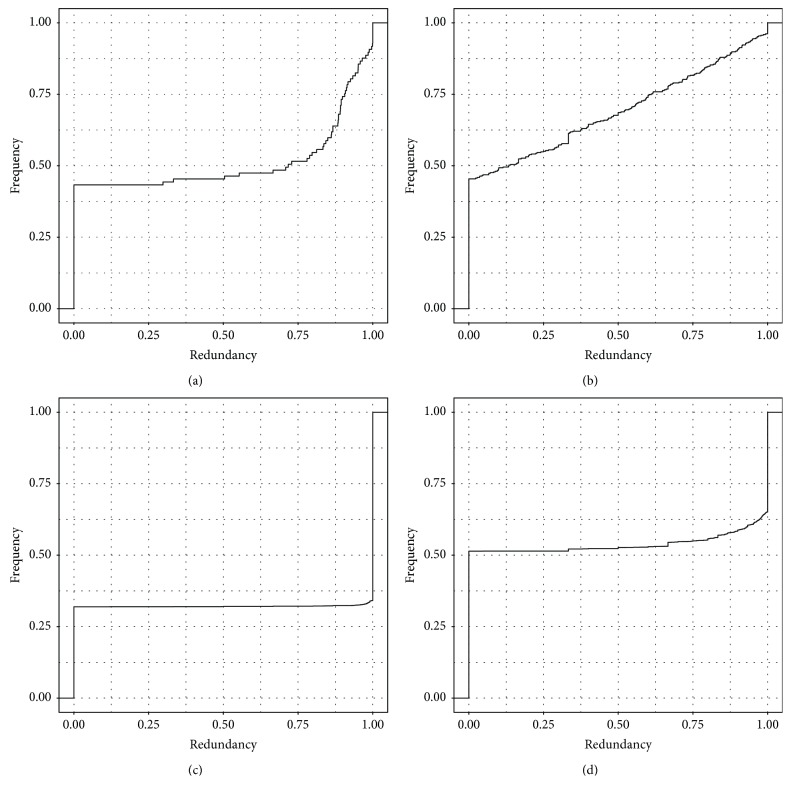
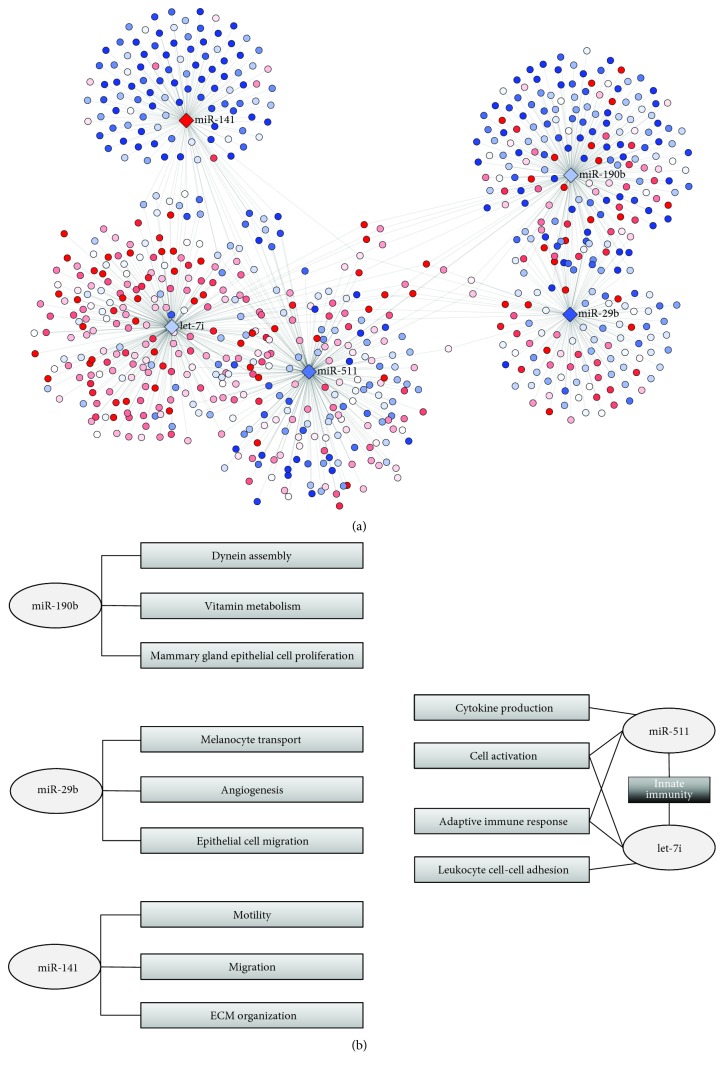
Alterations to transcriptional regulation are an important factor in breast cancer. Noncoding RNA, such as microRNA (miR), have very influential roles in the transcriptional regulation of genes. Transcriptional regulation can be successfully modeled and analyzed using complex network theory. Particularly, interactions between two distinct classes of biological elements, such as miR and genes, can be approached through the bipartite network formalism. Based on bipartite network properties, it is possible to identify highly influential miRs in the network, such as those that have a large number of connections indicating regulation of a large set of genes. Some miRs in a network are nonredundant, which indicates that they are solely responsible of the regulation of a particular set of genes, which in turn may be associated to a particular biological process. We hypothesize that highly influential, nonredundant miRs, which we call (Cdre-miRs), have an important role on the control of biological functions through transcriptional networks. In this work, we analyze the regulation of gene expression by miRs in healthy and cancerous breast tissue using bipartite miR-gene networks inferred from the Cancer Genome Atlas (TCGA) expression data. We observe differences in the degree, clustering coefficient and redundancy distributions for miRs and genes in the network, indicating differences in the way that these elements interact with each other. Furthermore, we identify a small set of five Cdre-miRs in the breast cancer network: miR-190b, miR-let7i, miR-292-b, miR-511, and miR-141. The neighborhood of genes controlled by each of these miRs is involved in particular biological functions such as dynein structure-associated processes, immune response, angiogenesis, cytokine activity, and cell motility. We propose that these Cdre-miRs are important control elements of biological functions deregulated in breast cancer.
转录调控的改变是乳腺癌的一个重要因素。非编码RNA,如微小RNA(miR),在基因的转录调控中发挥着非常重要的作用。转录调控可以使用复杂网络理论成功地进行建模和分析。特别是,两类不同生物元件之间的相互作用,如miR和基因,可以通过二分网络形式来研究。基于二分网络的特性,可以识别网络中具有高度影响力的miR,例如那些有大量连接表明调控大量基因的miR。网络中的一些miR是非冗余的,这表明它们单独负责调控特定的一组基因,而这组基因反过来可能与特定的生物学过程相关。我们假设,具有高度影响力的非冗余miR,我们称之为(Cdre-miR),在通过转录网络控制生物学功能方面具有重要作用。在这项工作中,我们使用从癌症基因组图谱(TCGA)表达数据推断出的二分miR-基因网络,分析了健康和癌性乳腺组织中miR对基因表达的调控。我们观察到网络中miR和基因在度、聚类系数和冗余分布上的差异,表明这些元件相互作用方式的不同。此外,我们在乳腺癌网络中识别出一小部分五个Cdre-miR:miR-190b、miR-let7i、miR-292-b、miR-511和miR-141。由这些miR中的每一个控制的基因邻域都参与特定的生物学功能,如动力蛋白结构相关过程、免疫反应、血管生成、细胞因子活性和细胞运动。我们提出这些Cdre-miR是乳腺癌中失调的生物学功能的重要控制元件。