Department of Immunology and Oncology, Centro Nacional de Biotecnología (CNB-CSIC), Madrid, Spain.
Servicio de Alergia, Hospital Universitario de La Princesa, Instituto de Investigación Sanitaria Princesa (IP), Madrid, Spain.
Allergy. 2019 Feb;74(2):349-360. doi: 10.1111/all.13553. Epub 2018 Oct 11.
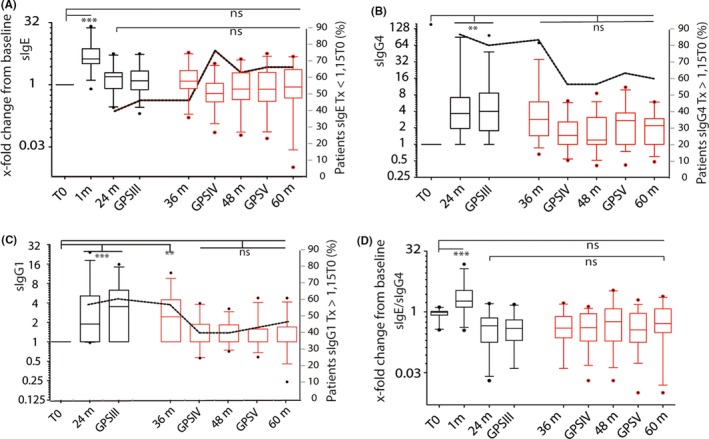
In the first 2 years of grass tablet sublingual immunotherapy treatment, we have previously demonstrated a progressive development of a regulatory T-cell response, which was preceded by an early decrease in the frequency of both IL-4+ cells and sIgE levels. A progressive increase in sIgG levels and FAB blockage were also found.
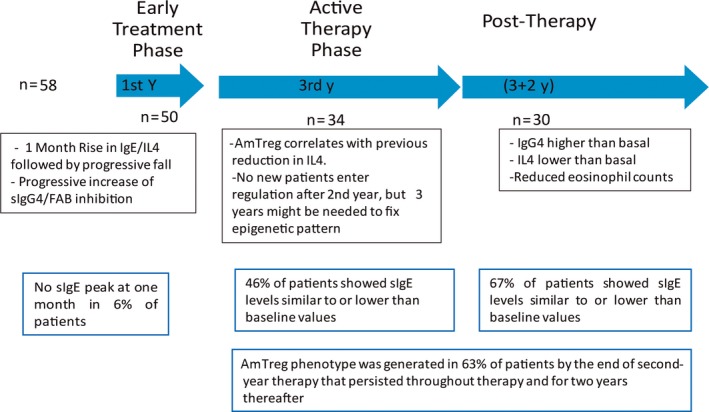
By monitoring immunological kinetics during 3 years of active treatment + 2 years of follow-up, we aimed to identify key immunological parameters that could explain sustained clinical benefit of grass tablet sublingual immunotherapy.
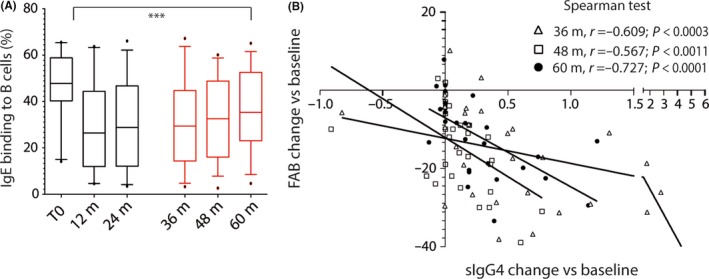
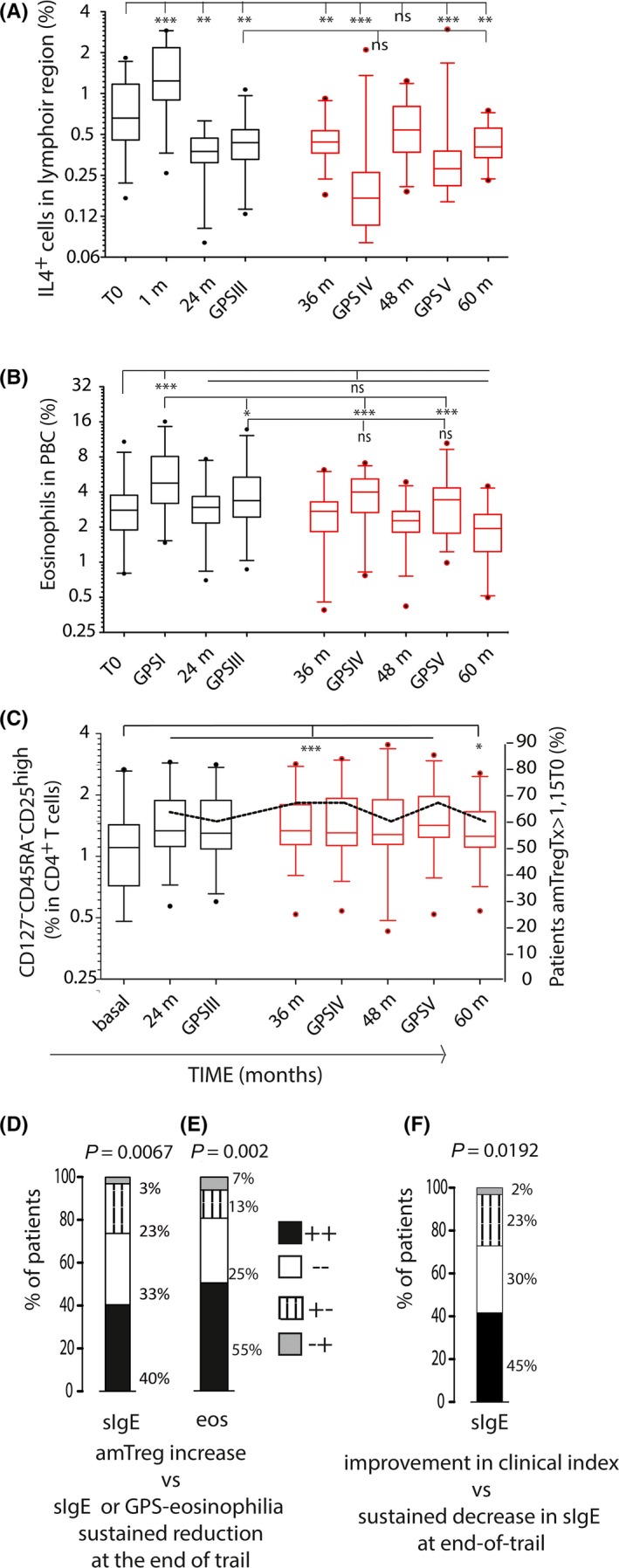
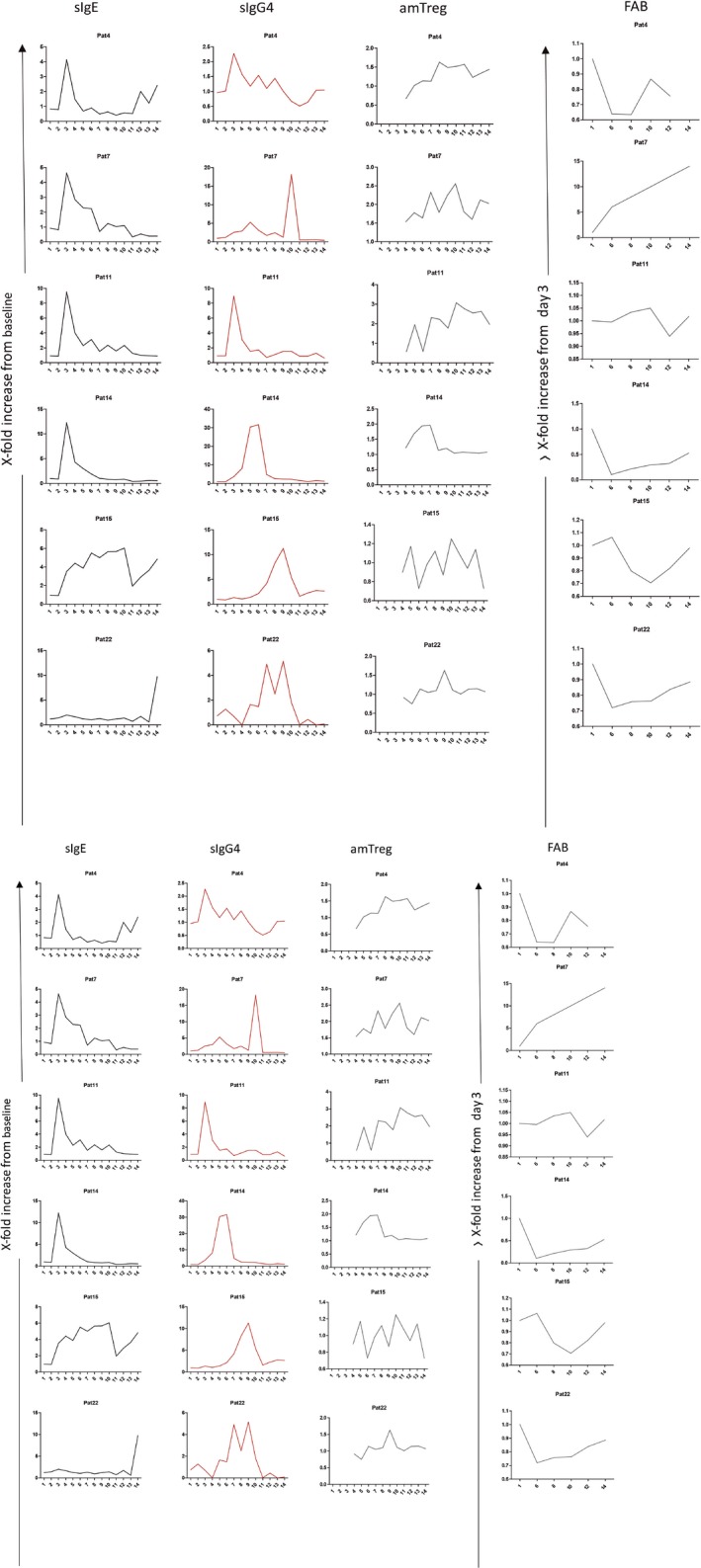
Thirty patients completed the 5-year clinical trial protocol. Although individual responses were heterogeneous, reduction in both sIgE and circulating IL-4+ cells compared to the initial 1- to 4-month peak was maintained throughout the 3-year treatment period and for 2 years after discontinuation. Meanwhile, after a 2-year increase in sIgG4, the levels were stabilized during the third year and decreased post-therapy. FAB inhibition remained significantly inhibited throughout the study compared to preimmunotherapy in 83% of patients. A sustained regulatory T-cell response, after IT cessation, occurs in two-thirds of the patients. There was a statistical association between this regulatory response, the maintenance of lower eosinophil counts during grass pollen seasons, and sIgE titers lower than before immunotherapy treatment, and the latter were significantly associated with clinical response.
Our results suggest that the immunological mechanisms underlying the sustained response after 2 years of cessation of immunotherapy (3-year treatment period) are linked to the acquisition and maintenance of a regulatory T-cell response.
在草片剂舌下免疫治疗的头 2 年中,我们之前已经证明了调节性 T 细胞反应的逐渐发展,这先于 IL-4+细胞和 sIgE 水平的早期下降。还发现 sIgG 水平和 FAB 阻断的逐渐增加。
通过监测 3 年的主动治疗+2 年的随访期间的免疫学动力学,我们旨在确定可能解释草片剂舌下免疫治疗持续临床获益的关键免疫学参数。
30 名患者完成了 5 年的临床试验方案。尽管个体反应存在异质性,但与最初的 1-4 个月高峰相比,sIgE 和循环 IL-4+细胞的减少在整个 3 年治疗期间和停药后 2 年都得到了维持。与此同时,在 sIgG4 增加 2 年后,水平在第三年稳定并在治疗后下降。与免疫治疗前相比,83%的患者在整个研究中 FAB 抑制明显抑制。在停止 IT 后,三分之二的患者出现持续的调节性 T 细胞反应。这种调节反应与草花粉季节期间嗜酸性粒细胞计数的维持以及 sIgE 滴度低于免疫治疗前之间存在统计学关联,后者与临床反应显著相关。
我们的结果表明,停止免疫治疗 2 年后(3 年治疗期)持续反应的免疫机制与获得和维持调节性 T 细胞反应有关。