University of Exeter Medical School, St Luke's Campus, University of Exeter, Exeter, EX1 2LU, UK.
BMC Psychiatry. 2018 Jul 13;18(1):222. doi: 10.1186/s12888-018-1800-1.
Research suggests that diagnostic procedures for Autism Spectrum Disorder are not consistent across practice and that diagnostic rates can be affected by contextual and social drivers. The purpose of this review was to consider how the content of clinical practice guidelines shapes diagnoses of Autism Spectrum Disorder in the UK; and investigate where, within those guidelines, social factors and influences are considered.
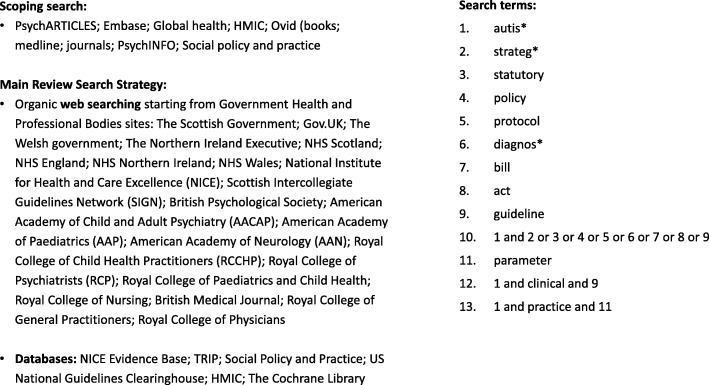
We electronically searched multiple databases (NICE Evidence Base; TRIP; Social Policy and Practice; US National Guidelines Clearinghouse; HMIC; The Cochrane Library; Embase; Global health; Ovid; PsychARTICLES; PsychINFO) and relevant web sources (government, professional and regional NHS websites) for clinical practice guidelines. We extracted details of key diagnostic elements such as assessment process and diagnostic tools. A qualitative narrative analysis was conducted to identify social factors and influences.
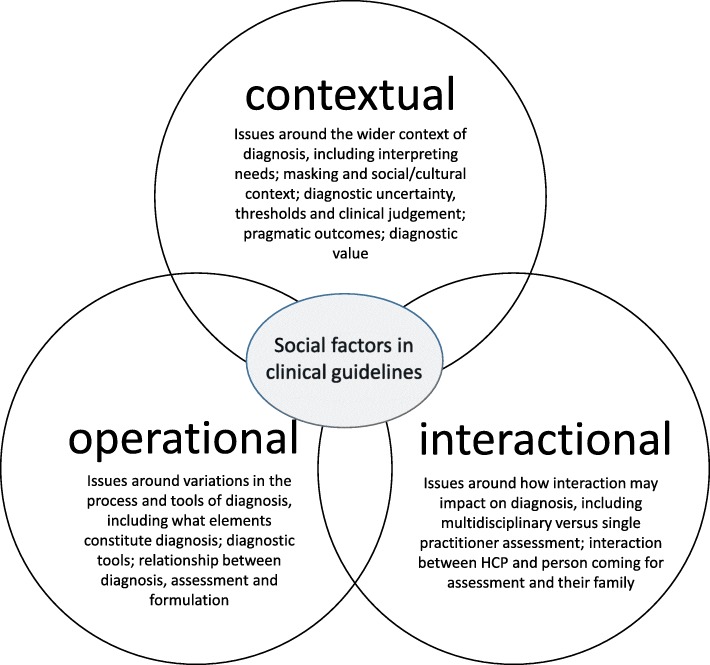
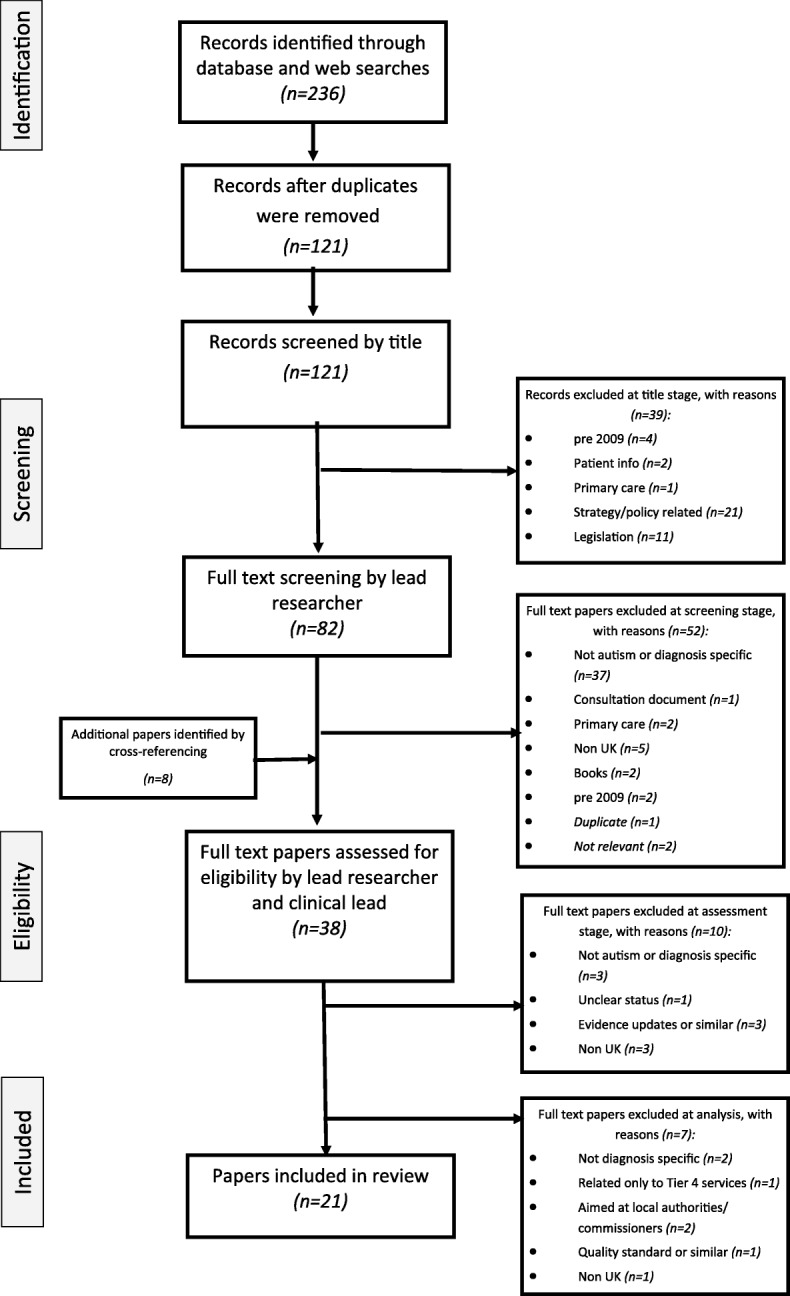
Twenty-one documents were found and analysed. Guidelines varied in recommendations for use of diagnostic tools and assessment procedures. Although multidisciplinary assessment was identified as the 'ideal' assessment, some guidelines suggested in practice one experienced healthcare professional was sufficient. Social factors in operational, interactional and contextual areas added complexity to guidelines but there were few concrete recommendations as to how these factors should be operationalized for best diagnostic outcomes.
Although individual guidelines appeared to present a coherent and systematic assessment process, they varied enough in their recommendations to make the choices available to healthcare professionals particularly complex and confusing. We recommend a more explicit acknowledgement of social factors in clinical practice guidelines with advice about how they should be managed and operationalised to enable more consistency of practice and transparency for those coming for diagnosis.
研究表明,自闭症谱系障碍的诊断程序在实践中并不一致,诊断率可能受到环境和社会驱动因素的影响。本研究的目的是探讨英国临床实践指南的内容如何影响自闭症谱系障碍的诊断;并调查指南中哪些地方考虑了社会因素和影响。
我们通过电子方式在多个数据库(NICE 证据基础;TRIP;社会政策和实践;美国国家指南清理中心;HMIC;考科蓝图书馆;Embase;全球健康;Ovid;PsychARTICLES;PsychINFO)和相关网站(政府、专业和地区 NHS 网站)搜索临床实践指南。我们提取了关键诊断要素的详细信息,如评估过程和诊断工具。采用定性叙述分析来确定社会因素和影响。
共发现并分析了 21 份文件。指南在诊断工具和评估程序的使用建议上存在差异。虽然多学科评估被认为是“理想”的评估方法,但一些指南建议在实践中,有一位经验丰富的医疗保健专业人员就足够了。在操作、互动和环境领域的社会因素增加了指南的复杂性,但很少有具体建议说明如何将这些因素付诸实践以获得最佳诊断结果。
尽管个别指南似乎提出了一个连贯和系统的评估过程,但它们在建议上存在足够的差异,使得医疗保健专业人员可选择的方案特别复杂和令人困惑。我们建议在临床实践指南中更明确地承认社会因素,并提供有关如何管理和实施这些因素的建议,以实现更一致的实践和为寻求诊断的人提供透明度。