F. Edward Hébert School of Medicine, Uniformed Services University, Bethesda, MD, USA.
Biosecurity Research Institute, Department of Diagnostic Medicine/Pathobiology, College of Veterinary Medicine, Kansas State University, Manhattan, Kansas, USA.
Emerg Microbes Infect. 2018 Jul 13;7(1):130. doi: 10.1038/s41426-018-0132-z.
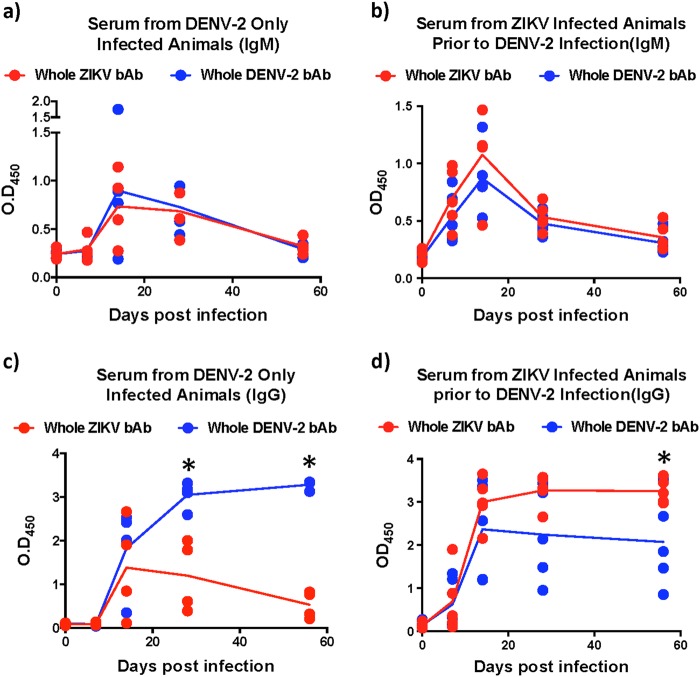
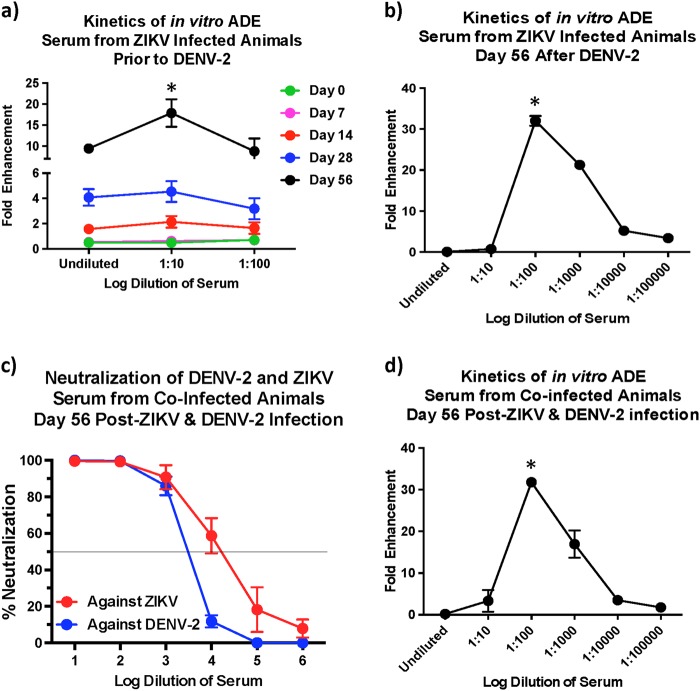
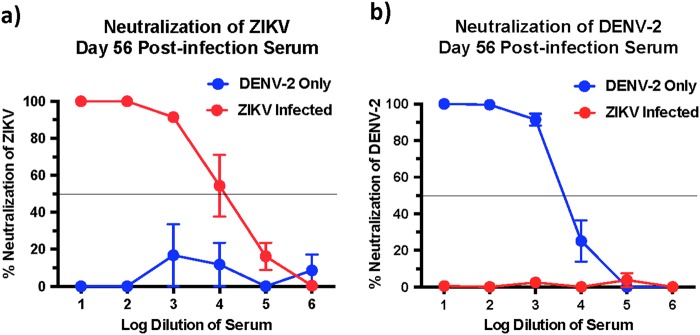
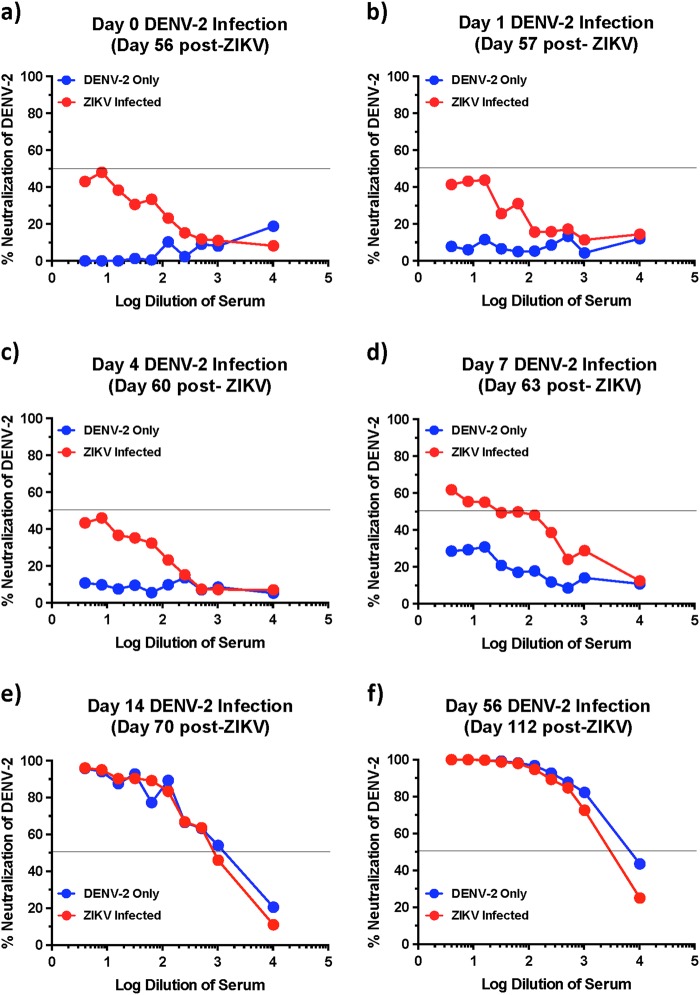
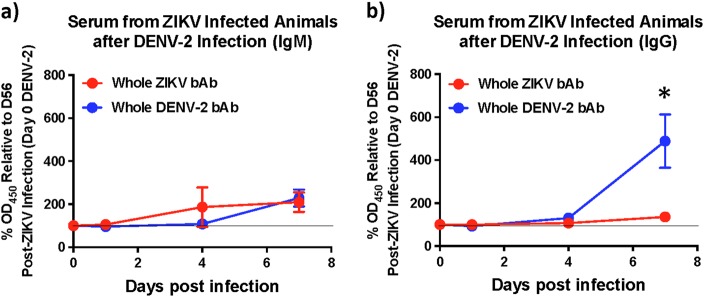
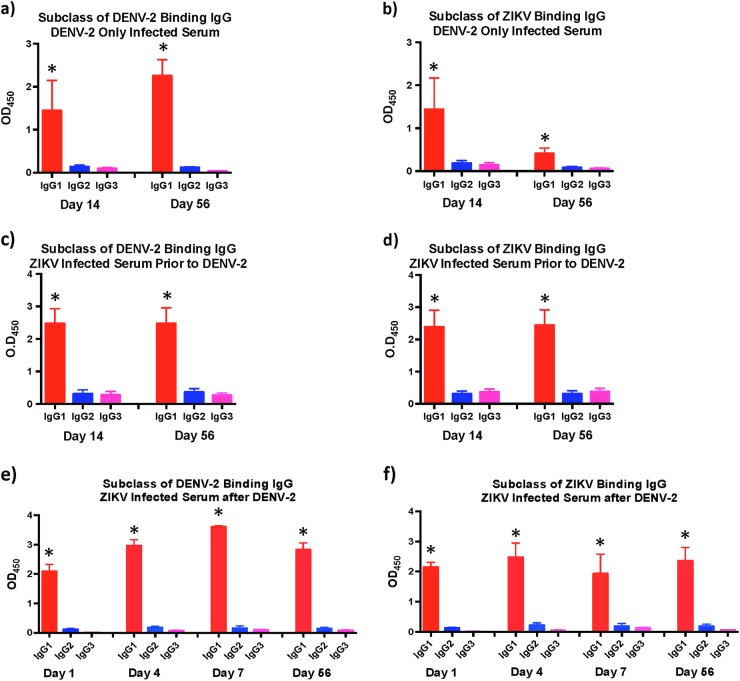
Structural similarities between Zika (ZIKV) and dengue virus (DENV) leads to the induction of cross-reactive responses. We have previously demonstrated that ZIKV exposed macaques significantly enhance DENV viremia. Here we show that this enhancement of DENV infection occurred in the presence of high levels of DENV cross-reactive IgG1 subclass of binding antibodies (bAb) with low DENV neutralizing antibody (nAb) activity (<1:10). The DENV-2 nAb titres after ZIKV infection were, however, higher than those induced in DENV-2 only infected animals suggesting that ZIKV induced low titres of cross-nAb against DENV. Surprisingly, DENV-2 infection of animals previously infected with ZIKV was not accompanied by an anamnestic increase in cross-nAb titres till about 1 week after DENV-2 infection. This delay coincided with enhanced DENV-2 viremia indicating that high levels of cross-bAb in the absence of high nAb contributes to enhancement of DENV infection. Serum collected 8 weeks after DENV-2 infection had high levels of nAb and showed delayed antibody dependent enhancement (ADE) of infection (1:100 dilution) as compared with serum that was collected from ZIKV infected animals prior to DENV-2 infection (1:10 dilution). Examination of serum from macaques that were simultaneously infected with both ZIKV and DENV-2 showed high levels of nAb and delayed ADE responses raising the possibility that the low levels of cross-nAb induced by ZIKV infection could be overcome by co-immunization against ZIKV and DENV infection. Taken together, our results provide additional insights into the nature and kinetics of cross-reactive antibody responses and identify a critical correlate that could potentially prevent enhancement of DENV infection during ZIKV convalescence.
寨卡病毒(ZIKV)和登革热病毒(DENV)之间存在结构相似性,导致交叉反应性应答的产生。我们之前已经证明,暴露于寨卡病毒的猕猴会显著增强登革热病毒血症。在这里,我们表明,在存在高水平结合抗体(bAb)的情况下,DENV 交叉反应性 IgG1 亚类的存在会增强 DENV 感染,而这些 bAb 的中和抗体(nAb)活性较低(<1:10)。然而,在感染寨卡病毒后,DENV-2 的 nAb 滴度高于仅感染 DENV-2 的动物所诱导的滴度,这表明寨卡病毒诱导了针对 DENV 的低滴度交叉 nAb。令人惊讶的是,先前感染过寨卡病毒的动物在感染 DENV-2 后,交叉 nAb 滴度并没有出现回忆性增加,直到 DENV-2 感染后约 1 周。这种延迟与 DENV-2 病毒血症的增强相吻合,表明在没有高 nAb 的情况下,高水平的交叉 bAb 有助于增强 DENV 感染。在感染 DENV-2 8 周后收集的血清具有高 nAb 水平,并显示出与在感染 DENV-2 之前从感染寨卡病毒的动物收集的血清相比,感染的抗体依赖性增强(ADE)延迟(1:100 稀释)(1:10 稀释)。对同时感染寨卡病毒和 DENV-2 的猕猴血清的检查显示,nAb 水平较高,ADE 反应延迟,这表明寨卡病毒感染诱导的低水平交叉 nAb 可能被针对寨卡病毒和 DENV 感染的联合免疫所克服。综上所述,我们的结果提供了对交叉反应性抗体应答的性质和动力学的进一步了解,并确定了一个潜在的关键指标,可能防止寨卡病毒恢复期的 DENV 感染增强。