Division of Molecular and Computational Toxicology, Amsterdam Institute for Molecules, Medicines and Systems, Vrije Universiteit Amsterdam, De Boelelaan 1108, 1081 HZ, Amsterdam, The Netherlands.
Division of Physiology, Department of Physiology and Medical Physics, Medical University of Innsbruck, 6020, Innsbruck, Austria.
Arch Toxicol. 2018 Aug;92(8):2517-2531. doi: 10.1007/s00204-018-2256-2. Epub 2018 Jul 14.
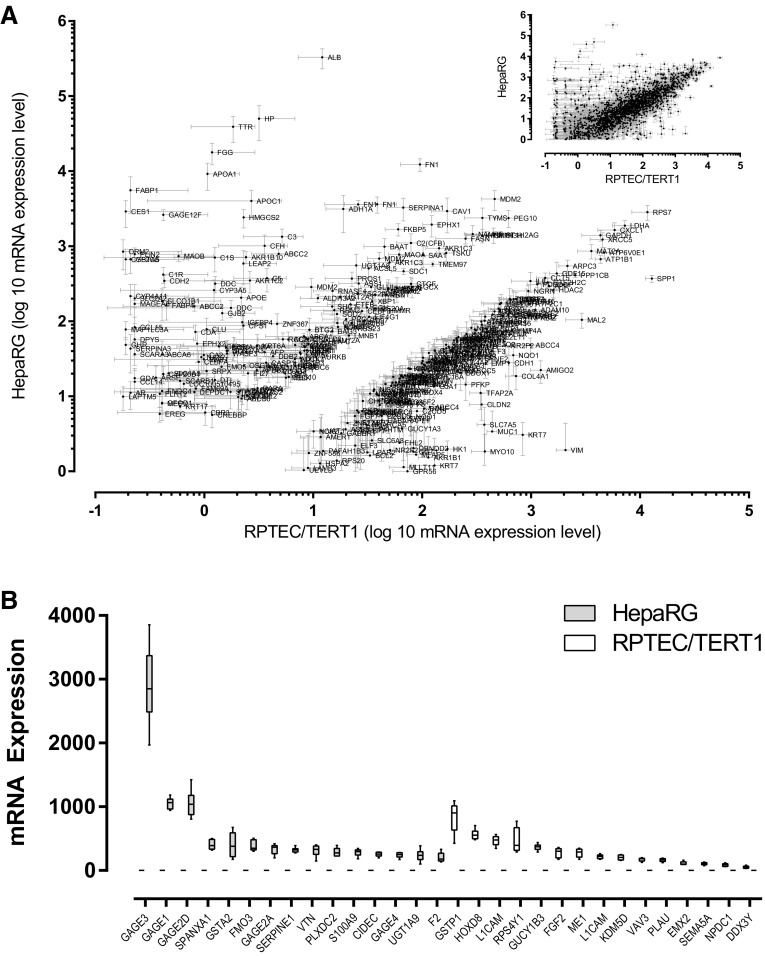
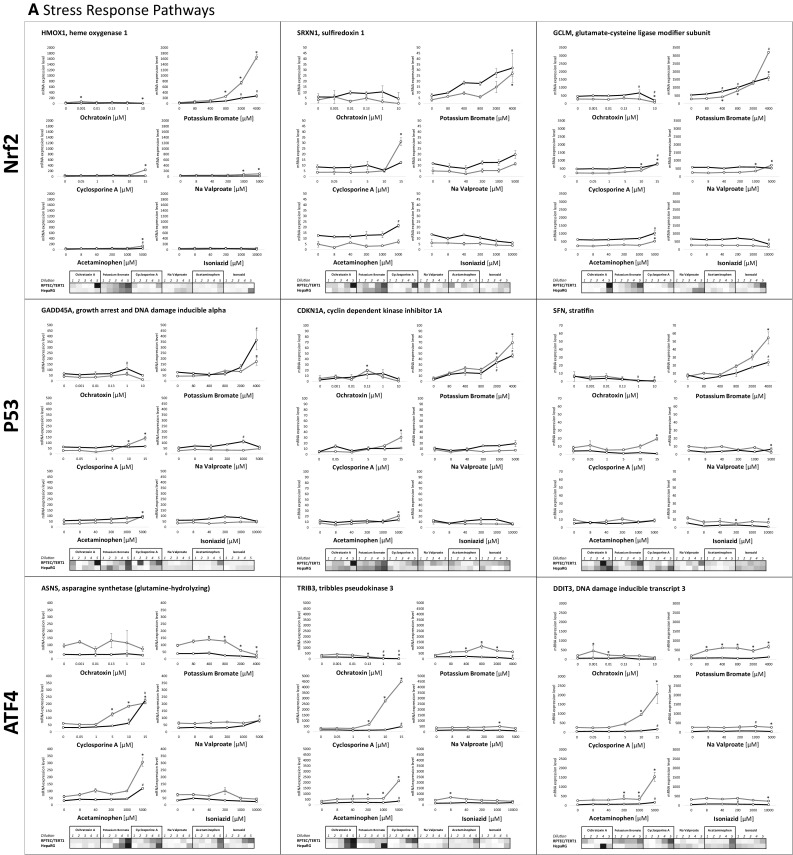
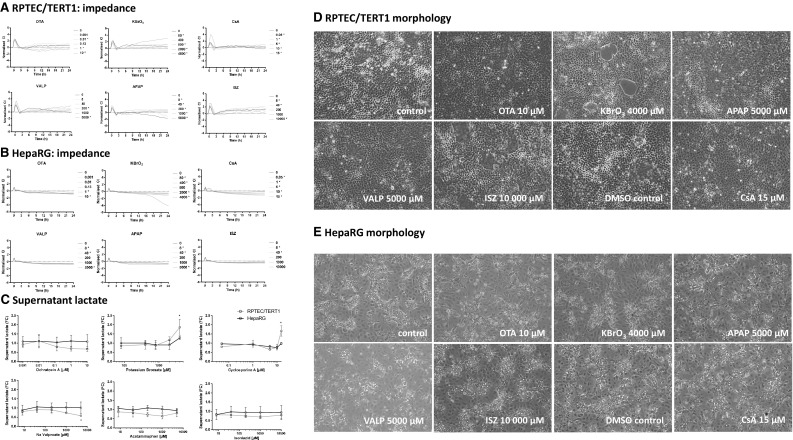
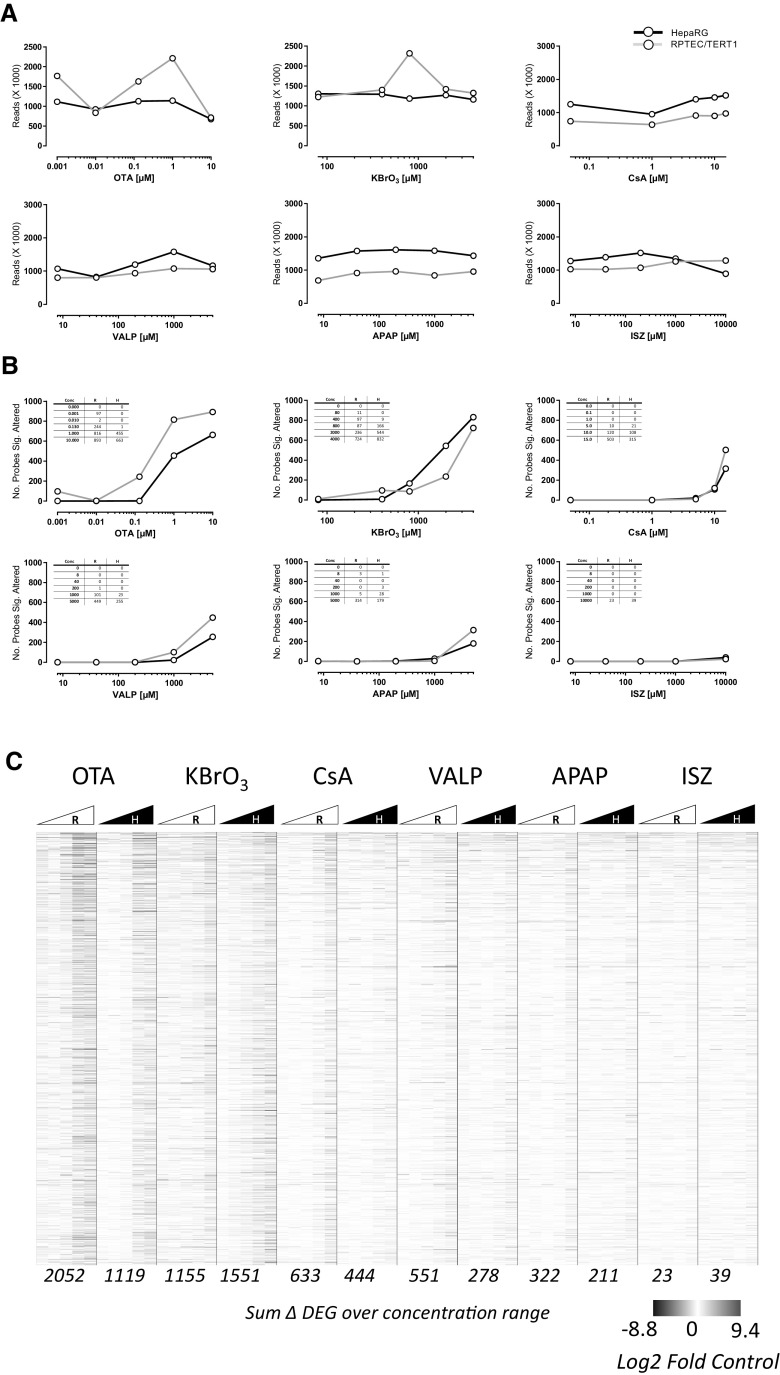
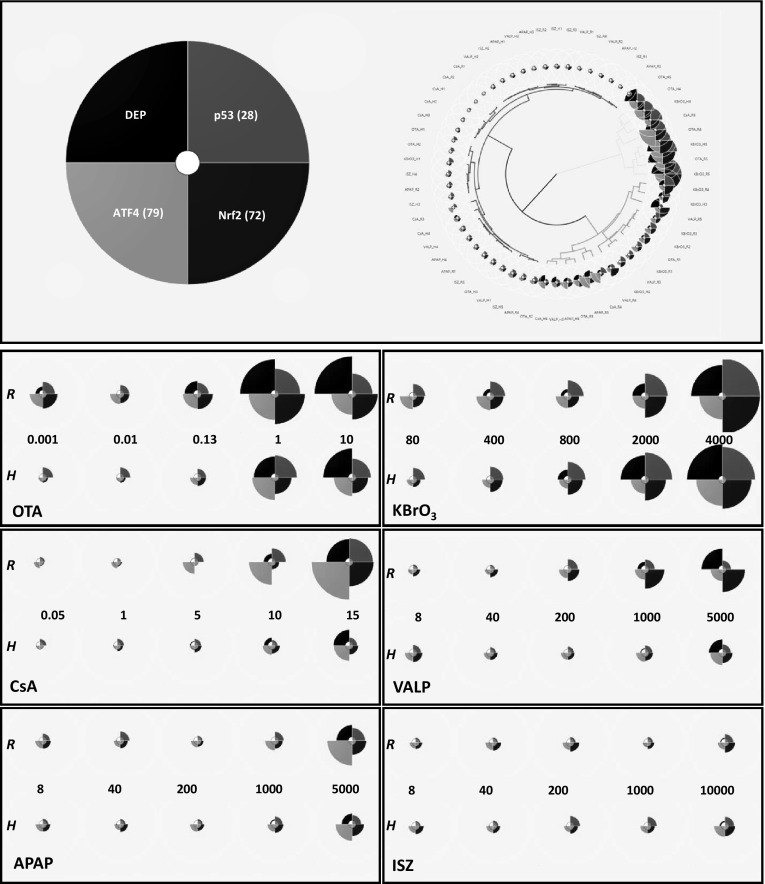
The utilisation of genome-wide transcriptomics has played a pivotal role in advancing the field of toxicology, allowing the mapping of transcriptional signatures to chemical exposures. These activities have uncovered several transcriptionally regulated pathways that can be utilised for assessing the perturbation impact of a chemical and also the identification of toxic mode of action. However, current transcriptomic platforms are not very amenable to high-throughput workflows due to, high cost, complexities in sample preparation and relatively complex bioinformatic analysis. Thus, transcriptomic investigations are usually limited in dose and time dimensions and are, therefore, not optimal for implementation in risk assessment workflows. In this study, we investigated a new cost-effective, transcriptomic assay, TempO-Seq, which alleviates the aforementioned limitations. This technique was evaluated in a 6-compound screen, utilising differentiated kidney (RPTEC/TERT1) and liver (HepaRG) cells and compared to non-transcriptomic label-free sensitive endpoints of chemical-induced disturbances, namely phase contrast morphology, xCELLigence and glycolysis. Non-proliferating cell monolayers were exposed to six sub-lethal concentrations of each compound for 24 h. The results show that utilising a 2839 gene panel, it is possible to discriminate basal tissue-specific signatures, generate dose-response relationships and to discriminate compound-specific and cell type-specific responses. This study also reiterates previous findings that chemical-induced transcriptomic alterations occur prior to cytotoxicity and that transcriptomics provides in depth mechanistic information of the effects of chemicals on cellular transcriptional responses. TempO-Seq is a robust transcriptomic platform that is well suited for in vitro toxicity experiments.
全基因组转录组学的应用在推动毒理学领域发展方面发挥了关键作用,使转录特征图谱能够与化学暴露相匹配。这些活动揭示了几个转录调控途径,可用于评估化学物质的扰动影响,以及识别毒性作用模式。然而,由于成本高、样品制备复杂以及相对复杂的生物信息学分析等原因,目前的转录组学平台不太适合高通量工作流程。因此,转录组学研究通常在剂量和时间方面受到限制,因此不适合在风险评估工作流程中实施。在本研究中,我们研究了一种新的具有成本效益的转录组学检测方法 TempO-Seq,该方法缓解了上述限制。该技术在 6 种化合物筛选中进行了评估,使用分化的肾脏(RPTEC/TERT1)和肝脏(HepaRG)细胞,并与非转录组学无标记敏感终点的化学诱导干扰进行了比较,即相差显微镜形态学、xCELLigence 和糖酵解。非增殖细胞单层在 24 小时内暴露于每种化合物的六个亚致死浓度下。结果表明,利用 2839 个基因谱,可以区分基础组织特异性特征,生成剂量反应关系,并区分化合物特异性和细胞类型特异性反应。本研究还重申了先前的发现,即化学诱导的转录组改变发生在细胞毒性之前,并且转录组学提供了关于化学物质对细胞转录反应影响的深入机制信息。TempO-Seq 是一种强大的转录组学平台,非常适合体外毒性实验。