Connolly Rod M, Smith Timothy M, Maxwell Paul S, Olds Andrew D, Macreadie Peter I, Sherman Craig D H
Australian Rivers Institute - Coast and Estuaries, School of Environment and Science, Griffith University, Southport, QLD, Australia.
Centre for Integrative Ecology, School of Life and Environmental Sciences, Deakin University, Geelong, VIC, Australia.
Front Plant Sci. 2018 Jun 29;9:894. doi: 10.3389/fpls.2018.00894. eCollection 2018.
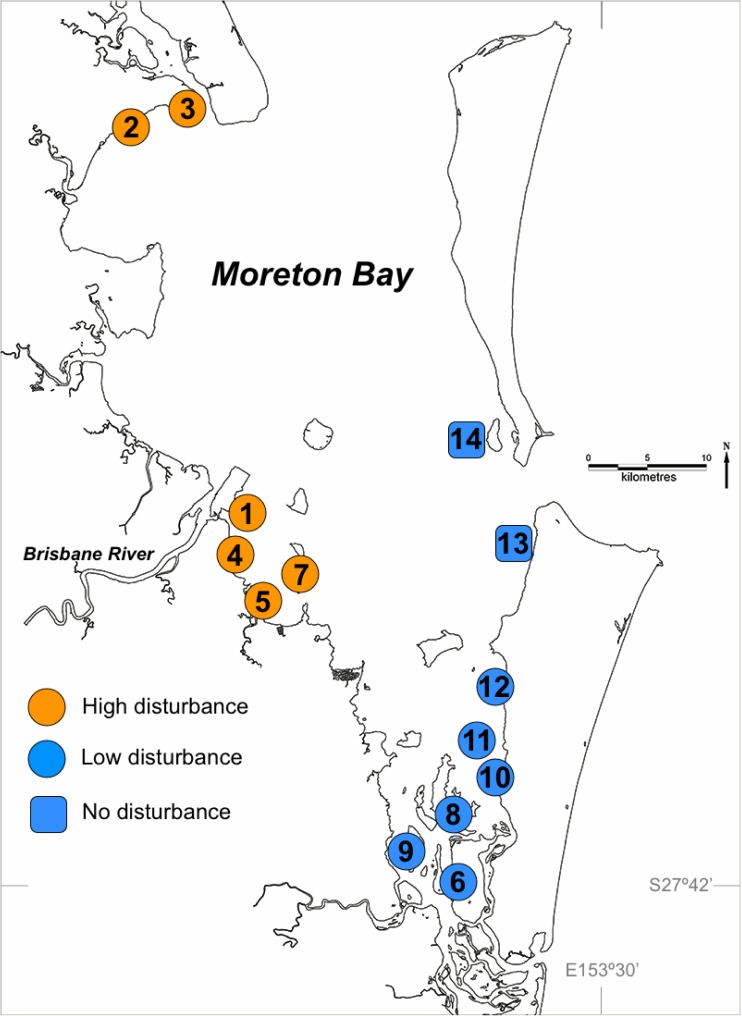
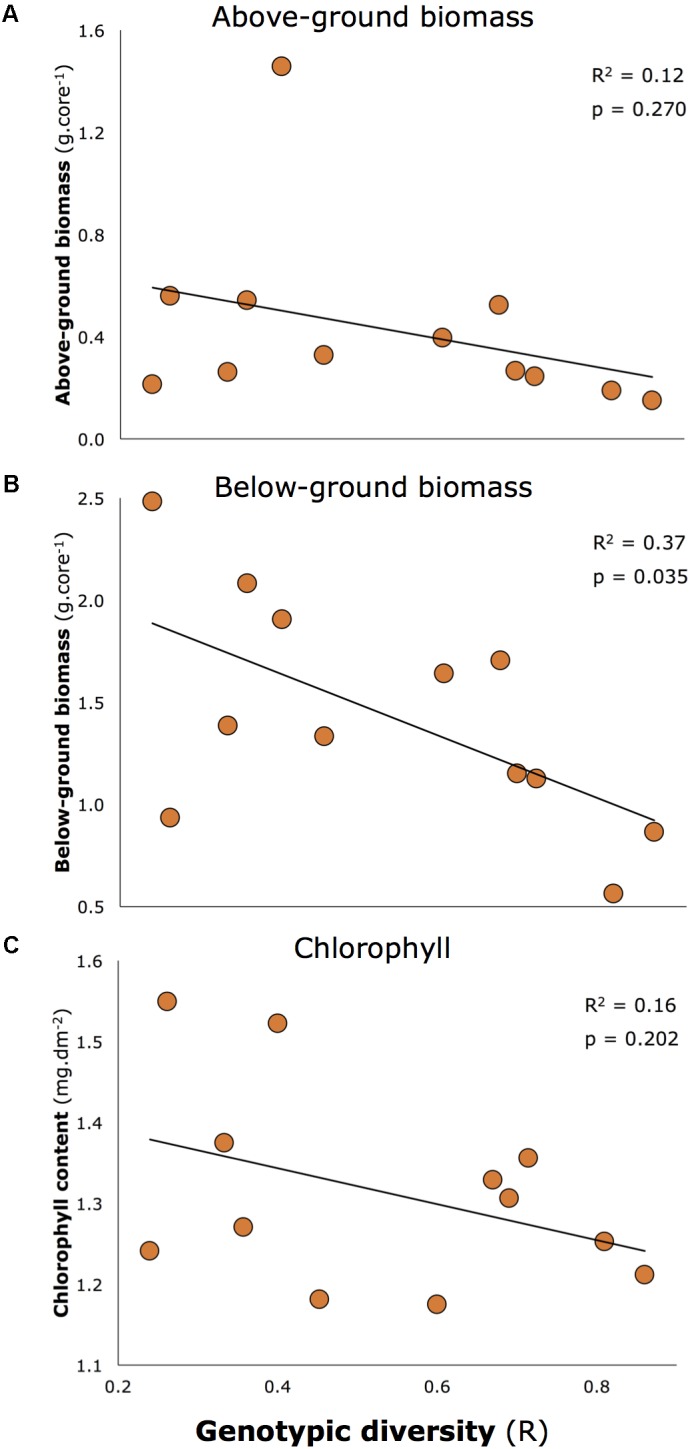
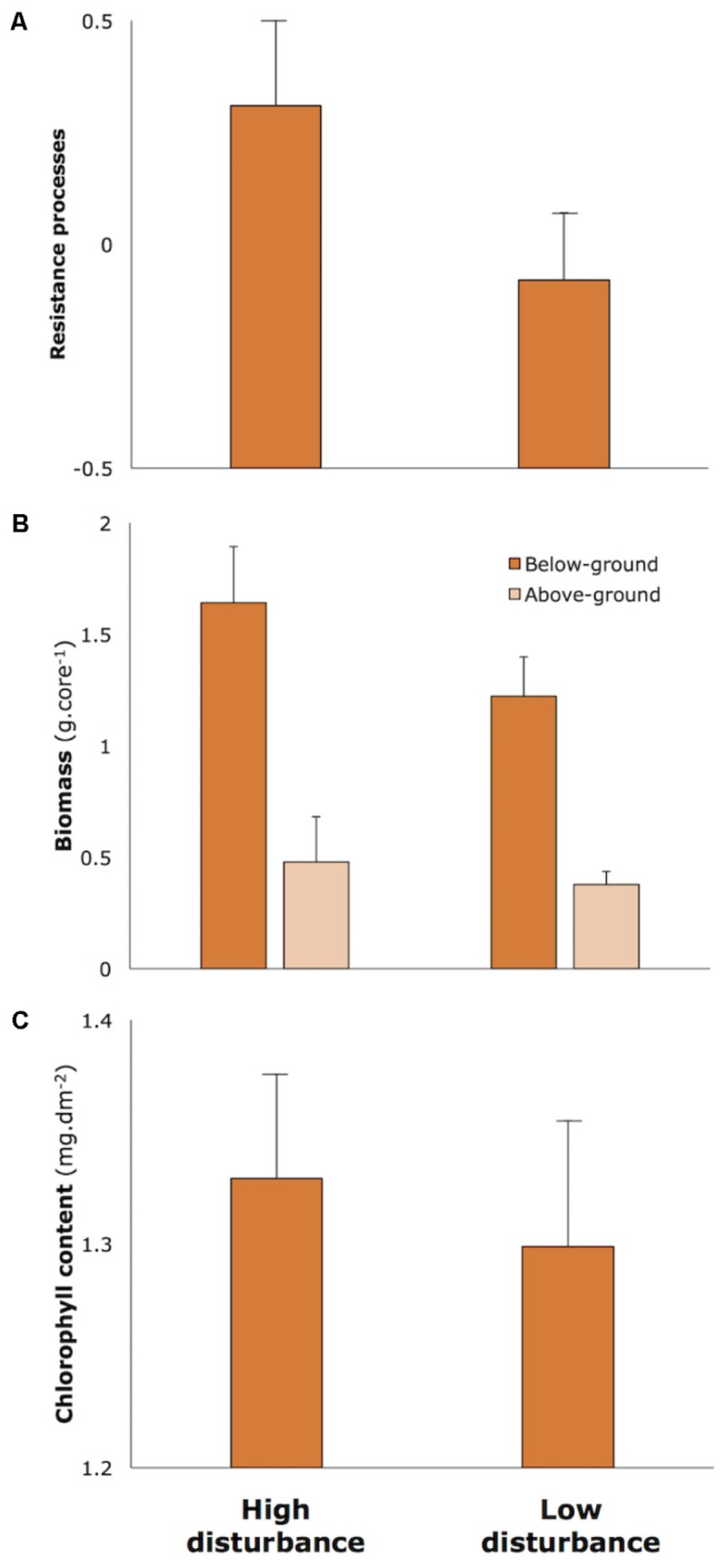
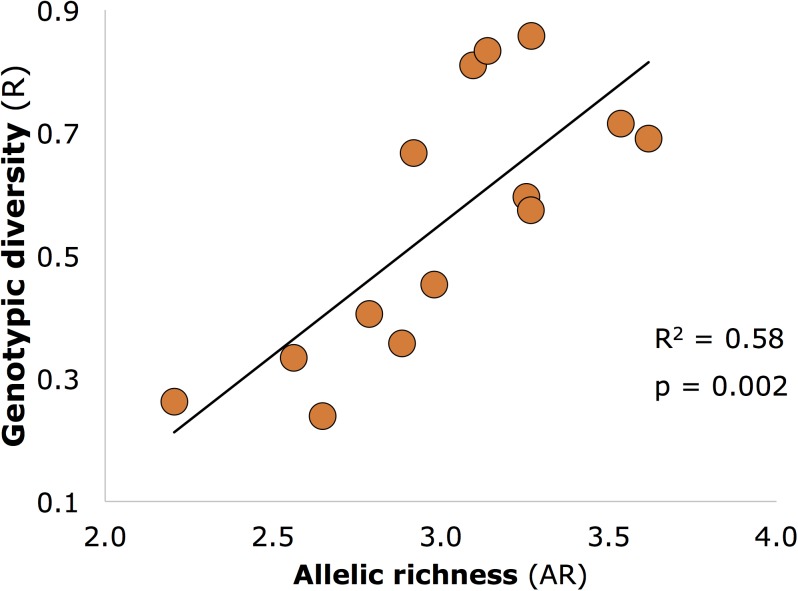
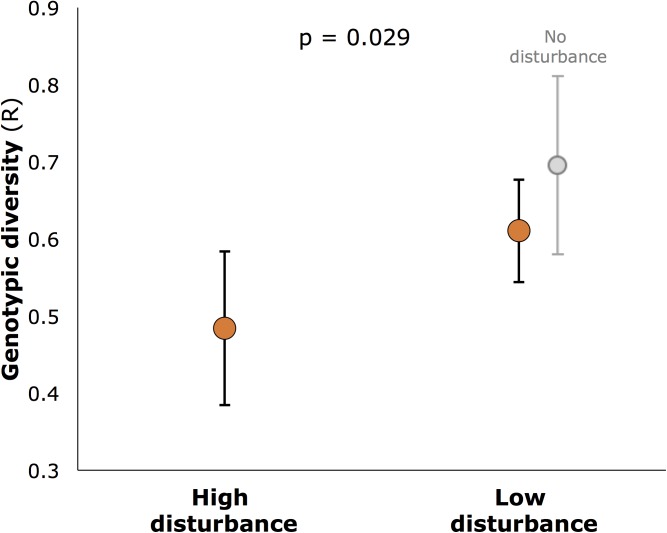
The response of seagrass systems to a severe disturbance provides an opportunity to quantify the degree of resilience in different meadows, and subsequently to test whether there is a genetic basis to resilience. We used existing data on levels of long-standing disturbance from poor water quality, and the responses of seagrass () after an extreme flood event in Moreton Bay, Queensland, Australia. Sites were grouped into high and low disturbance categories, in which seagrass showed high and low resilience, respectively, as determined by measuring rates of key feedback processes (nutrient removal, suppression of sediment resuspension, and algal grazing), and physiological and morphological traits. Theoretically, meadows with higher genotypic diversity would be expected to have greater resilience. However, because the more resilient meadows occur in areas historically exposed to high disturbance, the alternative is also possible, that selection will have resulted in a narrower, less diverse subset of genotypes than in less disturbed meadows. Levels of genotypic and genetic diversity (allelic richness) based on 11 microsatellite loci, were positively related ( = 0.58). Genotypic diversity was significantly lower at highly disturbed sites ( = 0.49) than at less disturbed sites ( = 0.61). Genotypic diversity also showed a negative trend with two morphological characteristics known to confer resilience on seagrass in Moreton Bay, leaf chlorophyll concentrations and seagrass biomass. Genetic diversity did not differ between disturbed and undisturbed sites. We postulate that the explanation for these results is historical selection for genotypes that confer protection against disturbance, reducing diversity in meadows that contemporarily show greater resilience.
海草系统对严重干扰的响应为量化不同草甸的恢复力程度提供了契机,进而可检验恢复力是否存在遗传基础。我们利用了有关长期水质不佳导致的干扰程度的现有数据,以及澳大利亚昆士兰州莫顿湾一场极端洪水事件后海草()的响应数据。根据关键反馈过程(养分去除、抑制沉积物再悬浮和藻类啃食)的速率以及生理和形态特征的测定,将研究地点分为高干扰和低干扰类别,其中海草分别表现出高恢复力和低恢复力。从理论上讲,基因型多样性较高的草甸预计具有更强的恢复力。然而,由于恢复力更强的草甸出现在历史上受干扰程度较高的地区,另一种情况也有可能,即与受干扰程度较低的草甸相比,选择导致基因型的子集更窄、多样性更低。基于11个微卫星位点的基因型和遗传多样性(等位基因丰富度)水平呈正相关( = 0.58)。高度受干扰地点的基因型多样性( = 0.49)显著低于受干扰程度较低的地点( = 0.61)。基因型多样性还与莫顿湾海草具有恢复力的两个形态特征——叶片叶绿素浓度和海草生物量呈负相关。受干扰和未受干扰地点的遗传多样性没有差异。我们推测,这些结果的解释是对赋予抗干扰能力的基因型进行了历史选择,从而降低了当代表现出更强恢复力的草甸的多样性。