Center for Health Research, Kaiser Permanente Northwest, Portland, Oregon, United States of America.
Seattle Children's Hospital and Research Institute, Trueman Katz Center for Pediatric Bioethics, Seattle, Washington, United States of America.
PLoS One. 2018 Jul 18;13(7):e0200139. doi: 10.1371/journal.pone.0200139. eCollection 2018.
Expanded carrier screening can provide risk information for numerous conditions. Understanding how individuals undergoing preconception expanded carrier screening value this information is important. The NextGen study evaluated the use of genome sequencing for expanded carrier screening and reporting secondary findings, and we measured participants' willingness to pay for this approach to understand how it is valued by women and couples planning a pregnancy.
We assessed 277 participants' willingness to pay for genome sequencing reporting carrier results for 728 gene/condition pairs and results for 121 secondary findings. We explored the association between attitudes and demographic factors and willingness to pay for expanded carrier screening using genome sequencing and conducted interviews with 58 of these participants to probe the reasoning behind their preferences.
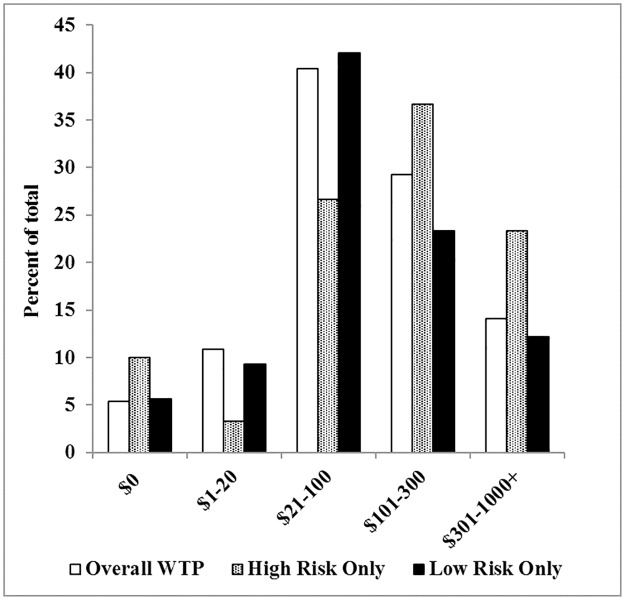
Most participants were willing to pay for expanded carrier screening using genome sequencing. Willingness to pay was associated with income level and religiosity, but not risk status for a condition in the carrier panel. Participants willing to pay nothing or a small amount cited issues around financial resources, whereas those willing to pay higher amounts were motivated by "peace of mind" from carrier results.
Women and couples planning a pregnancy value genome sequencing. The potentially high out-of-pocket cost of this service could result in healthcare disparities, since maximum amounts that participants were willing to pay were higher than a typical copay and related to income.
扩展携带者筛查可以为许多疾病提供风险信息。了解正在接受孕前扩展携带者筛查的个体如何重视这些信息非常重要。NextGen 研究评估了使用基因组测序进行扩展携带者筛查和报告次要发现的情况,我们衡量了参与者对这种方法的支付意愿,以了解女性和计划怀孕的夫妇对其的重视程度。
我们评估了 277 名参与者对使用基因组测序报告 728 个基因/疾病对携带者结果和 121 个次要发现结果的支付意愿。我们探讨了使用基因组测序进行扩展携带者筛查的态度和人口统计学因素与支付意愿之间的关联,并对其中 58 名参与者进行了访谈,以探究他们偏好背后的原因。
大多数参与者愿意为使用基因组测序进行扩展携带者筛查付费。支付意愿与收入水平和宗教信仰有关,但与携带者面板中疾病的风险状况无关。愿意支付零或少量费用的参与者提到了财务资源方面的问题,而愿意支付更高金额的参与者则是出于对携带者结果的“安心”。
计划怀孕的女性和夫妇重视基因组测序。由于参与者愿意支付的最高金额高于典型的共同支付额,并且与收入有关,因此该服务的潜在高额自费费用可能导致医疗保健的差异。