Jia Zhunan, Zhang Hui, Ong Choon Nam, Patra Abhijeet, Lu Yonghai, Lim Chwee Teck, Venkatesan Thirumalai
NUSNNI-Nanocore, National University of Singapore, 5A Engineering Drive 1, 117411, Singapore.
NUS Graduate School for Integrative Sciences and Engineering, National University of Singapore, 28 Medical Drive, 117456, Singapore.
ACS Omega. 2018 May 31;3(5):5131-5140. doi: 10.1021/acsomega.7b02035. Epub 2018 May 10.
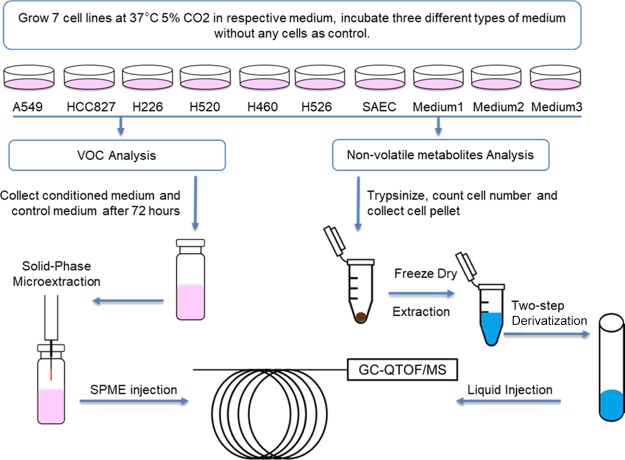
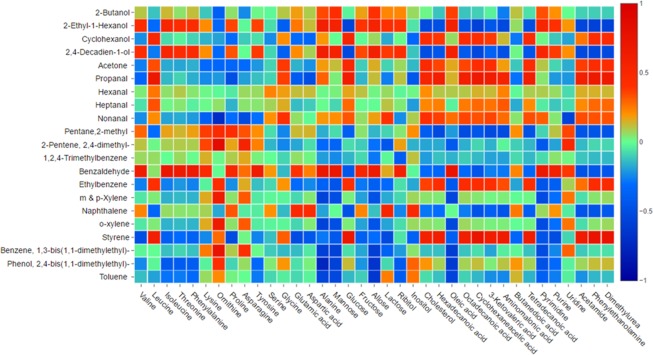
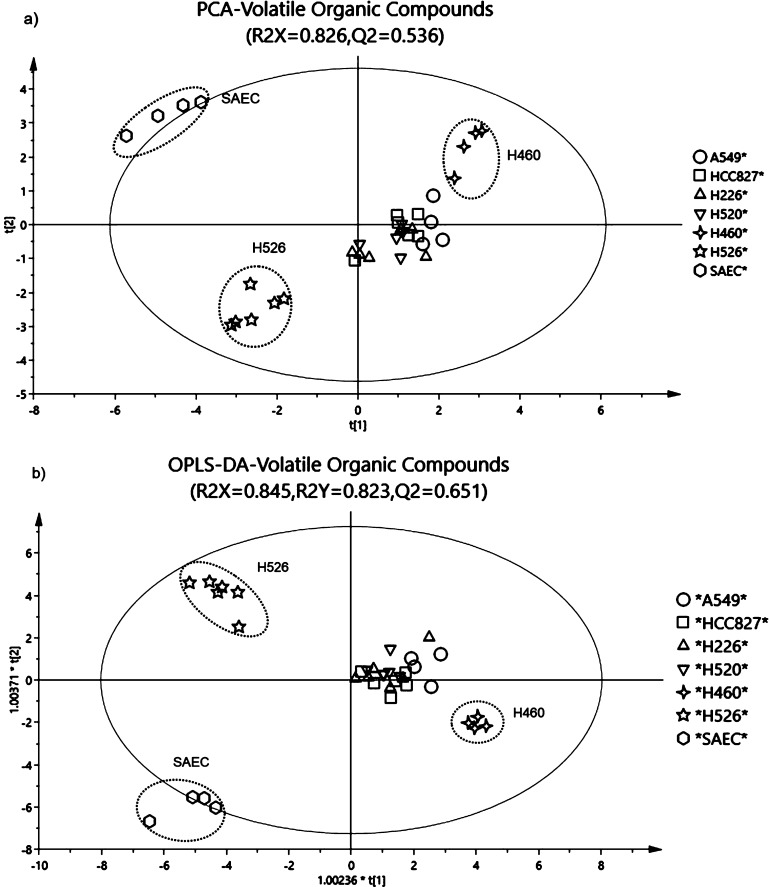
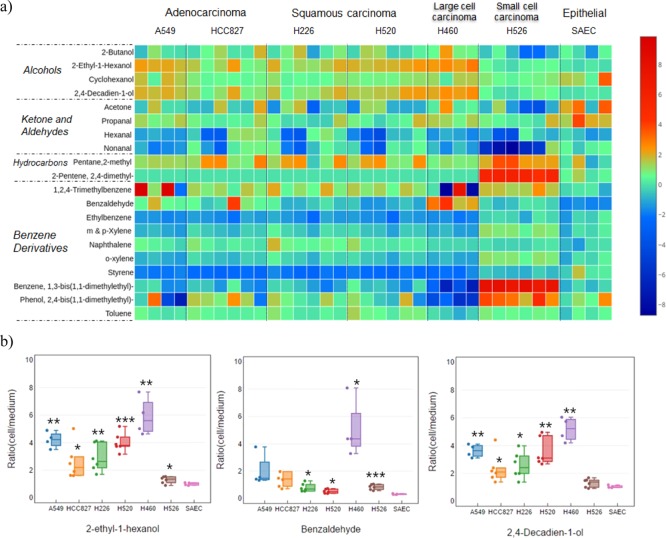
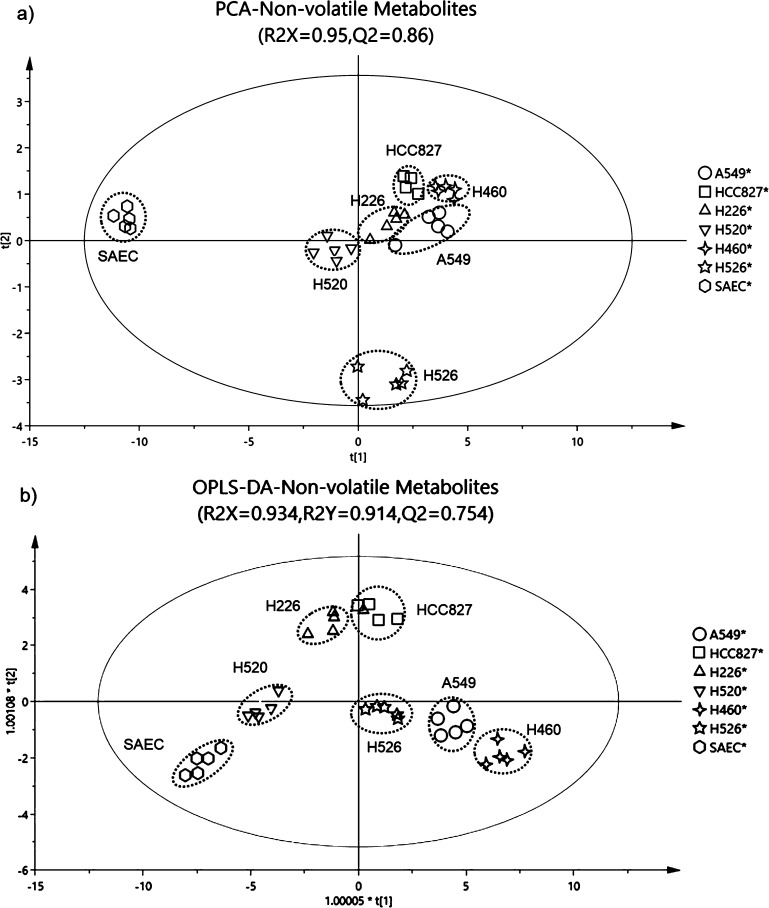
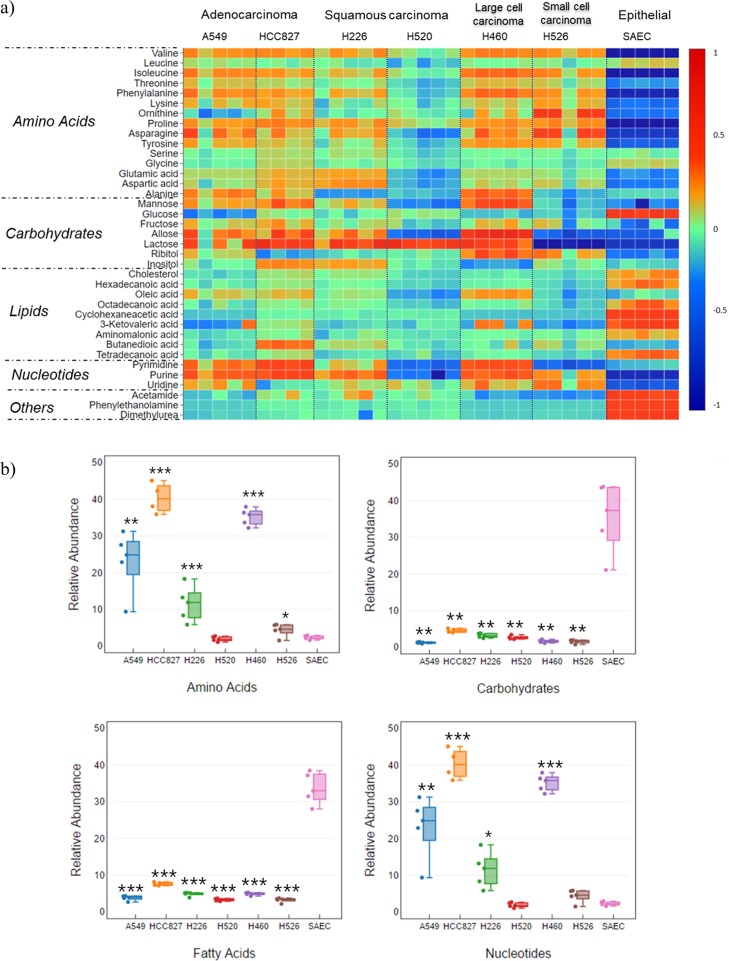
In recent years, there has been an extensive search for a non-invasive screening technique for early detection of lung cancer. Volatile organic compound (VOC) analysis in exhaled breath is one such promising technique. This approach is based on the fact that tumor growth is accompanied by unique oncogenesis, leading to detectable changes in VOC emitting profile. Here, we conducted a comprehensive profiling of VOCs and metabolites from six different lung cancer cell lines and one normal lung cell line using mass spectrometry. The concomitant VOCs and metabolite profiling allowed significant discrimination between lung cancer and normal cell, nonsmall cell lung cancer (NSCLC) and small cell lung cancer (SCLC), as well as between different subtypes of NSCLC. It was found that a combination of benzaldehyde, 2-ethylhexanol, and 2,4-decadien-1-ol could serve as potential volatile biomarkers for lung cancer. A detailed correlation between nonvolatile metabolites and VOCs can demonstrate possible biochemical pathways for VOC production by the cancer cells, thus enabling further optimization of VOCs as biomarkers. These findings could eventually lead to noninvasive early detection of lung cancer and differential diagnosis of lung cancer subtypes, thus revolutionizing lung cancer treatment.
近年来,人们一直在广泛寻找一种用于早期检测肺癌的非侵入性筛查技术。呼气中挥发性有机化合物(VOC)分析就是这样一种有前景的技术。这种方法基于肿瘤生长伴随着独特的肿瘤发生过程,从而导致呼出VOC谱发生可检测变化这一事实。在此,我们使用质谱法对六种不同肺癌细胞系和一种正常肺细胞系的VOC和代谢物进行了全面分析。同时进行的VOC和代谢物分析能够显著区分肺癌细胞与正常细胞、非小细胞肺癌(NSCLC)与小细胞肺癌(SCLC),以及NSCLC的不同亚型。研究发现,苯甲醛、2 - 乙基己醇和2,4 - 癸二烯 - 1 - 醇的组合可作为肺癌潜在的挥发性生物标志物。非挥发性代谢物与VOC之间的详细相关性可以揭示癌细胞产生VOC的可能生化途径,从而有助于进一步优化VOC作为生物标志物。这些发现最终可能实现肺癌的非侵入性早期检测以及肺癌亚型的鉴别诊断,从而彻底改变肺癌治疗方式。