Mukherjee Ayan, Chakrabarty Sankalpita, Kumari Neetu, Su Wei-Nien, Basu Suddhasatwa
Department of Chemical Engineering, Indian Institute of Technology Delhi, New Delhi 110016, India.
NanoElectrochemistry Laboratory, Graduate Institute of Applied Science and Technology, National Taiwan University of Science and Technology, Taipei 106, Taiwan.
ACS Omega. 2018 Jun 30;3(6):5946-5957. doi: 10.1021/acsomega.8b00708. Epub 2018 Jun 1.
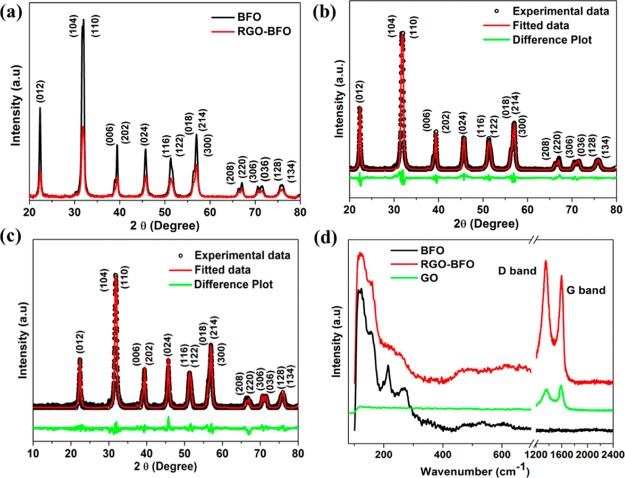
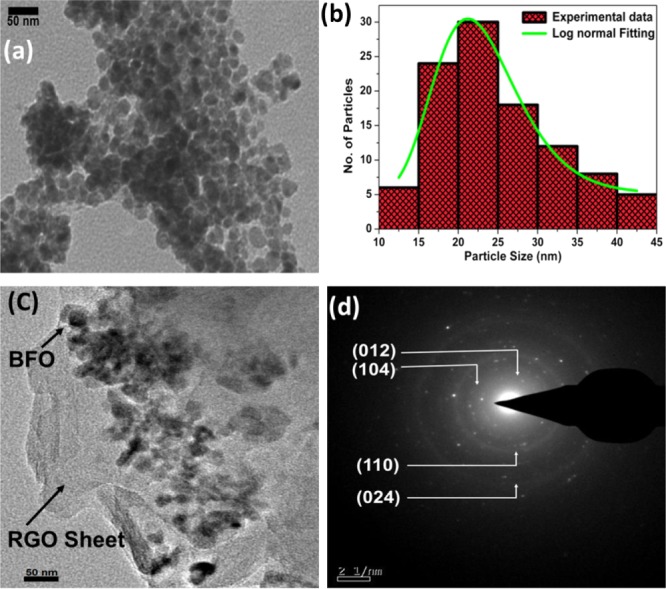
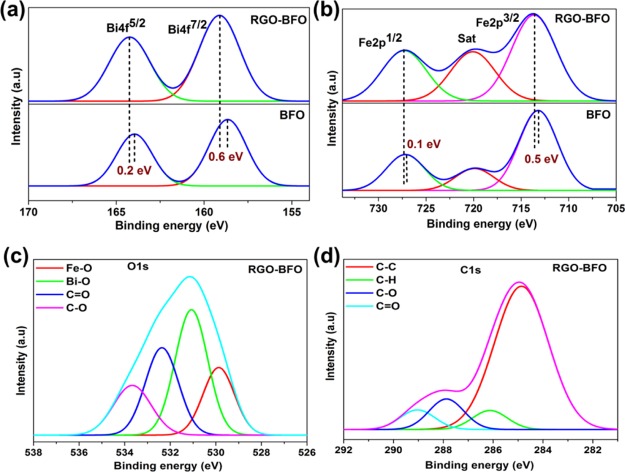
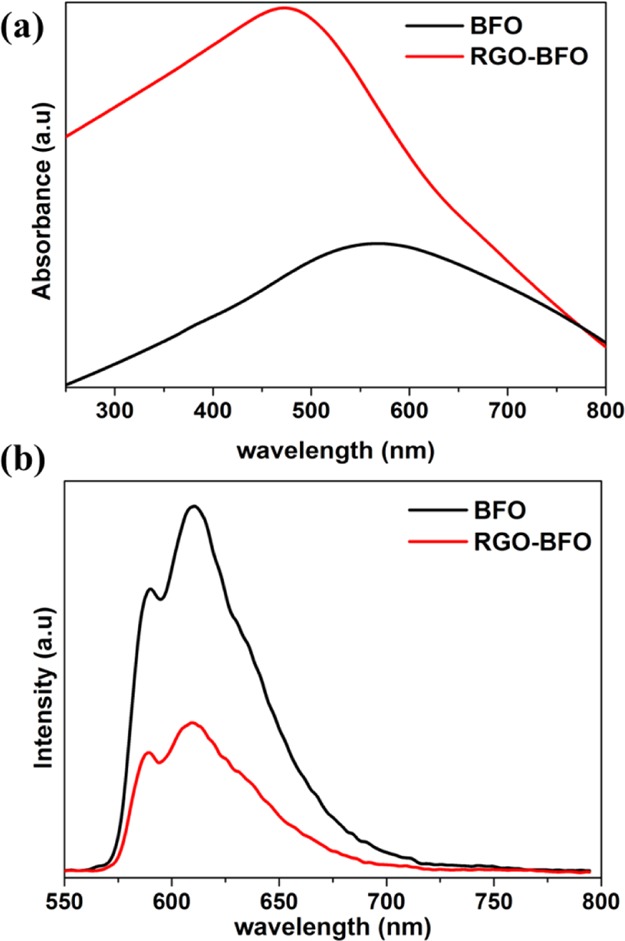
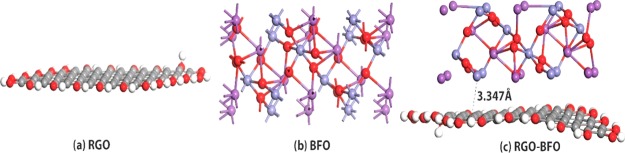
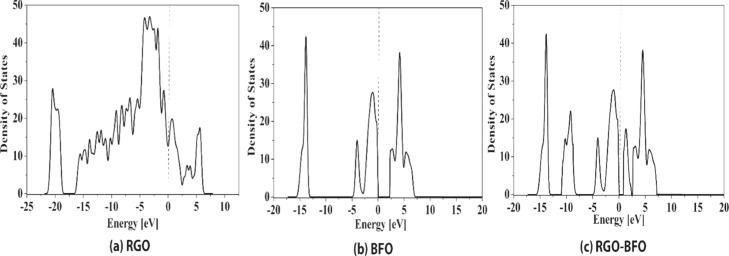
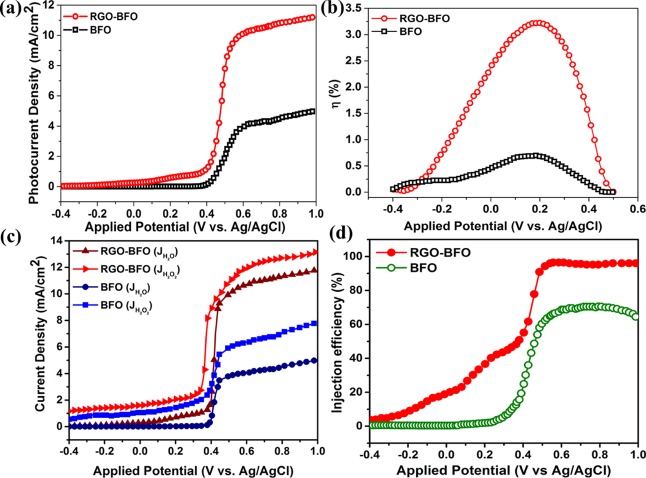
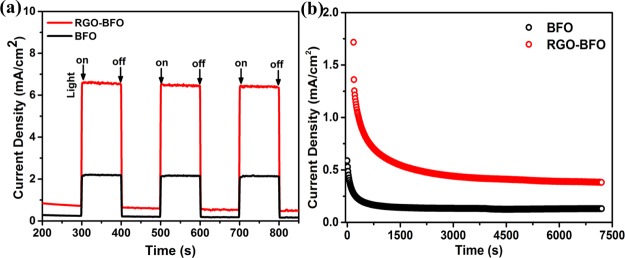
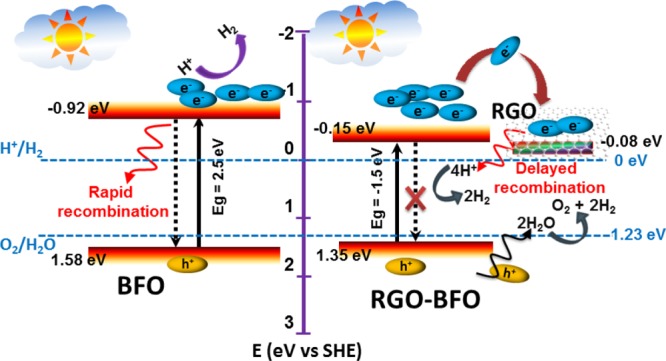
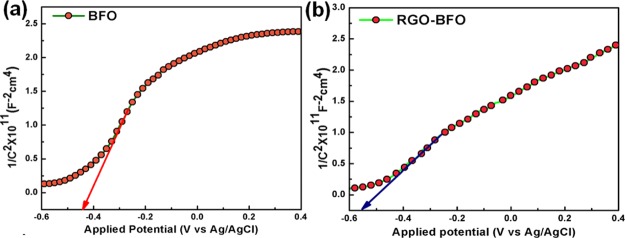
Reduced graphene oxide (RGO)-supported bismuth ferrite (BiFeO) (RGO-BFO) nanocomposite is synthesized via a two-step chemical route for photoelectrochemical (PEC) water splitting and photocatalytic dye degradation. The detailed structural analysis, chemical coupling, and morphology of BFO- and RGO-supported BFO are established through X-ray diffraction, Raman and X-ray photoelectron spectroscopy, and high-resolution transmission electron microscopy studies. The modified band structure in RGO-BFO is obtained from the UV-vis spectroscopy study and supported by density functional theory (DFT). The photocatalytic degradation of Rhodamine B dye achieved under 120 min visible-light illumination is 94% by the RGO-BFO composite with a degradation rate of 1.86 × 10 min, which is 3.8 times faster than the BFO nanoparticles. The chemical oxygen demand (COD) study further confirmed the mineralization of an organic dye in presence of the RGO-BFO catalyst. The RGO-BFO composite shows excellent PEC performance toward water splitting, with a photocurrent density of 10.2 mA·cm, a solar-to-hydrogen conversion efficiency of 3.3%, and a hole injection efficiency of 98% at 1 V (vs Ag/AgCl). The enhanced catalytic activity of RGO-BFO is explained on the basis of the modified band structure and chemical coupling between BFO and RGO, leading to the fast charge transport through the interfacial layers, hindering the recombination of the photogenerated electron-hole pair and ensuring the availability of free charge carriers to assist the catalytic activity.
通过两步化学路线合成了还原氧化石墨烯(RGO)负载的铋铁氧体(BiFeO)(RGO-BFO)纳米复合材料,用于光电化学(PEC)水分解和光催化染料降解。通过X射线衍射、拉曼光谱和X射线光电子能谱以及高分辨率透射电子显微镜研究,确定了BFO和RGO负载的BFO的详细结构分析、化学耦合和形态。RGO-BFO中改性的能带结构是通过紫外可见光谱研究获得的,并得到密度泛函理论(DFT)的支持。在120分钟可见光照射下,RGO-BFO复合材料对罗丹明B染料的光催化降解率为94%,降解速率为1.86×10⁻² min⁻¹,比BFO纳米颗粒快3.8倍。化学需氧量(COD)研究进一步证实了在RGO-BFO催化剂存在下有机染料的矿化。RGO-BFO复合材料在水分解方面表现出优异的PEC性能,光电流密度为10.2 mA·cm⁻²,太阳能到氢能的转换效率为3.3%,在1 V(vs Ag/AgCl)下空穴注入效率为98%。基于改性的能带结构以及BFO和RGO之间的化学耦合,解释了RGO-BFO催化活性增强的原因,这导致电荷通过界面层快速传输,阻碍了光生电子-空穴对的复合,并确保了自由电荷载流子的可用性以辅助催化活性。