Institute of Life Sciences, Chongqing Medical University, Chongqing 400016, China.
Asian J Androl. 2018 Nov-Dec;20(6):608-614. doi: 10.4103/aja.aja_55_18.
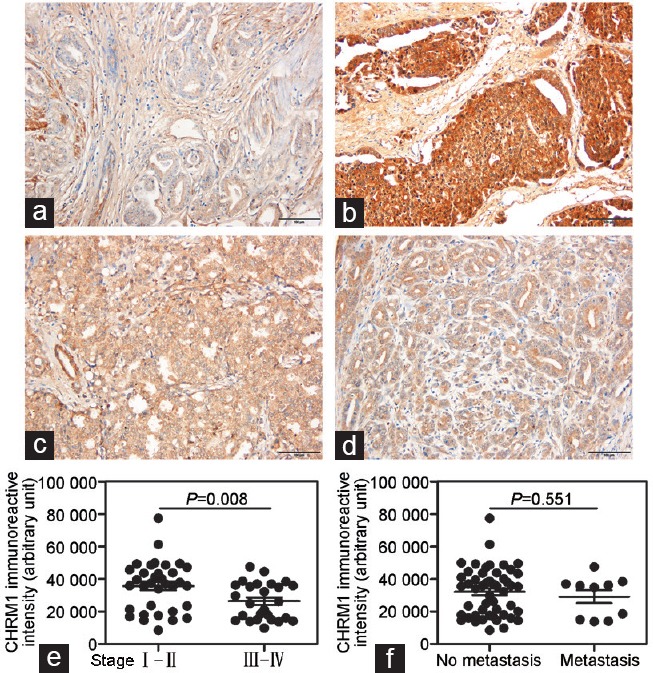
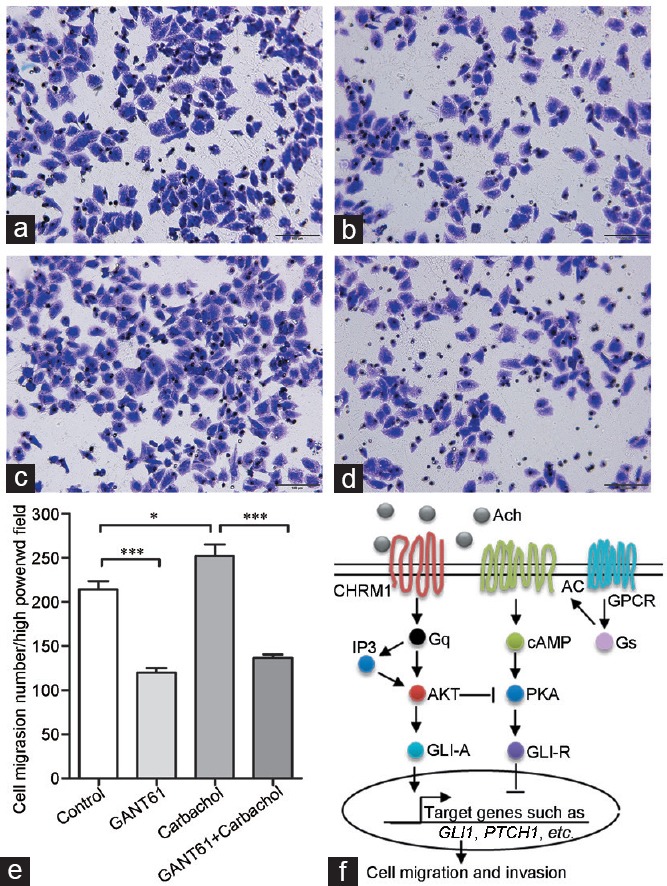
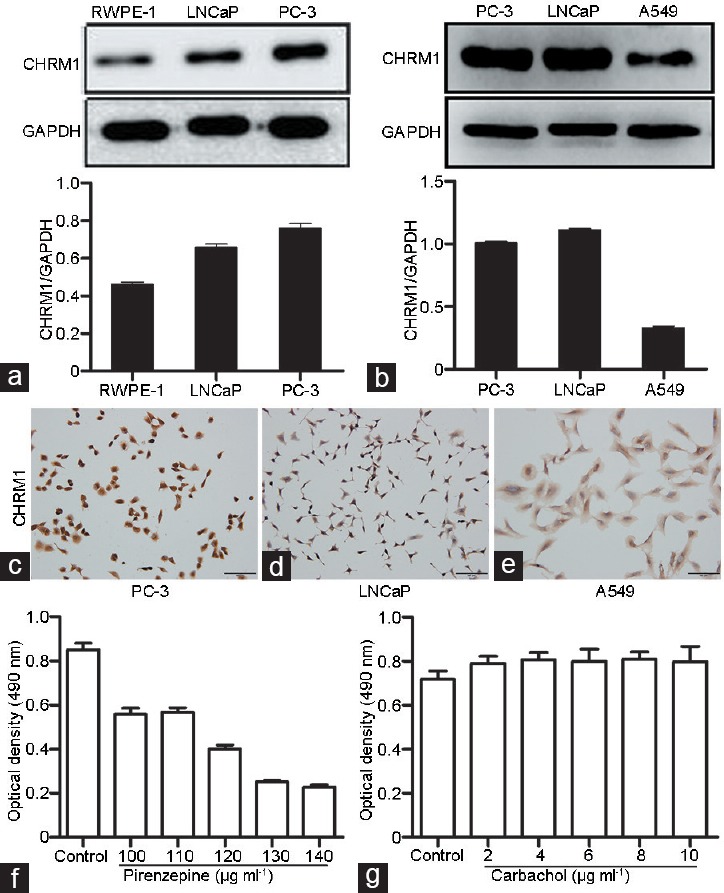
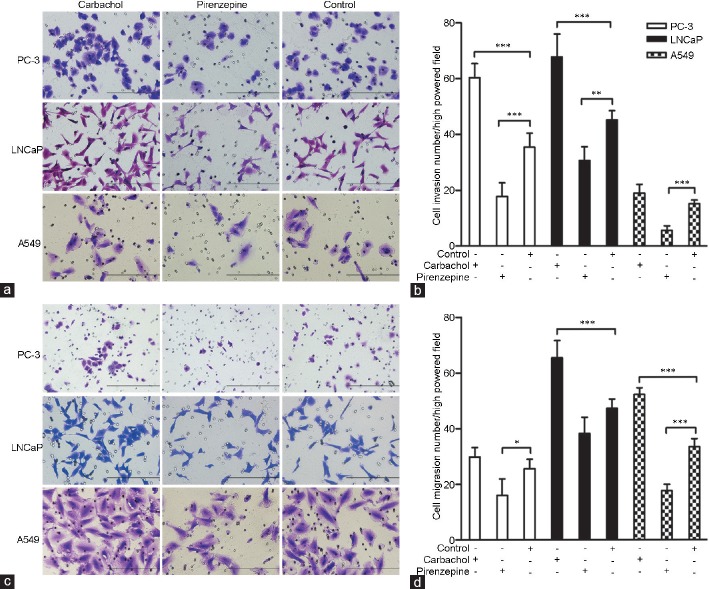
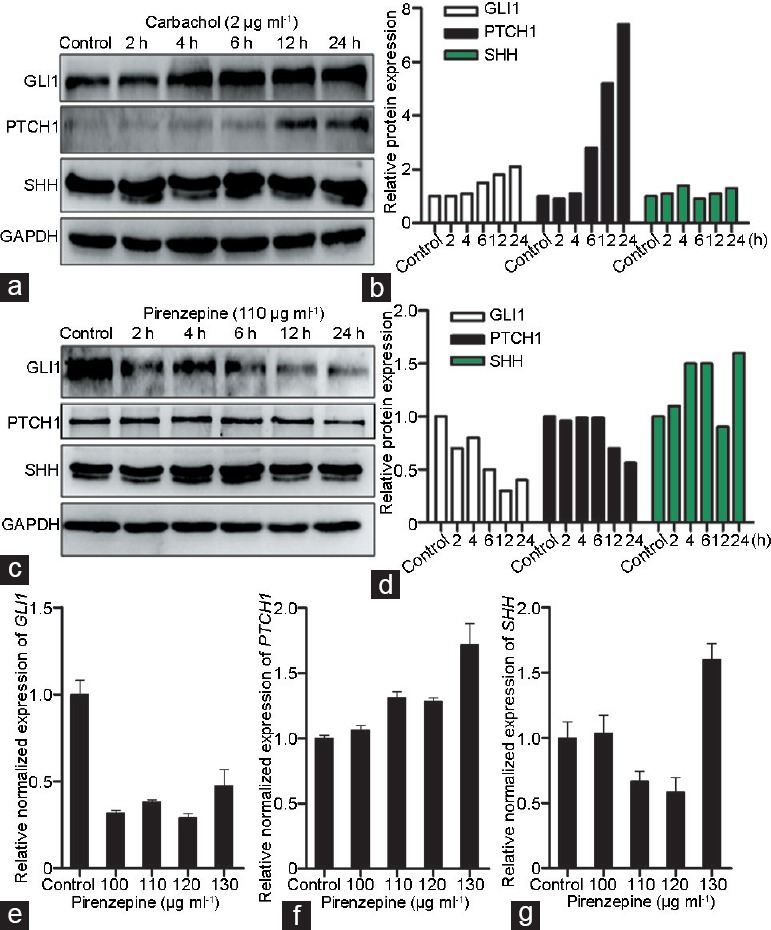
The autonomic nervous system contributes to prostate cancer proliferation and metastasis. However, the exact molecular mechanism remains unclear. In this study, muscarinic acetylcholine receptor M1 (CHRM1) expression was measured via immunohistochemical analysis in human prostate cancer tissue array slides. PC-3, LNCaP, and A549 cells were treated with pirenzepine or carbachol, and the cell migration and invasion abilities were evaluated. Western blotting and quantitative real-time PCR were performed to measure GLI family zinc finger 1 (GLI1), patched 1 (PTCH1), and sonic hedgehog (SHH) expression levels. High expression of CHRM1 was found in early-stage human prostate cancer tissues. In addition, the selective CHRM1 antagonist pirenzepine inhibited PC-3, LNCaP, and A549 cell migration and invasion, but the agonist carbachol promoted the migration and invasion of these three cell lines. Muscarinic signaling can be relayed by hedgehog signaling. These data show that CHRM1 is involved in the regulation of prostate cancer migration and invasion through the hedgehog signaling pathway.
自主神经系统促进前列腺癌的增殖和转移。然而,其确切的分子机制尚不清楚。在这项研究中,通过免疫组织化学分析检测了人前列腺癌组织阵列载玻片上的毒蕈碱乙酰胆碱受体 M1(CHRM1)的表达。用哌仑西平或卡巴胆碱处理 PC-3、LNCaP 和 A549 细胞,并评估细胞迁移和侵袭能力。通过 Western blot 和实时定量 PCR 测定 GLI 家族锌指蛋白 1(GLI1)、 patched 1(PTCH1)和 sonic hedgehog(SHH)的表达水平。发现在早期人类前列腺癌组织中 CHRM1 高表达。此外,选择性 CHRM1 拮抗剂哌仑西平抑制 PC-3、LNCaP 和 A549 细胞的迁移和侵袭,但激动剂卡巴胆碱促进这三种细胞系的迁移和侵袭。毒蕈碱信号可以通过 hedgehog 信号转导进行传递。这些数据表明,CHRM1 通过 hedgehog 信号通路参与调节前列腺癌的迁移和侵袭。