Diabetes and Metabolism Research Unit, Vall d'Hebron Research Institute, Centro de Investigación Biomédica en Red de Diabetes y Enfermedades Metabólicas Asociadas (CIBERDEM), Instituto de Salud Carlos III (ISCIII), Universitat Autònoma de Barcelona, Pg. Vall d'Hebron 119-129, 08035, Barcelona, Spain.
Centre for Experimental Medicine, School of Medicine, Dentistry and Biomedical Sciences, Queen's University, Belfast, UK.
Diabetologia. 2018 Sep;61(9):1902-1912. doi: 10.1007/s00125-018-4692-1. Epub 2018 Jul 20.
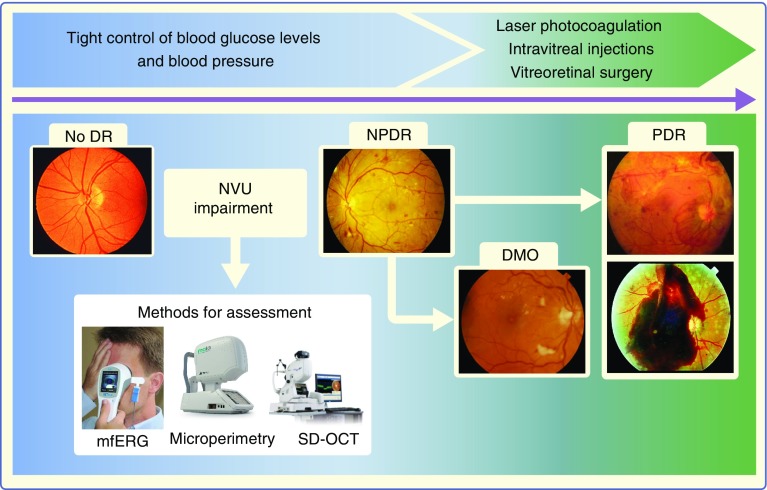
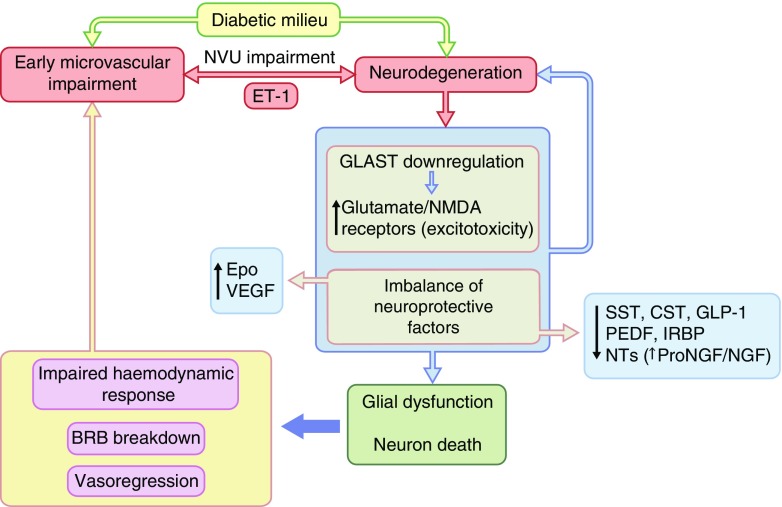
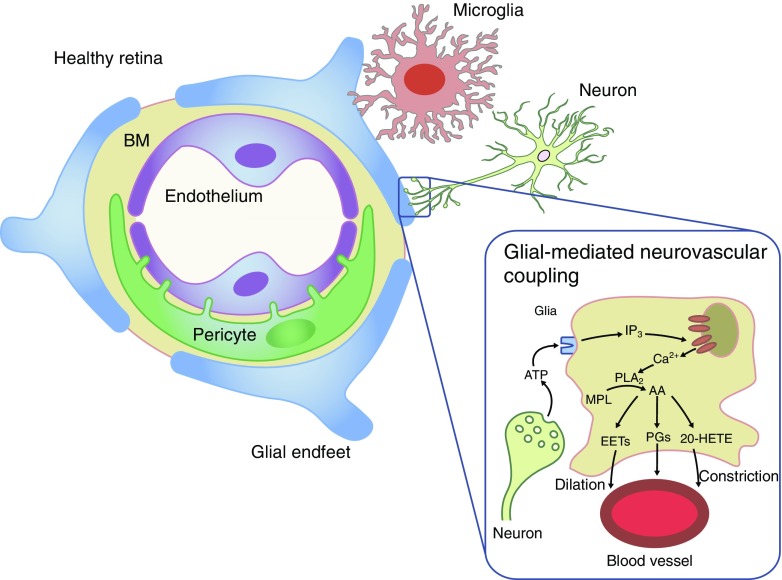
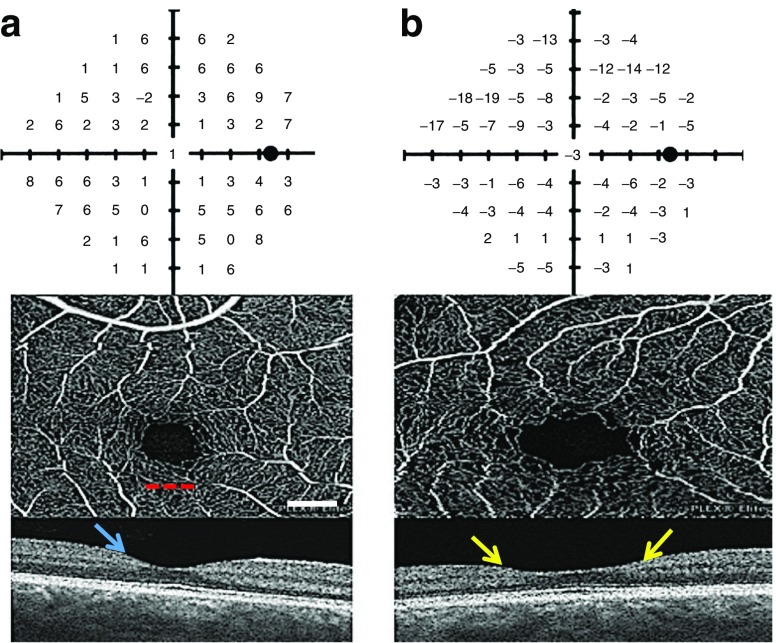
The concept of diabetic retinopathy as a microvascular disease has evolved, in that it is now considered a more complex diabetic complication in which neurodegeneration plays a significant role. In this article we provide a critical overview of the role of microvascular abnormalities and neurodegeneration in the pathogenesis of diabetic retinopathy. A special emphasis is placed on the pathophysiology of the neurovascular unit (NVU), including the contributions of microvascular and neural elements. The potential mechanisms linking retinal neurodegeneration and early microvascular impairment, and the effects of neuroprotective drugs are summarised. Additionally, we discuss how the assessment of retinal neurodegeneration could be an important index of cognitive status, thus helping to identify individuals at risk of dementia, which will impact on current procedures for diabetes management. We conclude that glial, neural and microvascular dysfunction are interdependent and essential for the development of diabetic retinopathy. Despite this intricate relationship, retinal neurodegeneration is a critical endpoint and neuroprotection, itself, can be considered a therapeutic target, independently of its potential impact on microvascular disease. In addition, interventional studies targeting pathogenic pathways that impact the NVU are needed. Findings from these studies will be crucial, not only for increasing our understanding of diabetic retinopathy, but also to help to implement a timely and efficient personalised medicine approach for treating this diabetic complication.
糖尿病性视网膜病变作为一种微血管疾病的概念已经发展,现在它被认为是一种更复杂的糖尿病并发症,其中神经退行性变起着重要作用。在本文中,我们对微血管异常和神经退行性变在糖尿病性视网膜病变发病机制中的作用进行了批判性的综述。特别强调了神经血管单元(NVU)的病理生理学,包括微血管和神经成分的贡献。总结了将视网膜神经退行性变与早期微血管损伤联系起来的潜在机制,以及神经保护药物的作用。此外,我们还讨论了评估视网膜神经退行性变如何成为认知状态的重要指标,从而有助于识别痴呆风险个体,这将影响当前的糖尿病管理程序。我们得出的结论是,神经胶质、神经和微血管功能障碍是相互依存的,是糖尿病性视网膜病变发展的必要条件。尽管存在这种复杂的关系,但视网膜神经退行性变是一个关键的终点,神经保护本身可以被视为一个治疗靶点,而不考虑其对微血管疾病的潜在影响。此外,需要针对影响 NVU 的致病途径进行干预性研究。这些研究的结果将至关重要,不仅有助于我们加深对糖尿病性视网膜病变的理解,还有助于实施及时有效的个性化医学方法来治疗这种糖尿病并发症。