Spinelli C, Montermini L, Meehan B, Brisson A R, Tan S, Choi D, Nakano I, Rak J
Department of Pediatrics, McGill University, The Research Institute of the McGill University Health Centre, Montreal, Canada.
UMR-CBMN CNRS, University of Bordeaux, IPB, France.
J Extracell Vesicles. 2018 Jul 17;7(1):1490144. doi: 10.1080/20013078.2018.1490144. eCollection 2018.
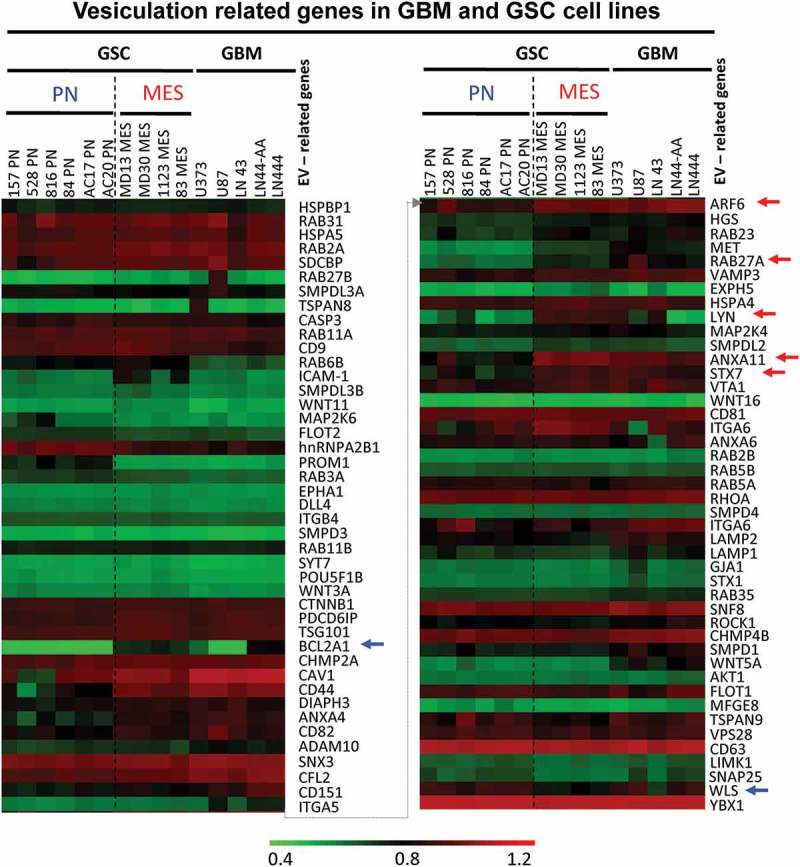
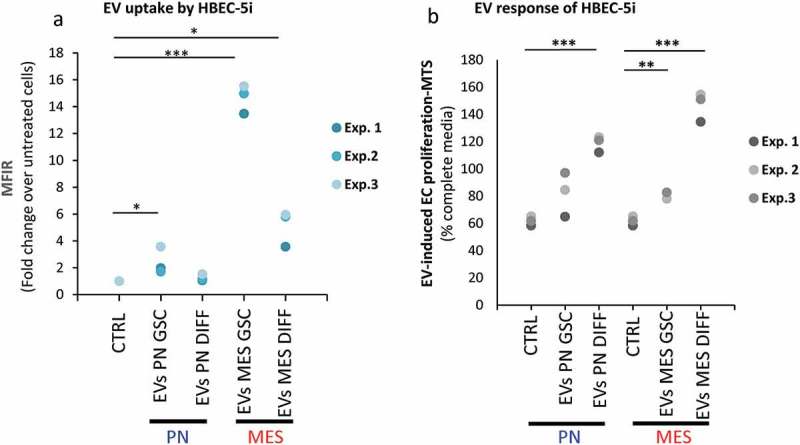
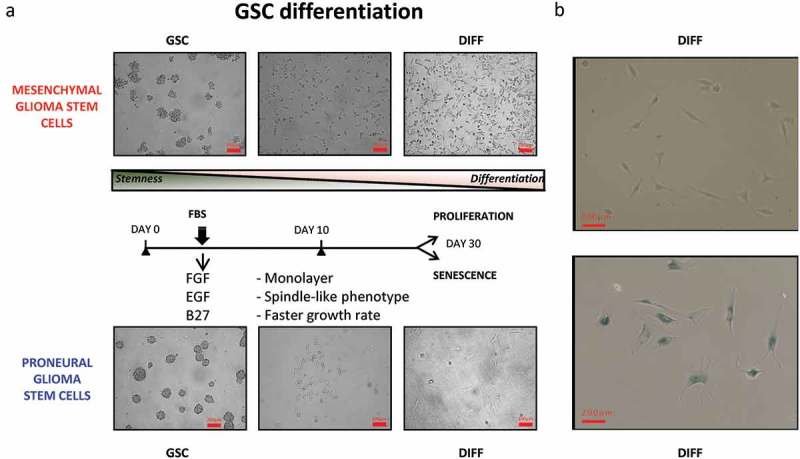
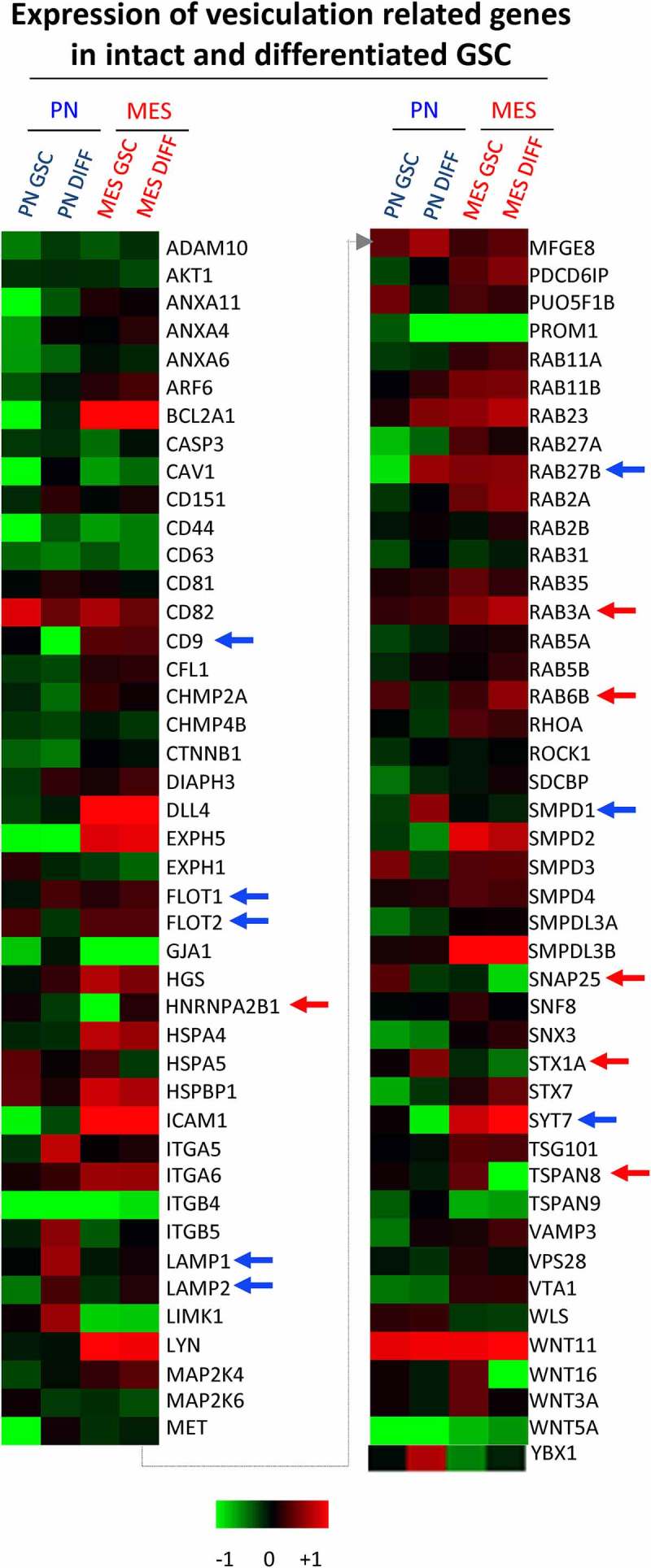
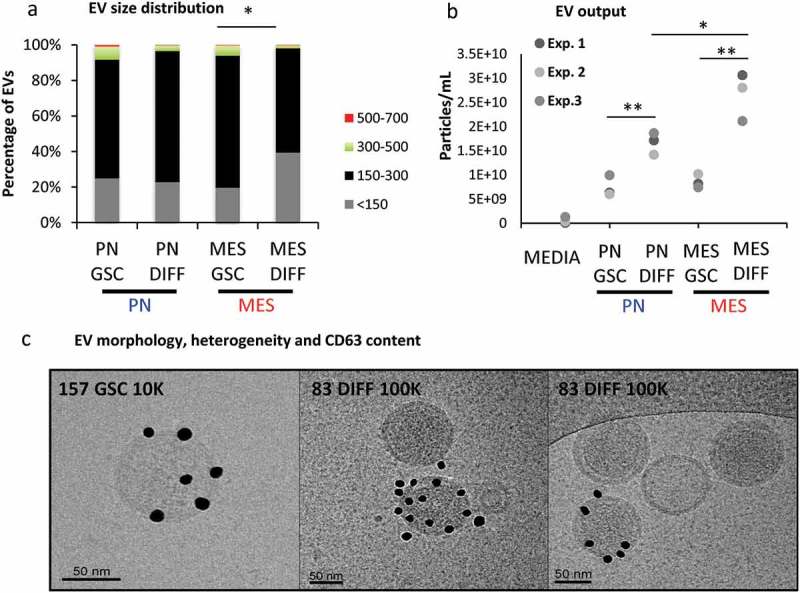
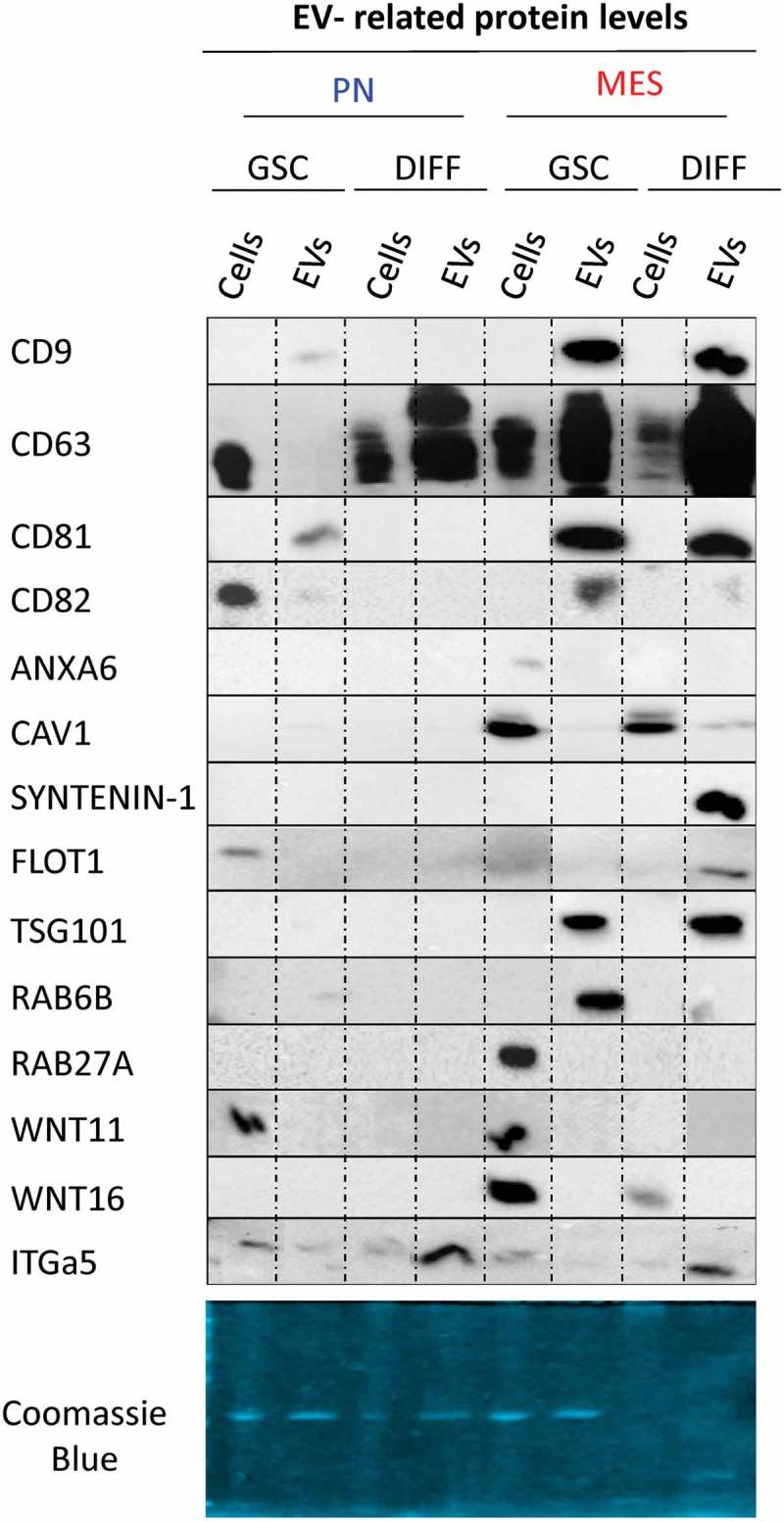
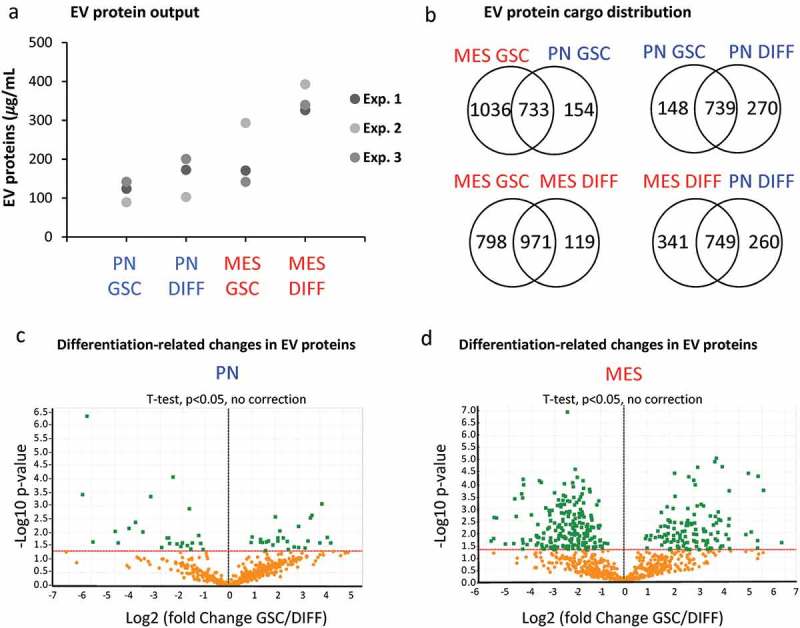
We have previously uncovered the impact of oncogenic and differentiation processes on extracellular vesicles (EVs) in cancer. This is of interested in the context of glioma stem cells (GSC) that are responsible for recurrent nature of glioblastoma multiforme (GBM), while retaining the potential to undergo differentiation and self renewal. GSCs reside in vascular niches where they interact with endothelial cells through a number of mediators including bioactive cargo of EVs. GSCs can be classified as proneural (PN) or mesenchymal (MES) subtypes on the basis of their gene expression profiles and distinct biological characteristics. In the present study we investigated how GSC diversity and differentiation programmes influence their EV-mediated communication potentials. Indeed, molecular subtypes of GBMs and GSCs differ with respect to their expression of EV-related genes (vesiculome) and GSCs with PN or MES phenotypes produce EVs with markedly different characteristics, marker profiles, proteomes and endothelial stimulating activities. For example, while EVs of PN GSC are largely devoid of exosomal markers their counterparts from MES GSCs express ample CD9, CD63 and CD81 tetraspanins. In both GSC subtypes serum-induced differentiation results in profound, but distinct changes of cellular phenotypes including the enhanced EV production, reconfiguration of their proteomes and the related functional pathways. Notably, the EV uptake was a function of both subtype and differentiation state of donor cells. Thus, while, EVs produced by differentiated MES GSCs were internalized less efficiently than those from undifferentiated cells they exhibited an increased stimulatory potential for human brain endothelial cells. Such stimulating activity was also observed for EVs derived from differentiated PN GSCs, despite their even weaker uptake by endothelial cells. These findings suggest that the role of EVs as biological mediators and biomarkers in GBM may depend on the molecular subtype and functional state of donor cancer cells, including cancer stem cells. : CryoTEM: cryo-transmission electron microscopy; DIFF: differentiated GSCs; EGF: epidermal growth factor; DUC: differential ultracentrifugation; EV: extracellular vesicle; FGF: fibroblast growth factor; GBM: glioblastoma multiforme; GFAP: glial fibrillary acidic protein; GO: gene ontology; GSC: glioma stem cells; HBEC-5i: human brain endothelial cells; MES: mesenchymal cells; MTS - [3-(4,5-dimethylthiazol-2-yl)-5-(3-carboxymethoxyphenyl)-2-(4-sulfophenyl)-2H-tetrazolium, inner salt; PMT1: proneural-to-mesenchyman transition cell line 1; PN: proneural cells; TEM: transmission electron microscopy; WB: western blotting.
我们之前已经揭示了致癌和分化过程对癌症细胞外囊泡(EVs)的影响。这在胶质母细胞瘤干细胞(GSC)的背景下很有意思,胶质母细胞瘤干细胞是多形性胶质母细胞瘤(GBM)复发的原因,同时保留了分化和自我更新的潜力。GSCs存在于血管微环境中,在那里它们通过多种介质与内皮细胞相互作用,包括EVs的生物活性货物。基于其基因表达谱和独特的生物学特征,GSCs可分为神经前体细胞(PN)或间充质细胞(MES)亚型。在本研究中,我们调查了GSC多样性和分化程序如何影响其EV介导的通讯潜力。事实上,GBM和GSCs的分子亚型在其EV相关基因(囊泡组)的表达方面存在差异,具有PN或MES表型的GSCs产生的EVs具有明显不同的特征、标志物谱、蛋白质组和内皮刺激活性。例如,虽然PN GSC的EVs在很大程度上缺乏外泌体标志物,但MES GSCs的EVs表达丰富的CD9、CD63和CD81四跨膜蛋白。在两种GSC亚型中,血清诱导的分化都会导致细胞表型发生深刻但不同的变化,包括EV产生增加、蛋白质组重新配置以及相关功能途径。值得注意的是,EV摄取是供体细胞亚型和分化状态的函数。因此,虽然分化的MES GSCs产生的EVs比未分化细胞产生的EVs内化效率更低,但它们对人脑血管内皮细胞的刺激潜力增加。对于来自分化的PN GSCs的EVs也观察到了这种刺激活性,尽管它们被内皮细胞摄取的能力更弱。这些发现表明,EVs作为GBM中的生物介质和生物标志物的作用可能取决于供体癌细胞,包括癌症干细胞的分子亚型和功能状态。:冷冻透射电子显微镜;DIFF:分化的GSCs;表皮生长因子;差速超速离心;EV:细胞外囊泡;成纤维细胞生长因子;GBM:多形性胶质母细胞瘤;胶质纤维酸性蛋白;基因本体论;GSC:胶质母细胞瘤干细胞;人脑血管内皮细胞;MES:间充质细胞;MTS - [3 - (4,5 - 二甲基噻唑 - 2 - 基) - 5 - (3 - 羧甲氧基苯基) - 2 - (4 - 磺基苯基) - 2H - 四唑,内盐;PMT1:神经前体细胞向间充质细胞转变细胞系1;PN:神经前体细胞;透射电子显微镜;蛋白质免疫印迹