Prasad Anoop, Donovan Richard, Ramachandran Manoj, Dawson-Bowling Sebastian, Millington Steven, Bhumbra Rej, Achan Pramod, Hanna Sammy A
Trauma and Orthopaedic Surgery Department, Royal London Hospital, UK.
EFORT Open Rev. 2018 Jun 6;3(6):358-362. doi: 10.1302/2058-5241.3.170028. eCollection 2018 Jun.
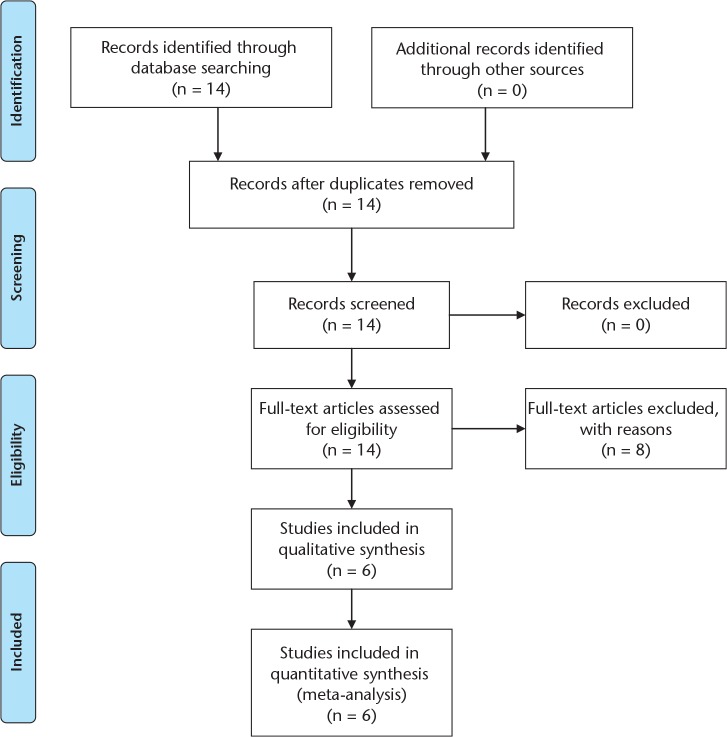
Total knee arthroplasty (TKA) in patients affected by poliomyelitis is technically challenging owing to abnormal anatomical features including articular and metaphyseal angular deformities, external rotation of the tibia, excessive valgus alignment, bone loss, narrowness of the femoral and tibial canals, impaired quadriceps strength, flexion contractures, genu recurvatum and ligamentous laxity. Little information is available regarding the results and complications of TKA in this challenging group of patients.We carried out a systematic review of the literature to determine the functional outcome, complications and revision rates of TKA in patients with poliomyelitis-affected knees. Six studies including 82 knees met the inclusion criteria and were reviewed. The mean patient age was 63 years (45 to 85) and follow-up was 5.5 years (0.5 to 13).All studies reported significant improvement in knee function following TKA. There were six failures requiring revision surgery in 82 cases (7%) occurring at a mean of 6.2 years (0.4 to 12). The reasons for revision surgery were aseptic loosening (17%, n=1), infection (33%, n=2), periprosthetic fracture (17%, n=1) and instability (33%, n=2). Thirty-six knees had a degree of recurvatum pre-operatively (44%), which was in the range of 5° to 30°. Ten of these knees (28%) developed recurrent recurvatum post-operatively.The findings support the use of TKA in patients with poliomyelitis-affected knees. The post-operative functional outcome is similar to other patients; however, the revision rate is higher. Quadriceps muscle power appears to be an important prognostic factor for functional outcome and the use of constrained implant designs is recommended in the presence of less than antigravity quadriceps strength. Cite this article: 2018;3:358-362. DOI: 10.1302/2058-5241.3.170028.
由于存在异常解剖特征,包括关节和干骺端角畸形、胫骨外旋、外翻畸形过度、骨质流失、股骨髓腔和胫骨髓腔狭窄、股四头肌力量受损、屈曲挛缩、膝反屈和韧带松弛,脊髓灰质炎患者的全膝关节置换术(TKA)在技术上具有挑战性。关于这一具有挑战性的患者群体中TKA的结果和并发症,目前可用信息很少。我们对文献进行了系统回顾,以确定脊髓灰质炎累及膝关节患者TKA的功能结果、并发症和翻修率。六项研究共82例膝关节符合纳入标准并接受了回顾。患者平均年龄为63岁(45至85岁),随访时间为5.5年(0.5至13年)。所有研究均报告TKA术后膝关节功能有显著改善。82例中有6例(7%)失败需要翻修手术,平均发生时间为6.2年(0.4至12年)。翻修手术的原因包括无菌性松动(17%,n=1)、感染(33%,n=2)、假体周围骨折(17%,n=1)和不稳定(33%,n=2)。36例膝关节术前存在一定程度的膝反屈(44%),范围为5°至30°。其中10例(28%)术后出现复发性膝反屈。这些发现支持在脊髓灰质炎累及膝关节的患者中使用TKA。术后功能结果与其他患者相似;然而,翻修率更高。股四头肌力量似乎是功能结果的一个重要预后因素,在股四头肌力量小于抗重力时,建议使用限制性植入物设计。引用本文:2018;3:358 - 362。DOI:10.1302/2058 - 5241.3.170028。