Shahbazi Mahboobeh, Cathey Henrietta, Danilova Natalia, Mackinnon Ian D R
Institute for Future Environments and Science and Engineering Faculty, Queensland University of Technology (QUT), Brisbane QLD 4001, Australia.
Materials (Basel). 2018 Jul 22;11(7):1259. doi: 10.3390/ma11071259.
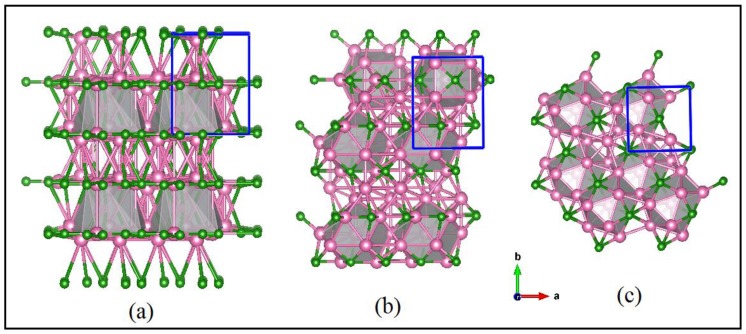
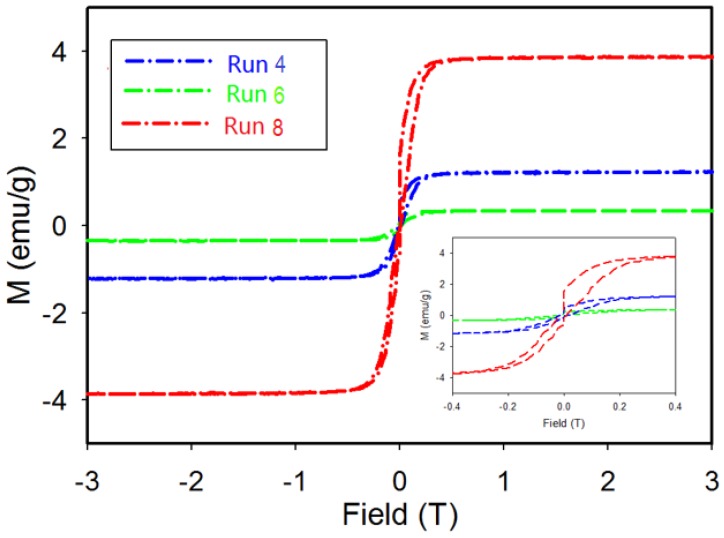
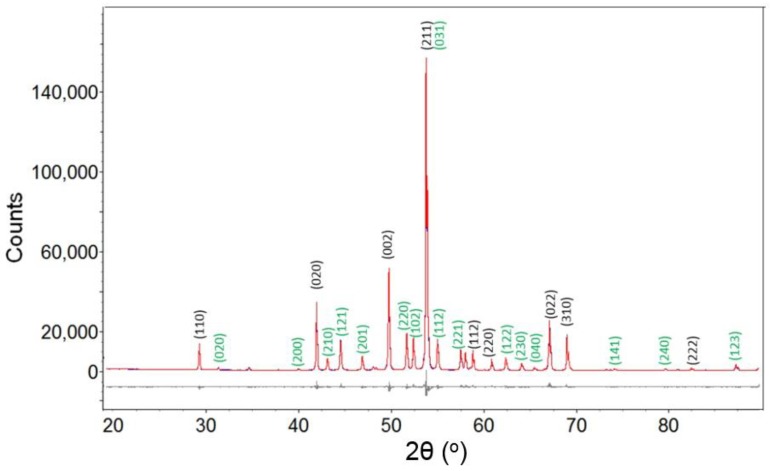
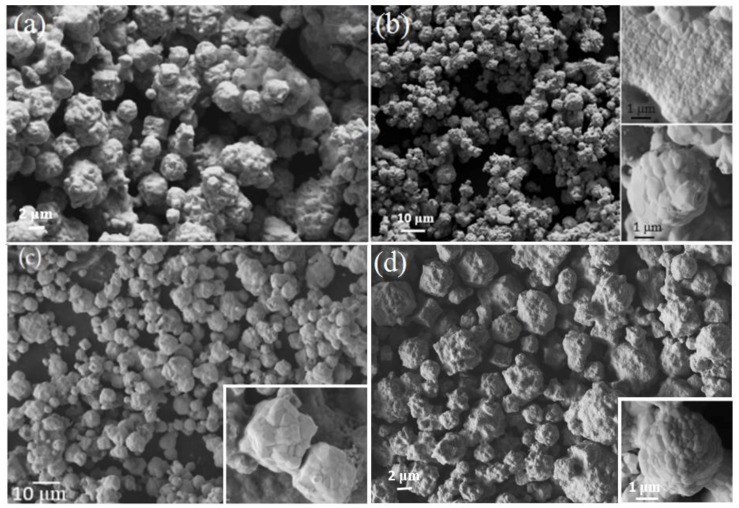
Crystalline Ni₂B, Ni₃B, and Ni₄B₃ are synthesized by a single-step method using autogenous pressure from the reaction of NaBH₄ and Ni precursors. The effect of reaction temperature, pressure, time, and starting materials on the composition of synthesized products, particle morphologies, and magnetic properties is demonstrated. High yields of Ni₂B (>98%) are achieved at 2.3⁻3.4 MPa and ~670 °C over five hours. Crystalline Ni₃B or Ni₄B₃ form in conjunction with Ni₂B at higher temperature or higher autogenous pressure in proportions influenced by the ratios of initial reactants. For the same starting ratios of reactants, a longer reaction time or higher pressure shifts equilibria to lower yields of Ni₂B. Using this approach, yields of ~88% Ni₄B₃ (single phase orthorhombic) and ~72% Ni₃B are obtained for conditions 1.9 MPa < P < 4.9 MPa and 670 °C < T < 725 °C. Gas-solid reaction is the dominant transformation mechanism that results in formation of Ni₂B at lower temperatures than conventional solid-state methods.
通过使用硼氢化钠与镍前驱体反应产生的自生压力,采用单步方法合成了晶体Ni₂B、Ni₃B和Ni₄B₃。证明了反应温度、压力、时间和起始原料对合成产物的组成、颗粒形态和磁性的影响。在2.3⁻3.4 MPa和约670 °C下反应五小时,可实现高产率的Ni₂B(>98%)。在较高温度或较高自生压力下,晶体Ni₃B或Ni₄B₃与Ni₂B一起形成,其比例受初始反应物比例的影响。对于相同的反应物起始比例,较长的反应时间或较高的压力会使平衡向Ni₂B产率降低的方向移动。采用这种方法,在1.9 MPa < P < 4.9 MPa和670 °C < T < 725 °C的条件下,可获得约88%的Ni₄B₃(单相正交晶系)和约72%的Ni₃B。气固反应是主要的转变机制,与传统固态方法相比,该机制在较低温度下导致Ni₂B的形成。