Department of Information Technology, Ghent University/imec, Technologiepark-Zwijnaarde 15, 9052 Ghent, Belgium.
Sensors (Basel). 2018 Jul 25;18(8):2409. doi: 10.3390/s18082409.
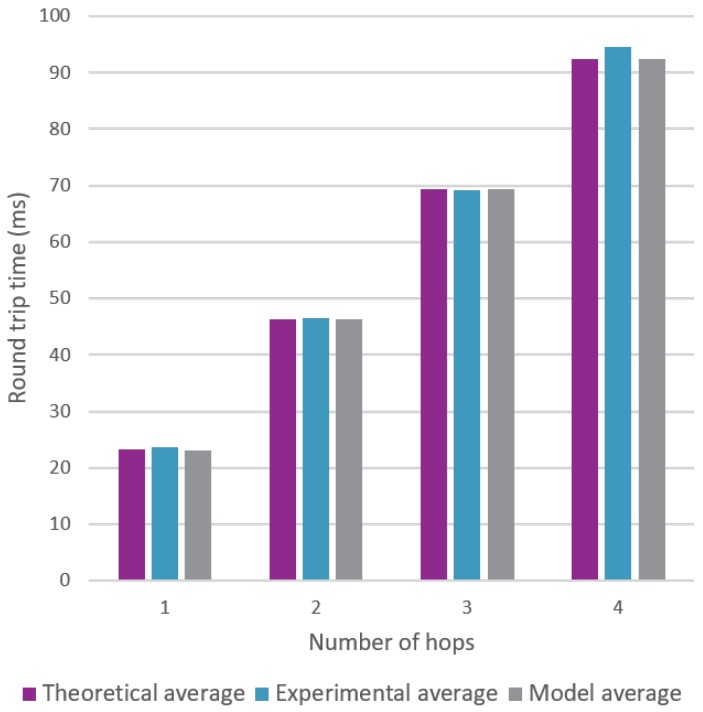
Mesh networks enable a many-to-many relation between nodes, which means that each node in the network can communicate with every other node using multi-hop communication and path diversity. As it enables the fast roll-out of sensor and actuator networks, it is an important aspect within the Internet of Things (IoT). Utilizing Bluetooth Low Energy (BLE) as an underlying technology to implement such mesh networks has gained a lot of interest in recent years. The result was a variety of BLE meshing solutions that were not interoperable because of the lack of a common standard. This has changed recently with the advent of the Bluetooth Mesh standard. However, a detailed overview of how this standard operates, performs and how it tackles other issues concerning BLE mesh networking is missing. Therefore, this paper investigates this new technology thoroughly and evaluates its performance by means of three approaches, namely an experimental evaluation, a statistical approach and a graph-based simulation model, which can be used as the basis for future research. Apart from showing that consistent results are achieved by means of all three approaches, we also identify possible drawbacks and open issues that need to be dealt with.
网格网络实现了节点之间的多对多关系,这意味着网络中的每个节点都可以使用多跳通信和路径多样性与其他每个节点进行通信。由于它能够快速部署传感器和执行器网络,因此它是物联网 (IoT) 的一个重要方面。近年来,利用蓝牙低能 (BLE) 作为底层技术来实现这种网格网络引起了广泛关注。由于缺乏通用标准,导致了多种不兼容的 BLE 网格解决方案。最近,随着蓝牙 Mesh 标准的出现,这种情况发生了变化。然而,关于该标准的操作、性能以及如何解决其他与 BLE 网格网络相关的问题的详细概述仍然缺失。因此,本文深入研究了这项新技术,并通过三种方法评估了其性能,即实验评估、统计方法和基于图的仿真模型,它们可以作为未来研究的基础。除了通过所有三种方法都得出一致的结果之外,我们还确定了可能存在的缺点和需要解决的问题。