Department of Pharmacy, University of Pisa, Pisa, Italy.
PLoS One. 2018 Jul 26;13(7):e0200924. doi: 10.1371/journal.pone.0200924. eCollection 2018.
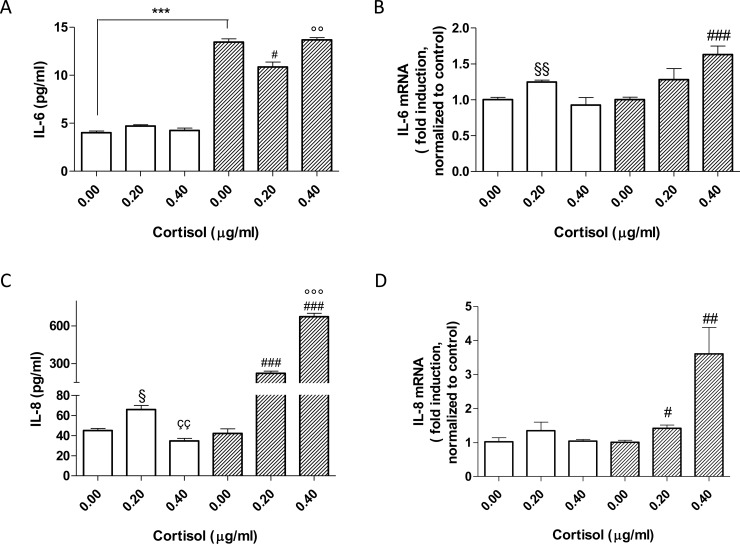
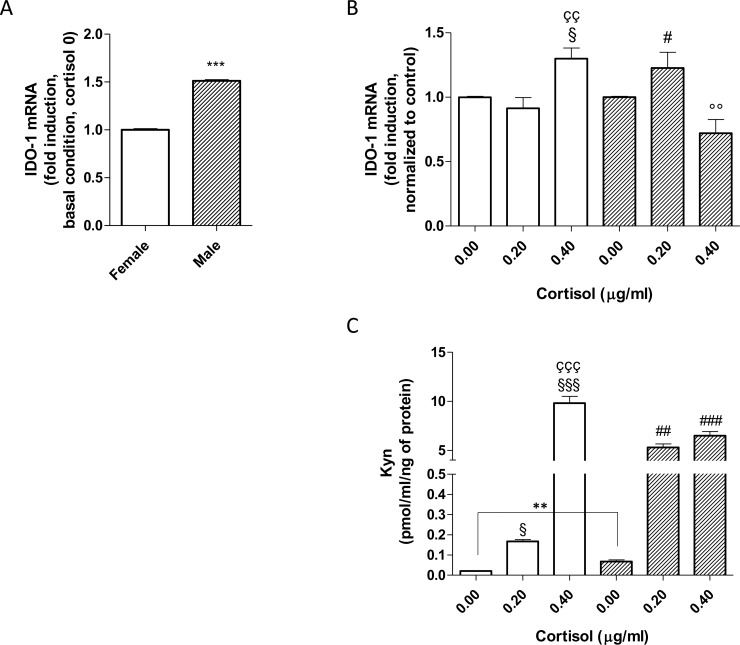
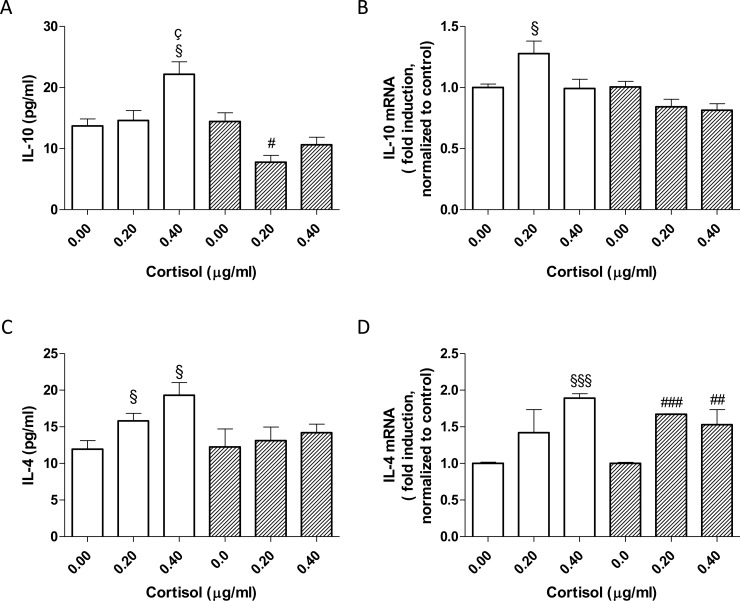
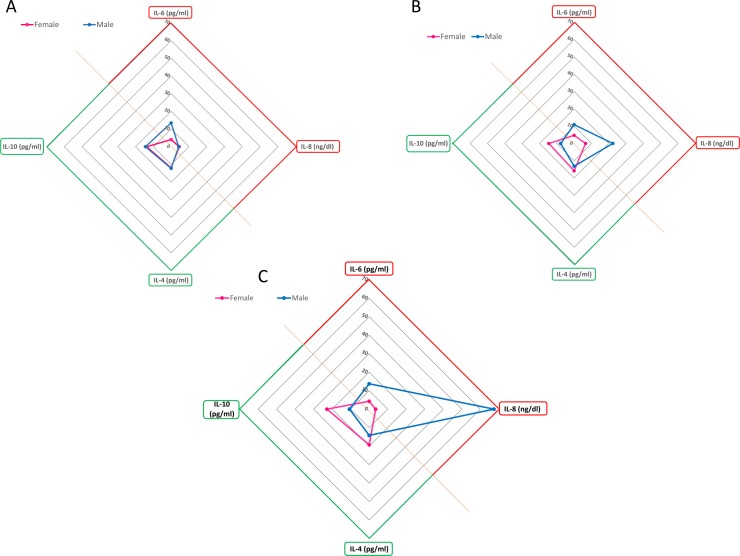
The stress hormone cortisol has been recognized as a coordinator of immune response. However, its different ability to modulate the release of inflammatory mediators in males and females has not been clarified yet. Indeed, the dissection of cortisol specific actions may be difficult due to the complex hormonal and physio-pathological individual status. Herein, the release of inflammatory mediators following increasing cortisol concentrations was investigated in an in vitro model of primary human male and female lymphomonocytes. The use of a defined cellular model to assess sex differences in inflammatory cytokine secretion could be useful to exclude the effects of divergent and fluctuating sex hormone levels occurring in vivo. Herein, the cells were challenged with cortisol concentrations resembling the plasma levels achieving in physiological and stressful conditions. The production of cytokines and other molecules involved in inflammatory process was determined. In basal conditions, male cells presented higher levels of some pro-inflammatory molecules (NF-kB and IDO-1 mRNAs, IL-6 and kynurenine) than female cells. Following cortisol exposure, the levels of the pro-inflammatory cytokines, IL-6 and IL-8, were increased in male cells. Conversely, in female cells IL-6 release was unchanged and IL-8 levels were decreased. Anti-inflammatory cytokines, IL-4 and IL-10, did not change in male cells and increased in female cells. Interestingly, kynurenine levels were higher in female cells than in male cells following cortisol stimulus. These results highlighted that cortisol differently affects male and female lymphomonocytes, shifting the cytokine release in favour of a pro-inflammatory pattern in male cells and an anti-inflammatory secretion profile in female cells, opening the way to study the influences of other stressful factors involved in the neurohumoral changes occurring in the response to stress conditions.
应激激素皮质醇已被认为是免疫反应的协调者。然而,其在男性和女性中调节炎症介质释放的不同能力尚未得到阐明。事实上,由于激素和生理病理个体状态的复杂性,皮质醇的特定作用的剖析可能很困难。在此,在原代人男性和女性淋巴细胞体外模型中研究了炎症介质在皮质醇浓度增加后的释放。使用定义明确的细胞模型评估炎症细胞因子分泌中的性别差异可能有助于排除体内发生的不同和波动的性激素水平的影响。在此,用类似于在生理和应激条件下达到的血浆水平的皮质醇浓度来挑战细胞。测定细胞因子和其他参与炎症过程的分子的产生。在基础条件下,男性细胞比女性细胞呈现更高水平的一些促炎分子(NF-kB 和 IDO-1 mRNAs、IL-6 和犬尿氨酸)。皮质醇暴露后,男性细胞中促炎细胞因子 IL-6 和 IL-8 的水平增加。相反,在女性细胞中,IL-6 的释放保持不变,IL-8 的水平降低。抗炎细胞因子 IL-4 和 IL-10 在男性细胞中没有变化,而在女性细胞中增加。有趣的是,皮质醇刺激后,女性细胞中的犬尿氨酸水平高于男性细胞。这些结果表明,皮质醇对男性和女性淋巴细胞的影响不同,将细胞因子释放向男性细胞中的促炎模式转变,向女性细胞中的抗炎分泌模式转变,为研究其他应激因素对神经激素变化的影响铺平了道路在应激条件下的反应。