Institute of Digestive Disease and Department of Medicine and Therapeutics, State Key Laboratory of Digestive Disease, Li Ka Shing Institute of Health Sciences, CUHK-Shenzhen Research Institute, The Chinese University of Hong Kong, Hong Kong, China.
Department of Surgery, The Chinese University of Hong Kong, Hong Kong, China.
Oncogene. 2018 Dec;37(50):6383-6398. doi: 10.1038/s41388-018-0402-1. Epub 2018 Jul 27.
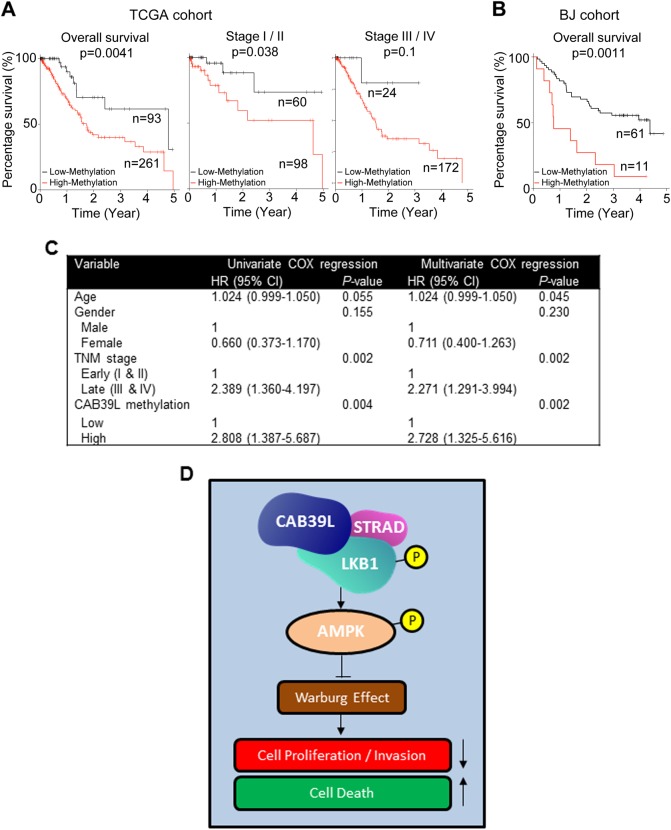
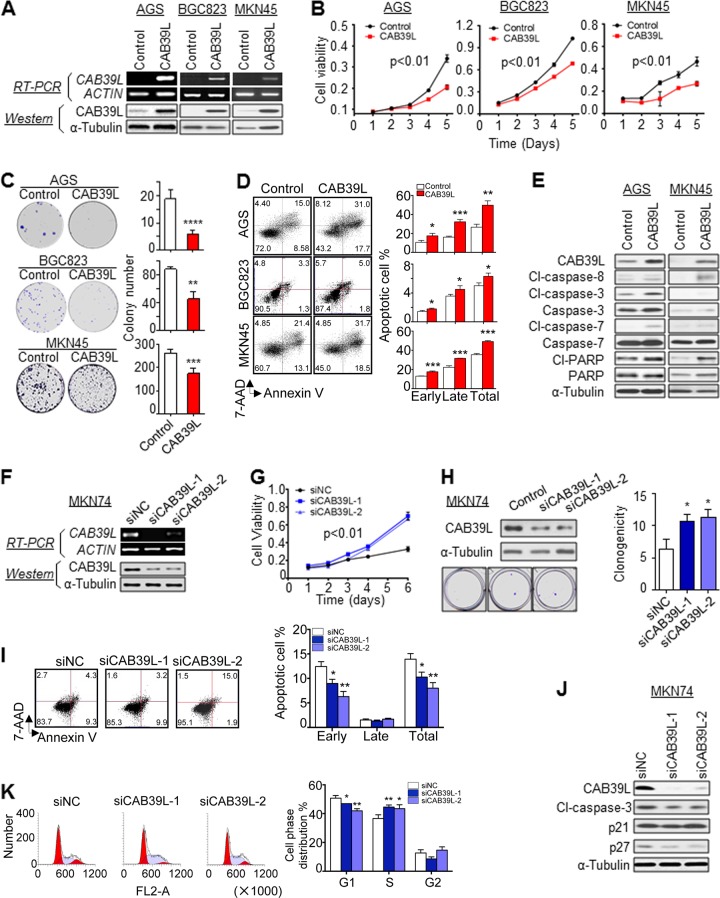
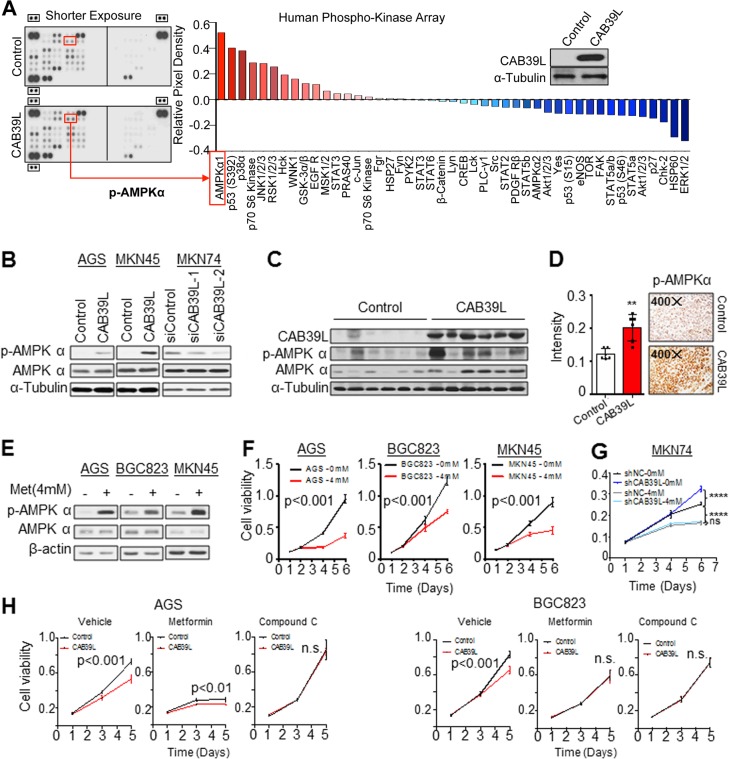
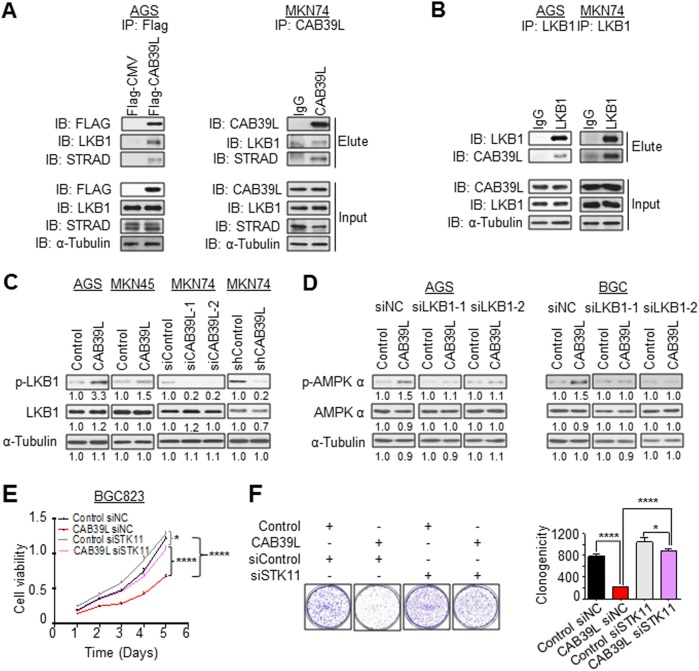
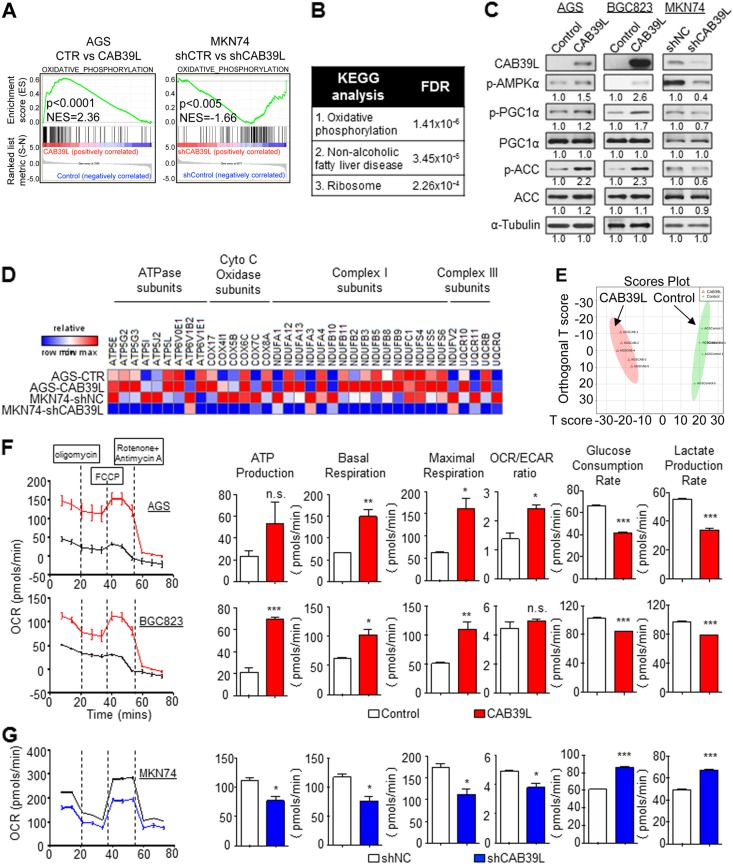
Metabolic dysfunction is a hallmark of gastric cancer (GC). In this study, we reported the identification of Calcium Binding Protein 39-Like (CAB39L) as a novel regulator of tumor metabolism in GC. CAB39L mRNA was frequently silenced by promoter methylation in GC cell lines and tissues. Functional studies suggested that CAB39L functions as a tumor suppressor, as overexpression of CAB39L elicited suppression of multiple cancer phenotypes both in GC cells and an orthotopic mouse model; whilst its knockdown promoted tumorigenesis. Mechanistically, CAB39L interacted with LKB1-STRAD complex and induced LKB1, leading to the phosphorylation and activation of AMPKα/β. LKB1-AMPK activation in GC cell lines was tumor suppressive, as metformin (an AMPK activator) inhibited GC cell growth in the CAB39L-silenced cells. Moreover, knockdown of LKB1 reversed growth inhibitory effect of CAB39L, indicating that tumor suppression by CAB39L depended on LKB1-AMPK. RNAseq and gene set enrichment analysis revealed that CAB39L was closely correlated with oxidative phosphorylation and mitochondrial biogenesis. Consistently, CAB39L-induced p-AMPK elicited PGC1α phosphorylation and increased the expression of genes involved in mitochondrial respiration complexes. Accordingly, CAB39L reversed the Warburg effect in GC, as evidenced by enhanced oxygen consumption rate and reduced extracellular acidification rate; inversely, CAB39L knockdown promoted a metabolic shift towards the Warburg phenotype. In GC patients, CAB39L promoter hypermethylation was correlated with poor prognosis. Our data demonstrate that CAB39L is a novel tumor suppressor which suppresses tumorigenesis by promoting LKB1-AMPK-PGC1α axis, thereby preventing a metabolic shift that drives carcinogenesis. CAB39L methylation is a potential prognostic biomarker for GC patients.
代谢功能障碍是胃癌 (GC) 的一个标志。在这项研究中,我们报告了钙结合蛋白 39 样 (CAB39L) 作为 GC 中肿瘤代谢的新型调节剂的鉴定。CAB39L mRNA 在 GC 细胞系和组织中经常因启动子甲基化而沉默。功能研究表明,CAB39L 作为一种肿瘤抑制因子发挥作用,因为 CAB39L 的过表达在 GC 细胞和原位小鼠模型中抑制了多种癌症表型;而其敲低则促进了肿瘤发生。在机制上,CAB39L 与 LKB1-STRAD 复合物相互作用,并诱导 LKB1,导致 AMPKα/β的磷酸化和激活。GC 细胞系中 LKB1-AMPK 的激活具有肿瘤抑制作用,因为二甲双胍(AMPK 激活剂)抑制了沉默 CAB39L 的 GC 细胞生长。此外,LKB1 的敲低逆转了 CAB39L 的生长抑制作用,表明 CAB39L 的肿瘤抑制作用取决于 LKB1-AMPK。RNAseq 和基因集富集分析显示,CAB39L 与氧化磷酸化和线粒体生物发生密切相关。一致地,CAB39L 诱导的 p-AMPK 引发 PGC1α 的磷酸化,并增加了参与线粒体呼吸复合物的基因的表达。因此,CAB39L 逆转了 GC 中的瓦博格效应,表现为耗氧率增加和细胞外酸化率降低;相反,CAB39L 的敲低促进了向瓦博格表型的代谢转变。在 GC 患者中,CAB39L 启动子的高甲基化与预后不良相关。我们的数据表明,CAB39L 是一种新型的肿瘤抑制因子,通过促进 LKB1-AMPK-PGC1α 轴抑制肿瘤发生,从而防止驱动癌变的代谢转变。CAB39L 甲基化是 GC 患者的一个潜在预后生物标志物。