HEI-Yncréa HdF, 59014 Lille, France.
Inria Lille-Nord Europe, 59650 Villeneuve d'Ascq, France.
Sensors (Basel). 2018 Jul 30;18(8):2472. doi: 10.3390/s18082472.
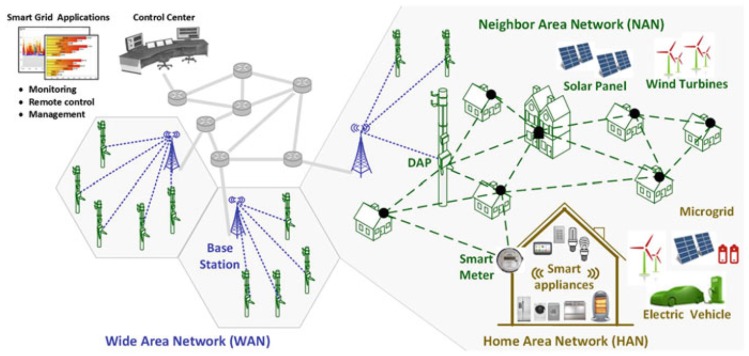
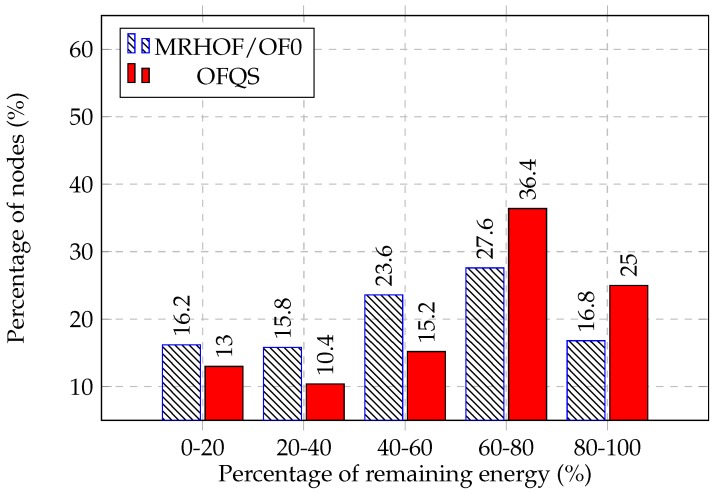
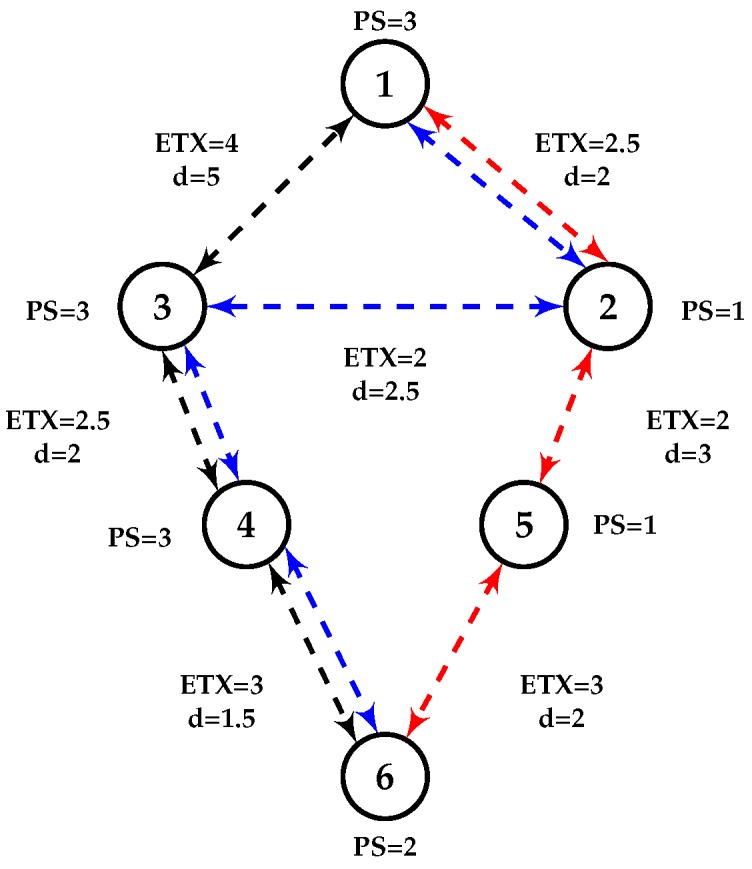
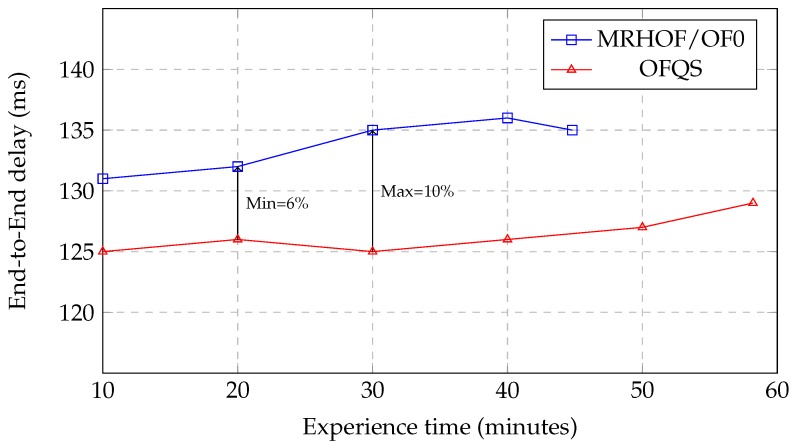
The Smart Grid (SG) aims to transform the current electric grid into a "smarter" network where the integration of renewable energy resources, energy efficiency and fault tolerance are the main benefits. This is done by interconnecting every energy source, storage point or central control point with connected devices, where heterogeneous SG applications and signalling messages will have different requirements in terms of reliability, latency and priority. Hence, data routing and prioritization are the main challenges in such networks. So far, RPL (Routing Protocol for Low-Power and Lossy networks) protocol is widely used on Smart Grids for distributing commands over the grid. RPL assures traffic differentiation at the network layer in wireless sensor networks through the logical subdivision of the network in multiple instances, each one relying on a specific Objective Function. However, RPL is not optimized for Smart Grids, as its main objective functions and their associated metric does not allow Quality of Service differentiation. To overcome this, we propose OFQS an objective function with a multi-objective metric that considers the delay and the remaining energy in the battery nodes alongside with the dynamic quality of the communication links. Our function automatically adapts to the number of instances (traffic classes) providing a Quality of Service differentiation based on the different Smart Grid applications requirements. We tested our approach on a real sensor testbed. The experimental results show that our proposal provides a lower packet delivery latency and a higher packet delivery ratio while extending the lifetime of the network compared to solutions in the literature.
智能电网(SG)旨在将当前的电网转变为一个“更智能”的网络,其中可再生能源的整合、能源效率和容错能力是主要优势。这是通过将每个能源源、存储点或中央控制点与连接的设备互联来实现的,其中异构的 SG 应用程序和信令消息在可靠性、延迟和优先级方面将具有不同的要求。因此,数据路由和优先级划分是这些网络中的主要挑战。到目前为止,RPL(低功耗有损网络的路由协议)协议在智能电网中被广泛用于在网格上分发命令。RPL 通过将网络逻辑划分为多个实例,每个实例依赖于特定的目标函数,在无线传感器网络中保证了网络层的流量区分。然而,RPL 并不针对智能电网进行优化,因为其主要目标函数及其相关度量标准不允许区分服务质量。为了克服这一问题,我们提出了 OFQS,这是一种具有多目标度量的目标函数,它考虑了电池节点中的延迟和剩余能量,以及通信链路的动态质量。我们的函数自动适应实例的数量(流量类别),根据不同的智能电网应用程序需求提供基于服务质量的区分。我们在真实的传感器测试平台上测试了我们的方法。实验结果表明,与文献中的解决方案相比,我们的方案提供了更低的分组交付延迟和更高的分组交付率,同时延长了网络的寿命。