Iglesias Marcos, Arun Anirudh, Chicco Maria, Lam Brandon, Talbot C Conover, Ivanova Vera, Lee W P A, Brandacher Gerald, Raimondi Giorgio
Vascularized and Composite Allotransplantation Laboratory, Department of Plastic and Reconstructive Surgery, Johns Hopkins School of Medicine, Baltimore, MD, United States.
Institute for Basic Biomedical Sciences, Johns Hopkins School of Medicine, Baltimore, MD, United States.
Front Immunol. 2018 Jul 16;9:1565. doi: 10.3389/fimmu.2018.01565. eCollection 2018.
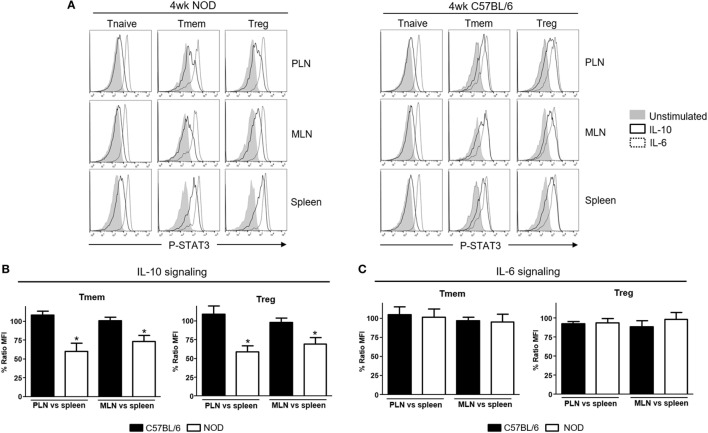
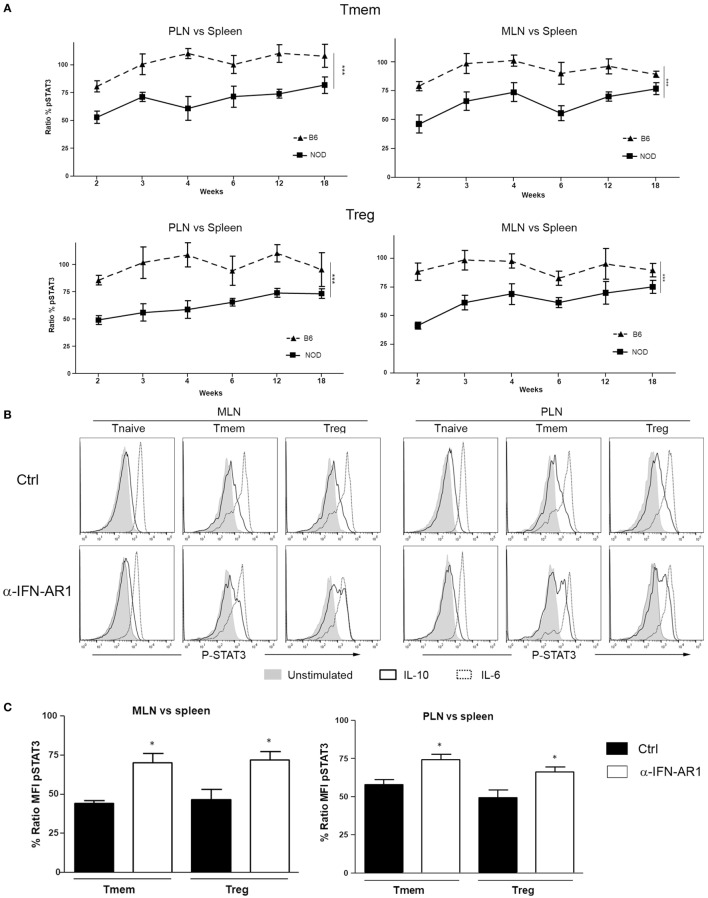
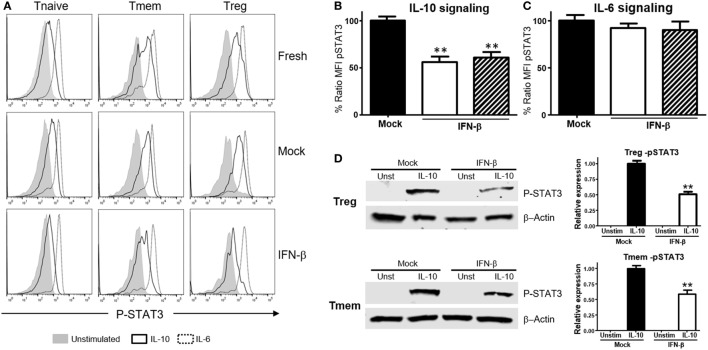
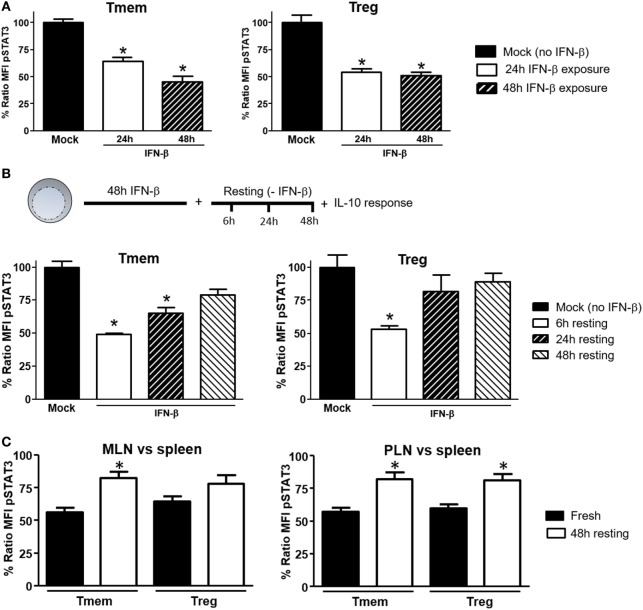
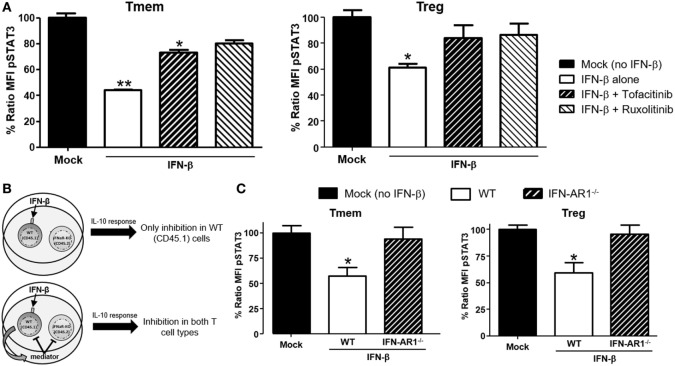
Destruction of insulin-producing β-cells by autoreactive T lymphocytes leads to the development of type 1 diabetes. Type-I interferons (TI-IFN) and interleukin-10 (IL-10) have been connected with the pathophysiology of this disease; however, their interplay in the modulation of diabetogenic T cells remains unknown. We have discovered that TI-IFN cause a selective inhibition of IL-10 signaling in effector and regulatory T cells, altering their responses. This correlates with diabetes development in nonobese diabetic mice, where the inhibition is also spatially localized to T cells of pancreatic and mesenteric lymph nodes. IL-10 signaling inhibition is reversible and can be restored blockade of TI-IFN/IFN-R interaction, paralleling with the resulting delay in diabetes onset and reduced severity. Overall, we propose a novel molecular link between TI-IFN and IL-10 signaling that helps better understand the complex dynamics of autoimmune diabetes development and reveals new strategies of intervention.
自身反应性T淋巴细胞对产生胰岛素的β细胞的破坏会导致1型糖尿病的发展。I型干扰素(TI-IFN)和白细胞介素-10(IL-10)与该疾病的病理生理学有关;然而,它们在调节致糖尿病T细胞中的相互作用仍不清楚。我们发现,TI-IFN会导致效应T细胞和调节性T细胞中IL-10信号传导的选择性抑制,从而改变它们的反应。这与非肥胖糖尿病小鼠的糖尿病发展相关,在这些小鼠中,这种抑制在空间上也局限于胰腺和肠系膜淋巴结的T细胞。IL-10信号传导抑制是可逆的,并且可以通过阻断TI-IFN/IFN-R相互作用来恢复,这与糖尿病发病延迟和严重程度降低相一致。总体而言,我们提出了TI-IFN和IL-10信号传导之间的一种新的分子联系,这有助于更好地理解自身免疫性糖尿病发展的复杂动态,并揭示新的干预策略。