Department of General Surgery, Huashan Hospital and Cancer Metastasis Institute and Institutes of Biomedical Sciences, Fudan University, Shanghai, 200032, China.
Department of General, Visceral and Cancer Surgery, University Hospital of Cologne, Cologne, Germany.
J Exp Clin Cancer Res. 2018 Jul 31;37(1):179. doi: 10.1186/s13046-018-0832-1.
In hepatocellular carcinoma (HCC), CD133+/CD44+ cells are one subgroup with high stemness and responsible for metastatic relapse and resistance to treatment. Our previous studies have demonstrated that osteopontin (OPN) plays critical roles in HCC metastasis. We further investigated the molecular mechanism underlying the role of OPN in regulating the stemness of HCC epigenetically and explored possible targeting strategy.
CD133+/CD44+ subgroup sorting from HCC cell lines and HCC tissues was used to investigate the effects of OPN knockdown on stemness. iTRAQ and MedIP-sequencing were applied to detect the protein profile and epigenetic modification of CD133+/CD44+ subgroup with or without OPN knockdown. The antitumor effects of 5 Azacytidine were examined in cultured HCC cells and patient derived xenograft (PDX) models.
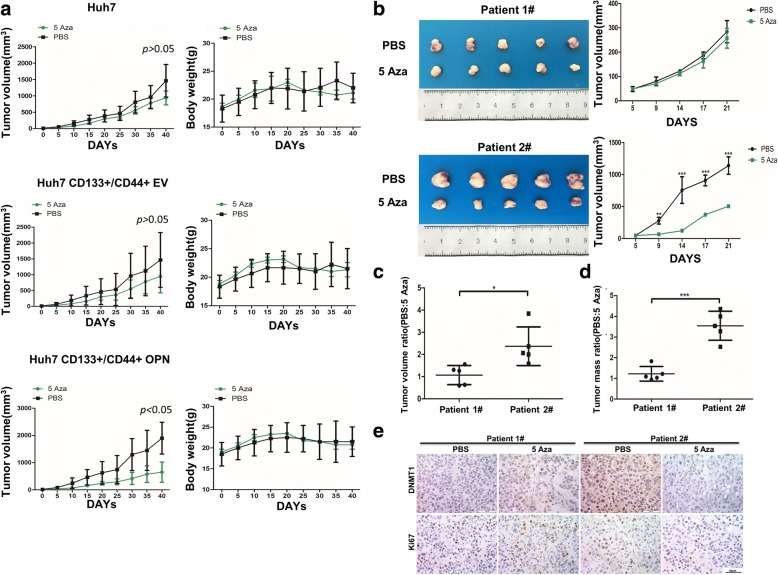
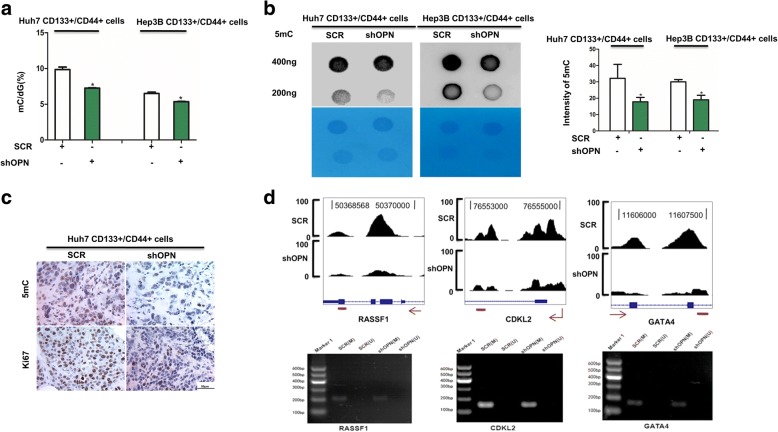
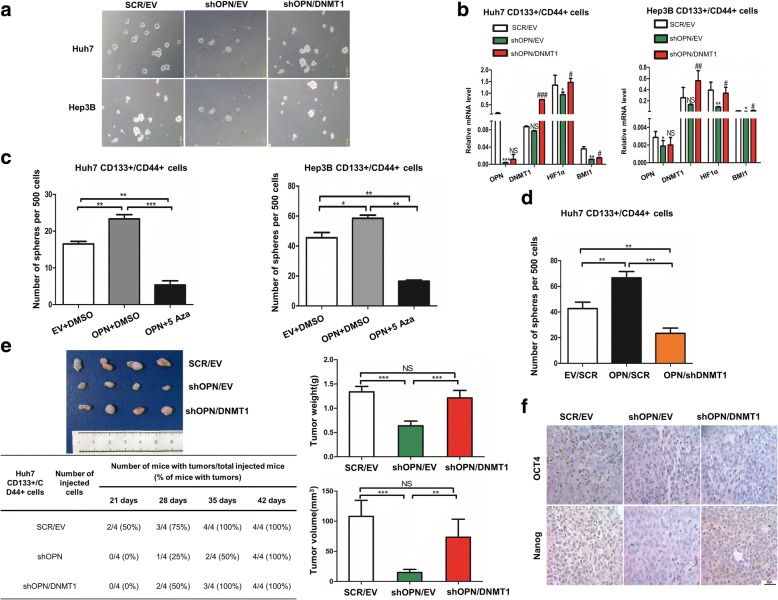
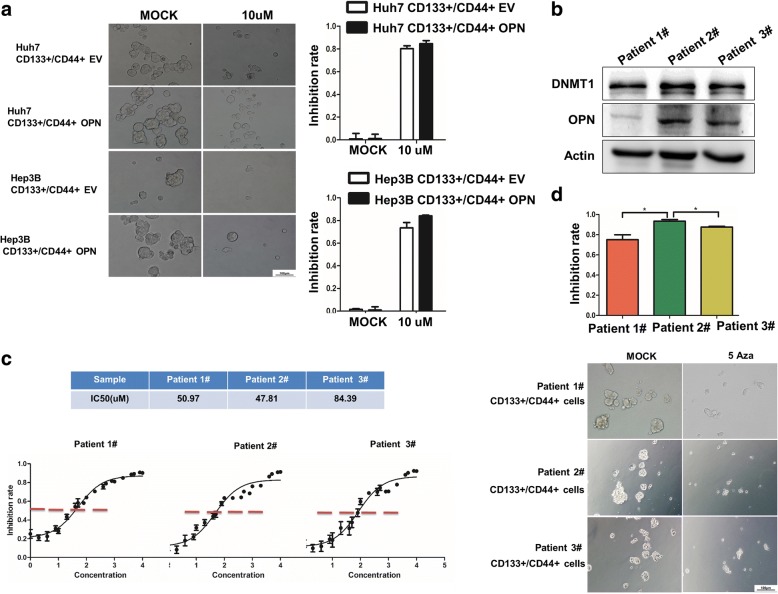
OPN was accumulated in CD133+/CD44+ subgroup of HCC cells. Knocking down OPN significantly inhibited the sphere formation and stemness-related genes expression, and delayed tumor initiation of CD133+/CD44+ subgroup of HCC cells. Employing MedIP-sequencing, dot blot and iTRAQ analyses of CD133+/CD44+ SCR and CD133+/CD44+ shOPN cells, we found that OPN knockdown leaded to reduction in DNA methylation with particular enrichment in CGI. Meanwhile, DNA (cytosine-5)-methyltransferase 1 (DNMT1), the main methylation maintainer, was downregulated via proteomics analysis, which mediated OPN altering DNA methylation. Furthermore, DNMT1 upregulation could partially rescue the properties of CD133+/CD44+ shOPN cells. Both in vitro and in vivo assays showed that CD133+/CD44+ cells with high OPN levels were more sensitive to DNA methylation inhibitor, 5 Azacytidine (5 Aza). The above findings were validated in HCC primary cells, a more clinically relevant model.
OPN induces methylome reprogramming to enhance the stemness of CD133+/CD44+ subgroup and provides the therapeutic benefits to DNMT1 targeting treatment in HCC.
在肝细胞癌(HCC)中,CD133+/CD44+细胞是具有高干性的亚群之一,负责转移复发和治疗耐药。我们之前的研究表明,骨桥蛋白(OPN)在 HCC 转移中起关键作用。我们进一步研究了 OPN 调节 HCC 干性的表观遗传机制,并探索了可能的靶向策略。
从 HCC 细胞系和 HCC 组织中对 CD133+/CD44+亚群进行分选,以研究 OPN 敲低对干性的影响。iTRAQ 和 MedIP-seq 用于检测有无 OPN 敲低的 CD133+/CD44+亚群的蛋白质谱和表观遗传修饰。在培养的 HCC 细胞和患者来源的异种移植(PDX)模型中检测 5-Azacytidine 的抗肿瘤作用。
OPN 在 HCC 细胞的 CD133+/CD44+亚群中积累。敲低 OPN 显著抑制了球体形成和干性相关基因的表达,并延缓了 HCC 细胞的 CD133+/CD44+亚群的肿瘤起始。通过 MedIP-seq、斑点印迹和 iTRAQ 分析 CD133+/CD44+SCR 和 CD133+/CD44+shOPN 细胞,我们发现 OPN 敲低导致 DNA 甲基化减少,特别是 CGI 富集。同时,通过蛋白质组学分析发现,主要的甲基化维持者 DNA(胞嘧啶-5)-甲基转移酶 1(DNMT1)下调,介导了 OPN 改变 DNA 甲基化。此外,DNMT1 的上调可以部分挽救 CD133+/CD44+shOPN 细胞的特性。体外和体内实验均表明,高 OPN 水平的 CD133+/CD44+细胞对 DNA 甲基化抑制剂 5-Azacytidine(5-Aza)更敏感。这些发现在 HCC 原代细胞中得到了验证,这是一种更具临床相关性的模型。
OPN 诱导甲基组重编程,增强 CD133+/CD44+亚群的干性,并为 HCC 中针对 DNMT1 的靶向治疗提供治疗益处。