Duke Institute for Brain Sciences, Duke University, Durham, North Carolina, USA.
Duke Center for Autism and Brain Development, Duke University, Durham, North Carolina, USA.
Stem Cells Transl Med. 2018 Nov;7(11):783-791. doi: 10.1002/sctm.18-0090. Epub 2018 Aug 1.
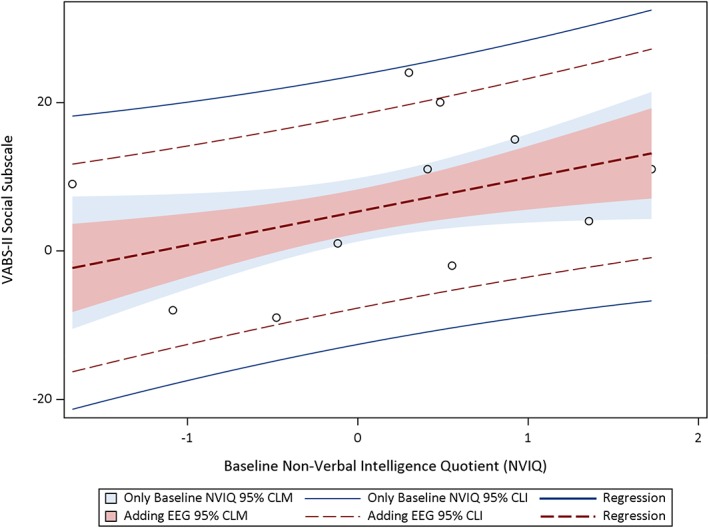
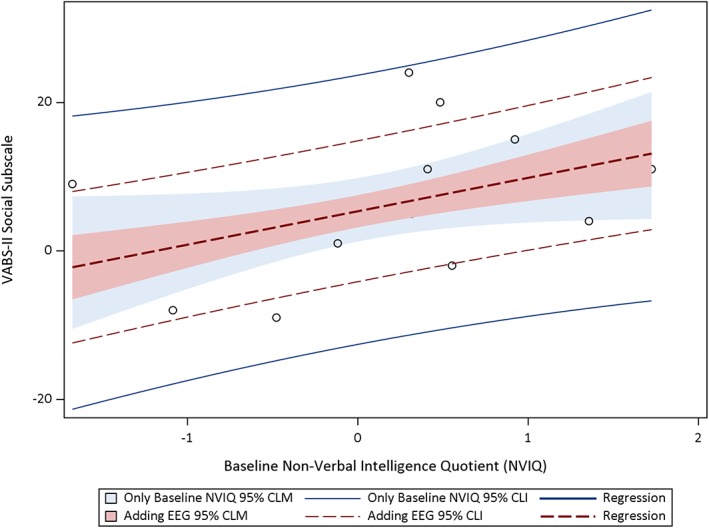
This study was a phase I, single-center, and open-label trial of a single intravenous infusion of autologous umbilical cord blood in young children with autism spectrum disorder (ASD). Twenty-five children between the ages of 2 and 6 with a confirmed diagnosis of ASD and a qualified banked autologous umbilical cord blood unit were enrolled. Safety results and clinical outcomes measured at 6 and 12 months post-infusion have been previously published. The purpose of the present analysis was to explore whether measures of electroencephalography (EEG) theta, alpha, and beta power showed evidence of change after treatment and whether baseline EEG characteristics were predictive of clinical improvement. The primary endpoint was the parent-reported Vineland adaptive behavior scales-II socialization subscale score, collected at baseline, 6- and 12-month visits. In addition, the expressive one word picture vocabulary test 4 and the clinical global impression-improvement scale were administered. Electrophysiological recordings were taken during viewing of dynamic social and nonsocial stimuli at 6 and 12 months post-treatment. Significant changes in EEG spectral characteristics were found by 12 months post-infusion, which were characterized by increased alpha and beta power and decreased EEG theta power. Furthermore, higher baseline posterior EEG beta power was associated with a greater degree of improvement in social communication symptoms, highlighting the potential for an EEG biomarker to predict variation in outcome. Taken together, the results suggest that EEG measures may be useful endpoints for future ASD clinical trials. Stem Cells Translational Medicine 2018;7:783-791.
本研究为一项单中心、开放标签的 I 期临床试验,旨在评估单剂量静脉输注自体脐带血治疗儿童自闭症谱系障碍(ASD)的安全性和临床疗效。共纳入 25 名 2-6 岁确诊 ASD 且有合格自体脐带血库血源的患儿。先前已发表了输注后 6 个月和 12 个月的安全性结果和临床转归。本分析旨在探讨治疗后脑电图(EEG)θ、α和β功率是否有变化的证据,以及基线 EEG 特征是否可预测临床改善。主要终点是家长报告的 Vineland 适应行为量表-II 社会交往分量表评分,在基线、6 个月和 12 个月访视时采集。此外,还进行了表达性单字图片词汇测试 4 和临床总体印象-改善量表评估。在治疗后 6 个月和 12 个月时进行了观看动态社交和非社交刺激的脑电图记录。结果发现,治疗后 12 个月时 EEG 频谱特征发生了显著变化,表现为α和β功率增加,θ功率降低。此外,基线时后头部 EEGβ功率越高,社会交流症状改善程度越大,这提示 EEG 生物标志物可能有助于预测结局的变化。综上所述,这些结果表明 EEG 测量可能是未来 ASD 临床试验的有用终点。《干细胞转化医学》2018;7:783-791。