Nowicka Anna, Cygan Hanna B, Tacikowski Paweł, Ostaszewski Paweł, Kuś Rafał
Laboratory of Psychophysiology, Department of Neurophysiology, Nencki Institute of Experimental Biology, Polish Academy of Sciences, 3 Pasteur Street, 02-093 Warsaw, Poland.
Laboratory of Psychophysiology, Department of Neurophysiology, Nencki Institute of Experimental Biology, Polish Academy of Sciences, 3 Pasteur Street, 02-093 Warsaw, Poland ; Central Institute for Labour Protection - National Research Institute, Czerniakowska 16, 00-701 Warsaw, Poland.
Mol Autism. 2016 Sep 6;7(1):38. doi: 10.1186/s13229-016-0102-z. eCollection 2016.
Impaired orienting to social stimuli is one of the core early symptoms of autism spectrum disorder (ASD). However, in contrast to faces, name processing has rarely been studied in individuals with ASD. Here, we investigated brain activity and functional connectivity associated with recognition of names in the high-functioning ASD group and in the control group.
EEG was recorded in 15 young males with ASD and 15 matched one-to-one control individuals. EEG data were analyzed with the event-related potential (ERP), event-related desynchronization and event-related synchronization (ERD/S), as well as coherence and direct transfer function (DTF) methods. Four categories of names were presented visually: one's own, close-other's, famous, and unknown.
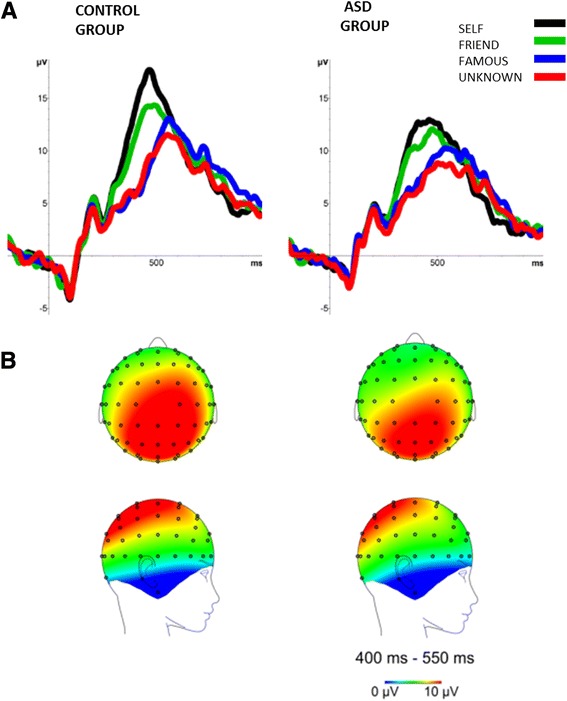
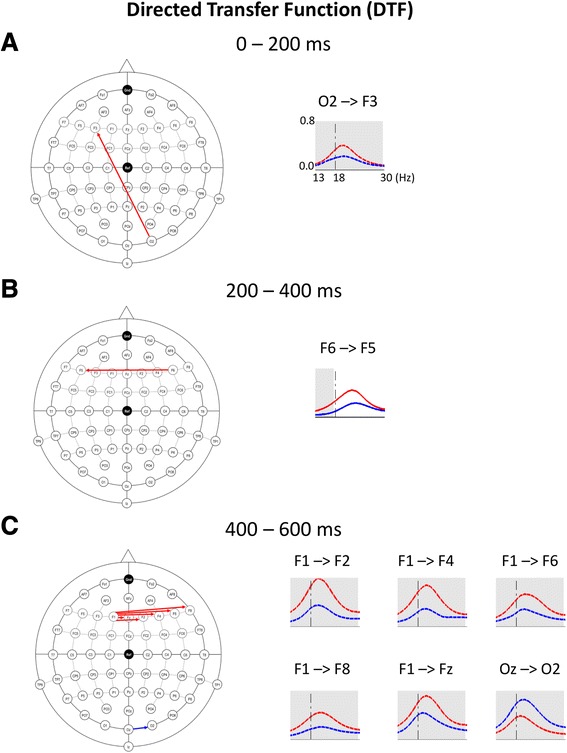
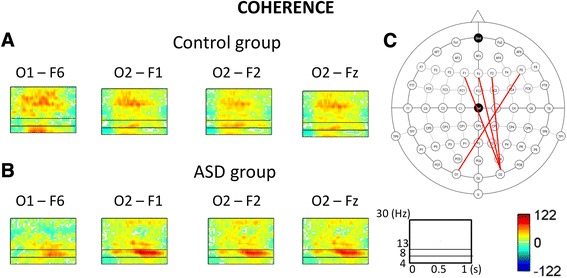
Differences between the ASD and control groups were found for ERP, coherence, and DTF. In individuals with ASD, P300 (a positive ERP component) to own-name and to a close-other's name were similar whereas in control participants, P300 to own-name was enhanced when compared to all other names. Analysis of coherence and DTF revealed disruption of fronto-posterior task-related connectivity in individuals with ASD within the beta range frequencies. Moreover, DTF indicated the directionality of those impaired connections-they were going from parieto-occipital to frontal regions. DTF also showed inter-group differences in short-range connectivity: weaker connections within the frontal region and stronger connections within the occipital region in the ASD group in comparison to the control group.
Our findings suggest a lack of the self-preference effect and impaired functioning of the attentional network during recognition of visually presented names in individuals with ASD.
对社交刺激的定向障碍是自闭症谱系障碍(ASD)的核心早期症状之一。然而,与面孔不同,ASD个体对名字的加工很少被研究。在此,我们调查了高功能ASD组和对照组中与名字识别相关的大脑活动和功能连接。
记录了15名患有ASD的年轻男性和15名一对一匹配的对照个体的脑电图。脑电图数据采用事件相关电位(ERP)、事件相关去同步化和事件相关同步化(ERD/S)以及相干性和直接传递函数(DTF)方法进行分析。视觉呈现四类名字:自己的名字、亲密他人的名字、名人的名字和不知名的名字。
在ERP、相干性和DTF方面发现了ASD组和对照组之间的差异。在ASD个体中,对自己名字和亲密他人名字的P300(一种正向ERP成分)相似,而在对照参与者中,与所有其他名字相比,对自己名字的P300增强。相干性和DTF分析显示,ASD个体在β频段频率范围内,与任务相关的前后向连接中断。此外,DTF表明了这些受损连接的方向性——它们从顶枕叶区域指向额叶区域。DTF还显示了组间在短程连接方面的差异:与对照组相比,ASD组额叶区域内的连接较弱,枕叶区域内的连接较强。
我们的研究结果表明,ASD个体在识别视觉呈现的名字时缺乏自我偏好效应,且注意力网络功能受损。