Department of Pathology, VU University Medical Center, Brain Tumor Center Amsterdam, De Boelelaan 1117, Amsterdam 1081 HV, The Netherlands; The Jackson Laboratory for Genomic Medicine, 10 Discovery Drive, Farmington, CT 06032, USA.
The Jackson Laboratory for Genomic Medicine, 10 Discovery Drive, Farmington, CT 06032, USA.
Neurol Clin. 2018 Aug;36(3):421-437. doi: 10.1016/j.ncl.2018.04.002.
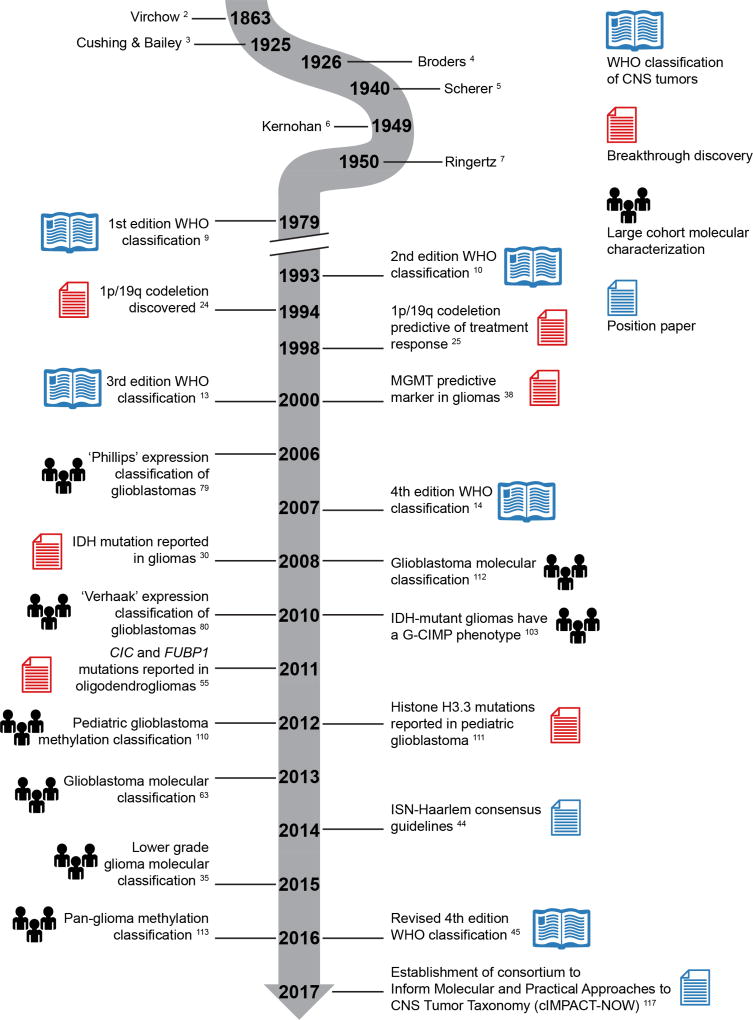
Recent advances in molecular analysis and genome sequencing have prompted a paradigm shift in neuropathology. This article discusses the discovery and clinical relevance of molecular biomarkers in diffuse gliomas in adults and how these biomarkers led to revision of the World Health Organization classification of these tumors. We relate progress in clinical classification to an overview of studies using molecular profiling to study gene expression and DNA methylation to categorize diffuse gliomas in adults and issues dealing with intratumoral heterogeneity. These efforts will refine the taxonomy of diffuse gliomas, facilitate selection of appropriate treatment regimens, and ultimately improve patient's lives.
近年来,分子分析和基因组测序的进展促使神经病理学发生了范式转变。本文讨论了成人弥漫性神经胶质瘤中分子生物标志物的发现及其临床意义,以及这些生物标志物如何导致这些肿瘤的世界卫生组织分类的修订。我们将临床分类的进展与使用分子谱分析研究基因表达和 DNA 甲基化以对成人弥漫性神经胶质瘤进行分类的研究概述以及与肿瘤内异质性相关的问题联系起来。这些努力将完善弥漫性神经胶质瘤的分类法,有助于选择合适的治疗方案,并最终改善患者的生活。