Migration Health Division, International Organization for Migration, United Nations Migration Agency, Geneva, Switzerland.
African Centre for Migration & Society, University of the Witwatersrand and Centre of African Studies, University of Edinburgh, PO Box 76, Wits, 2050, South Africa.
BMC Public Health. 2018 Aug 8;18(1):987. doi: 10.1186/s12889-018-5932-5.
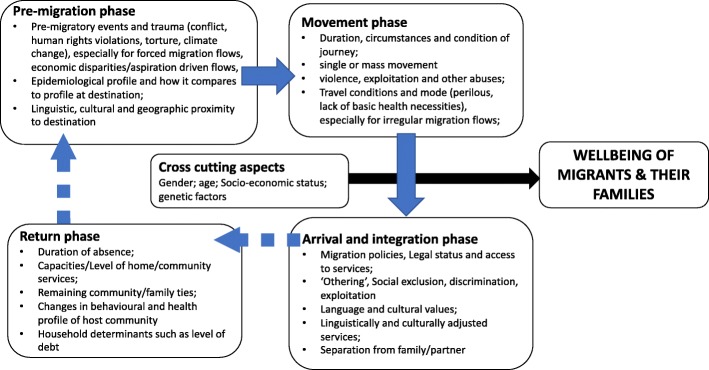
With 244 million international migrants, and significantly more people moving within their country of birth, there is an urgent need to engage with migration at all levels in order to support progress towards global health and development targets. In response to this, the 2nd Global Consultation on Migration and Health- held in Colombo, Sri Lanka in February 2017 - facilitated discussions concerning the role of research in supporting evidence-informed health responses that engage with migration.
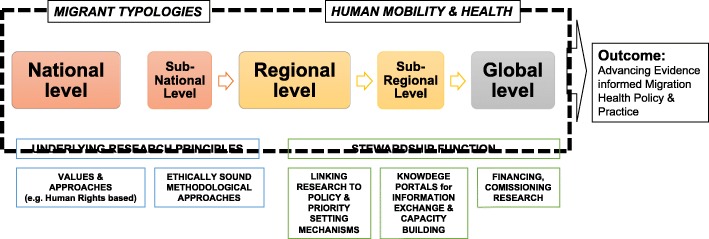
Drawing on discussions with policy makers, research scholars, civil society, and United Nations agencies held in Colombo, we emphasize the urgent need for quality research on international and domestic (in-country) migration and health to support efforts to achieve the Sustainable Development Goals (SDGs). The SDGs aim to 'leave no-one behind' irrespective of their legal status. An ethically sound human rights approach to research that involves engagement across multiple disciplines is required. Researchers need to be sensitive when designing and disseminating research findings as data on migration and health may be misused, both at an individual and population level. We emphasize the importance of creating an 'enabling environment' for migration and health research at national, regional and global levels, and call for the development of meaningful linkages - such as through research reference groups - to support evidence-informed inter-sectoral policy and priority setting processes.
目前全球有 2.44 亿国际移民,国内流动人口数量也大幅增加,因此迫切需要在各个层面上关注移民问题,以支持在实现全球卫生和发展目标方面取得进展。为此,第二届全球移民与卫生协商会议于 2017 年 2 月在斯里兰卡科伦坡举行,会议就研究在支持应对移民问题的循证卫生措施方面的作用进行了讨论。
通过在科伦坡与政策制定者、研究学者、民间社会和联合国机构进行讨论,我们强调迫切需要开展关于国际和国内(国内)移民与卫生问题的高质量研究,以支持努力实现可持续发展目标。可持续发展目标旨在“不让任何人掉队”,无论其法律地位如何。需要采取合乎道德且尊重人权的多学科方法进行研究。研究人员在设计和传播研究结果时需要谨慎,因为有关移民和卫生的数据可能会被误用,无论是在个人层面还是在人口层面。我们强调在国家、区域和全球各级营造有利于移民与卫生研究的“有利环境”的重要性,并呼吁建立有意义的联系,例如通过研究参考小组,以支持循证跨部门政策和重点事项的制定。