MRC Human Genetics Unit, MRC Institute of Genetics and Molecular Medicine, University of Edinburgh, Crewe Road, Edinburgh EH4 2XU, UK.
RIKEN Preventive Medicine and Diagnosis Innovation Program, 2F Main Research Building, 2-1 Hirosawa, Wako, Japan.
Open Biol. 2018 Aug;8(8). doi: 10.1098/rsob.180011.
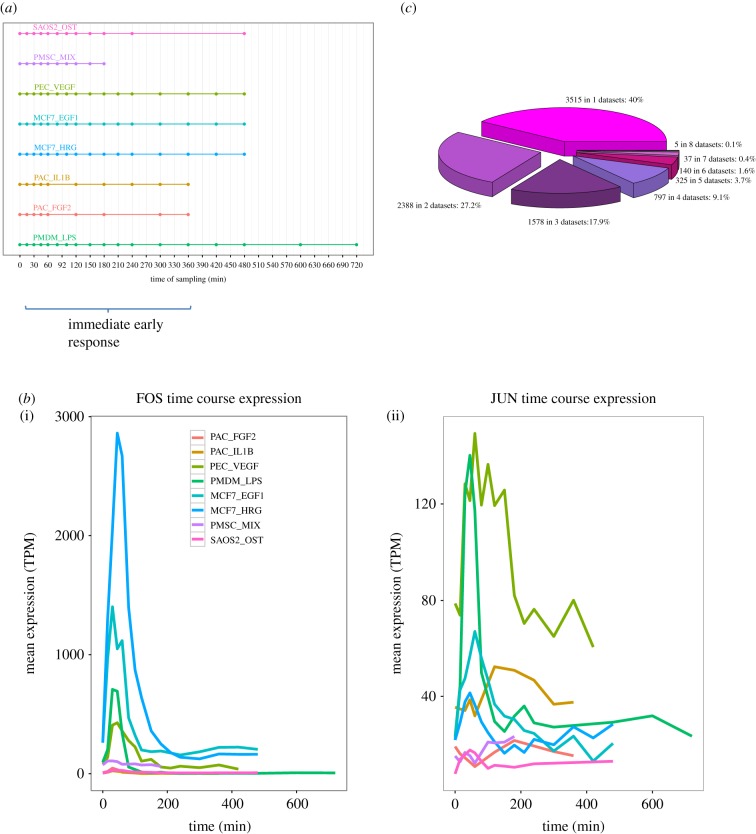
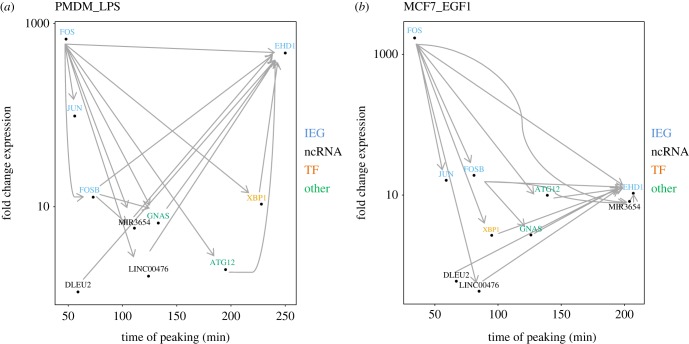
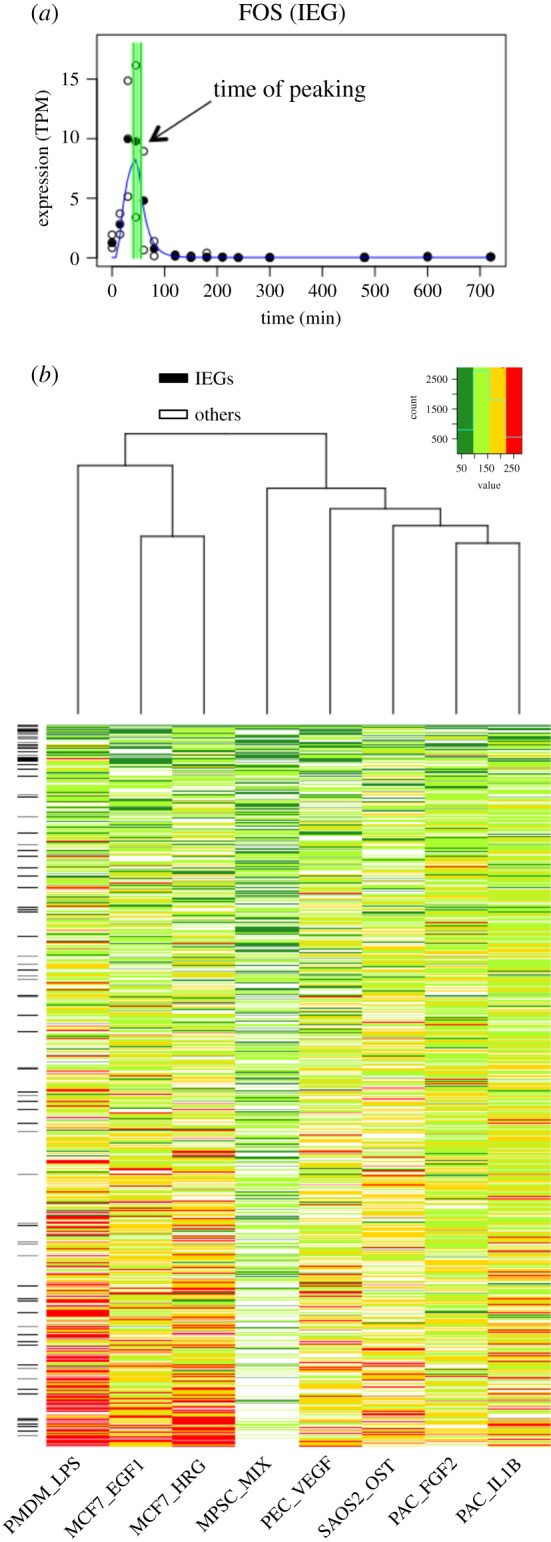
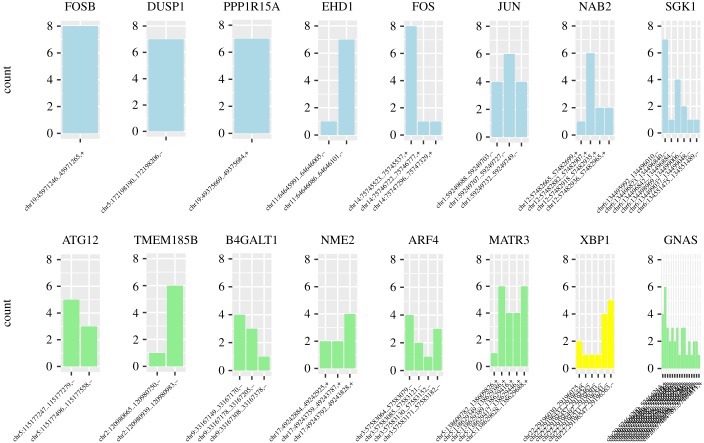
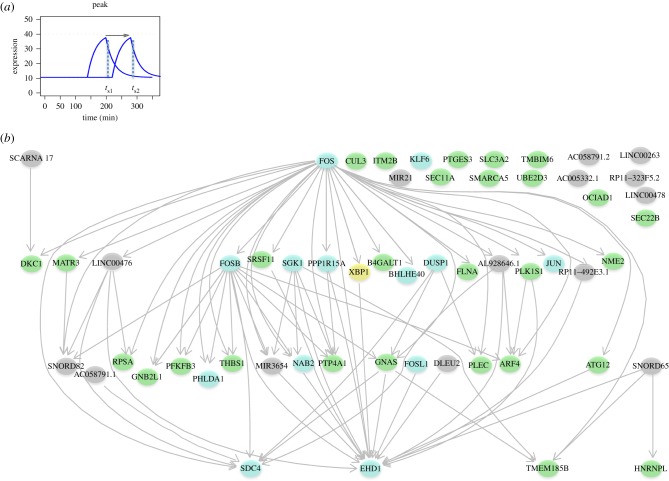
The promoters of immediate early genes (IEGs) are rapidly activated in response to an external stimulus. These genes, also known as primary response genes, have been identified in a range of cell types, under diverse extracellular signals and using varying experimental protocols. Whereas genomic dissection on a case-by-case basis has not resulted in a comprehensive catalogue of IEGs, a rigorous meta-analysis of eight genome-wide FANTOM5 CAGE (cap analysis of gene expression) time course datasets reveals successive waves of promoter activation in IEGs, recapitulating known relationships between cell types and stimuli: we obtain a set of 57 (42 protein-coding) candidate IEGs possessing promoters that consistently drive a rapid but transient increase in expression over time. These genes show significant enrichment for known IEGs reported previously, pathways associated with the immediate early response, and include a number of non-coding RNAs with roles in proliferation and differentiation. Surprisingly, we also find strong conservation of the ordering of activation for these genes, such that 77 pairwise promoter activation orderings are conserved. Using the leverage of comprehensive CAGE time series data across cell types, we also document the extensive alternative promoter usage by such genes, which is likely to have been a barrier to their discovery until now. The common activation ordering of the core set of early-responding genes we identify may indicate conserved underlying regulatory mechanisms. By contrast, the considerably larger number of transiently activated genes that are specific to each cell type and stimulus illustrates the breadth of the primary response.
立即早期基因 (IEG) 的启动子会迅速被外部刺激激活。这些基因也被称为初级反应基因,已在多种细胞类型中被鉴定出来,这些细胞类型会受到各种细胞外信号的刺激,并使用不同的实验方案。虽然对每个案例进行基因组剖析并没有导致 IEG 的全面目录,但对八个 FANTOM5 CAGE(基因表达的帽分析)时间序列数据集的严格荟萃分析揭示了 IEG 中启动子的连续激活波,再现了已知的细胞类型和刺激之间的关系:我们获得了一组 57 个(42 个蛋白质编码)候选 IEG,它们的启动子能够持续时间地快速但短暂地增加表达。这些基因在先前报道的已知 IEG 中显著富集,与早期反应相关的途径包括许多在增殖和分化中具有作用的非编码 RNA。令人惊讶的是,我们还发现这些基因的激活排序具有很强的保守性,以至于有 77 个成对的启动子激活排序是保守的。通过利用跨细胞类型的综合 CAGE 时间序列数据,我们还记录了这些基因的广泛的替代启动子使用情况,这可能是迄今为止发现它们的障碍。我们确定的核心早期反应基因的共同激活排序可能表明存在保守的潜在调控机制。相比之下,每个细胞类型和刺激都具有特异性的短暂激活基因数量要大得多,这说明了初级反应的广泛性。