Max Planck Institute for Dynamics of Complex Technical Systems, Bioprocess Engineering, Magdeburg, Sandtorstr. 1, 39106, Magdeburg, Germany.
Valneva SE, 6 rue Alain Bombard, 44800, Saint-Herblain, France.
Appl Microbiol Biotechnol. 2018 Oct;102(20):8725-8737. doi: 10.1007/s00253-018-9275-z. Epub 2018 Aug 8.
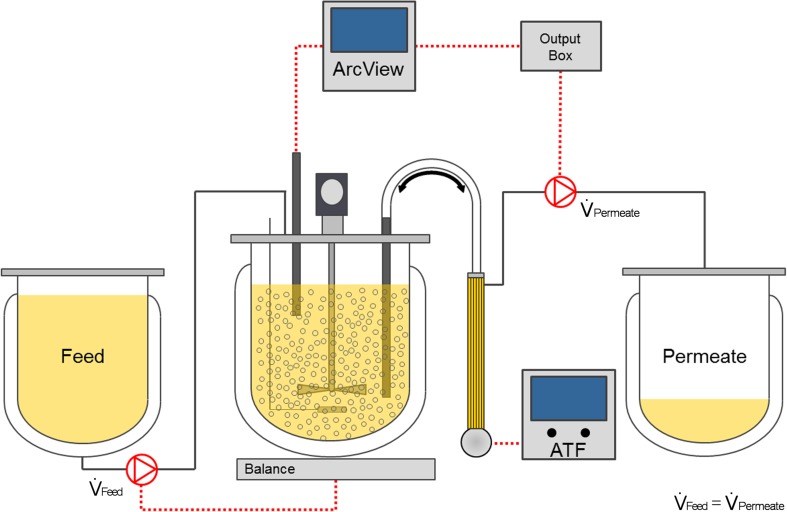
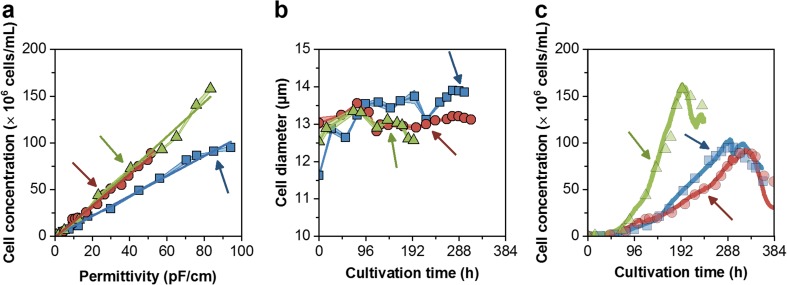
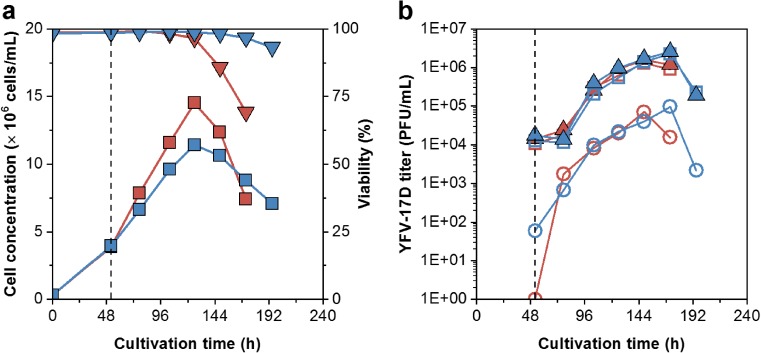
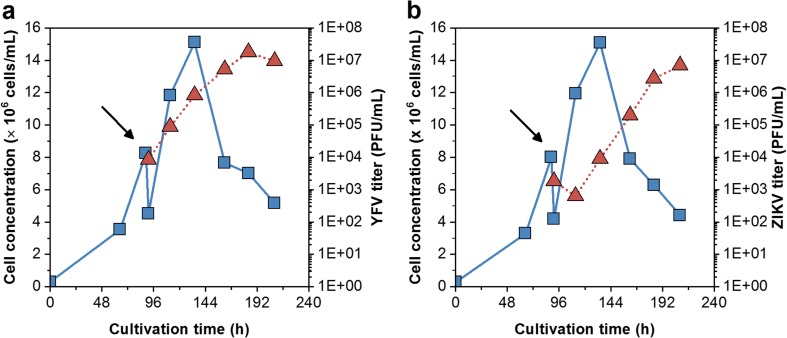
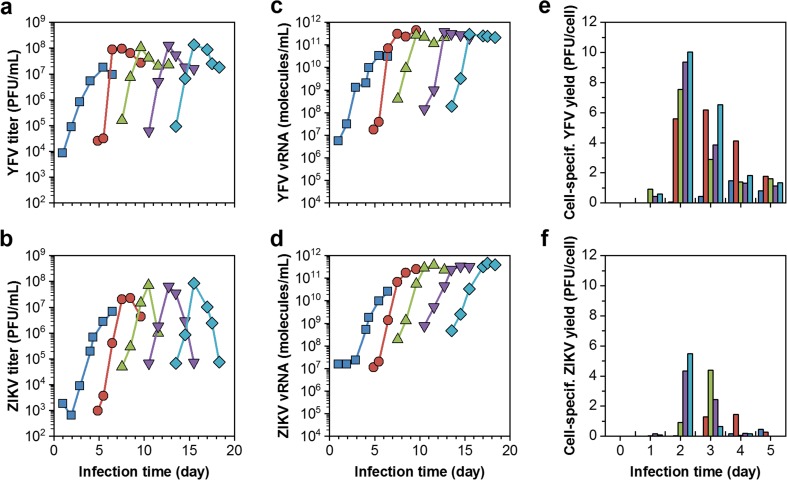
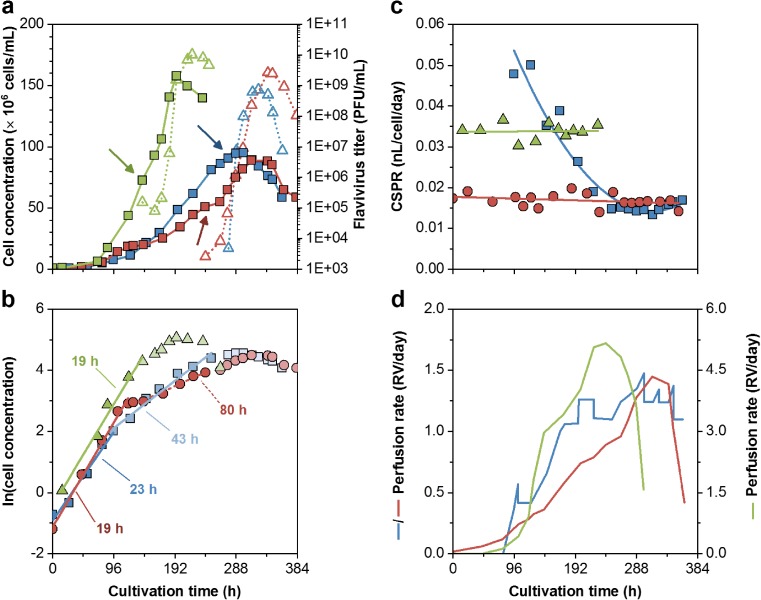
A live-attenuated, human vaccine against mosquito-borne yellow fever virus has been available since the 1930s. The vaccine provides long-lasting immunity and consistent mass vaccination campaigns counter viral spread. However, traditional egg-based vaccine manufacturing requires about 12 months and vaccine supplies are chronically close to shortages. In particular, for urban outbreaks, vaccine demand can be covered rarely by global stockpiling. Thus, there is an urgent need for an improved vaccine production platform, ideally transferable to other flaviviruses including Zika virus. Here, we present a proof-of-concept study regarding cell culture-based yellow fever virus 17D (YFV) and wild-type Zika virus (ZIKV) production using duck embryo-derived EB66® cells. Based on comprehensive studies in shake flasks, 1-L bioreactor systems were operated with scalable hollow fiber-based tangential flow filtration (TFF) and alternating tangential flow filtration (ATF) perfusion systems for process intensification. EB66® cells grew in chemically defined medium to cell concentrations of 1.6 × 10 cells/mL. Infection studies with EB66®-adapted virus led to maximum YFV titers of 7.3 × 10 PFU/mL, which corresponds to about 10 million vaccine doses for the bioreactor harvest. For ZIKV, titers of 1.0 × 10 PFU/mL were achieved. Processes were automated successfully using a capacitance probe to control perfusion rates based on on-line measured cell concentrations. The use of cryo-bags for direct inoculation of production bioreactors facilitates pre-culture preparation contributing to improved process robustness. In conclusion, this platform is a powerful option for next generation cell culture-based flavivirus vaccine manufacturing.
自 20 世纪 30 年代以来,一种减毒活的、针对蚊媒黄热病病毒的人类疫苗已经问世。该疫苗提供持久的免疫力,并且一致的大规模疫苗接种活动可以抑制病毒传播。然而,传统的基于鸡蛋的疫苗生产需要大约 12 个月的时间,而且疫苗供应一直接近短缺。特别是对于城市疫情爆发,全球储备很少能满足疫苗需求。因此,迫切需要一个改进的疫苗生产平台,理想情况下可以转移到其他黄病毒,包括寨卡病毒。在这里,我们提出了一个基于细胞培养的黄热病病毒 17D(YFV)和野生型寨卡病毒(ZIKV)生产的概念验证研究,使用鸭胚衍生的 EB66®细胞。在摇瓶的综合研究基础上,采用可扩展的中空纤维切向流过滤(TFF)和交替切向流过滤(ATF)灌注系统,在 1-L 生物反应器系统中进行了规模化生产。EB66®细胞在化学成分确定的培养基中生长到 1.6×10 个细胞/mL 的细胞浓度。用 EB66®适应的病毒进行感染研究,导致 YFV 的最大滴度达到 7.3×10 PFU/mL,这相当于生物反应器收获的大约 1000 万剂疫苗。对于 ZIKV,达到了 1.0×10 PFU/mL 的滴度。通过使用电容探头根据在线测量的细胞浓度控制灌注率,成功地实现了过程自动化。使用冷冻袋直接接种生产生物反应器,便于预培养准备,有助于提高过程的稳健性。总之,该平台是下一代基于细胞培养的黄病毒疫苗生产的有力选择。