Deanery of Biomedical Sciences, University of Edinburgh, Edinburgh, United Kingdom.
Elife. 2018 Aug 10;7:e35373. doi: 10.7554/eLife.35373.
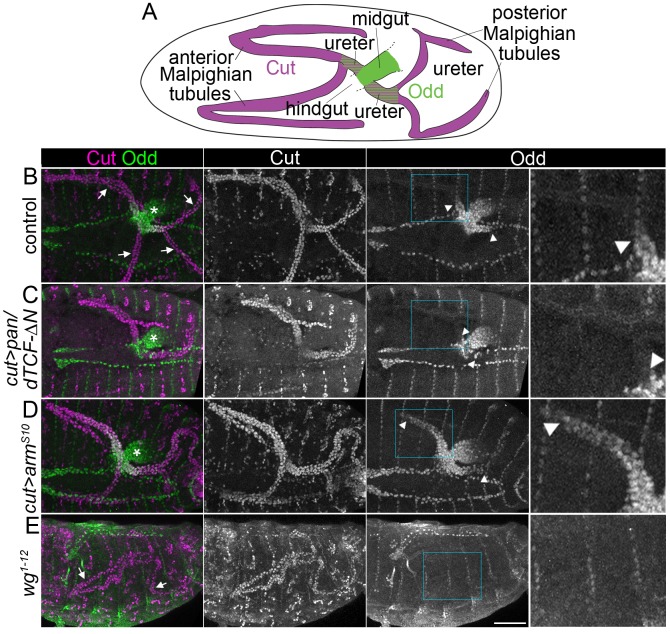
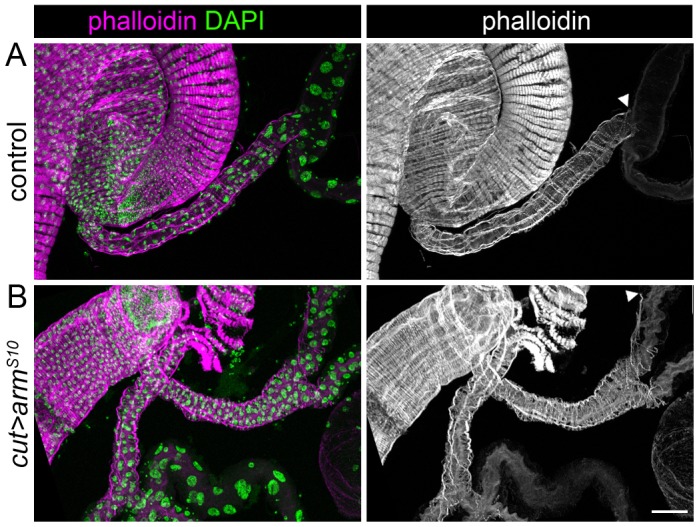
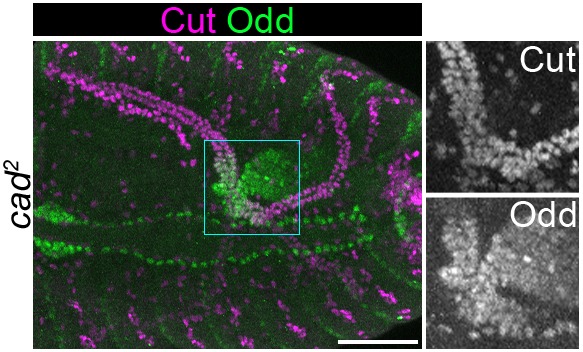
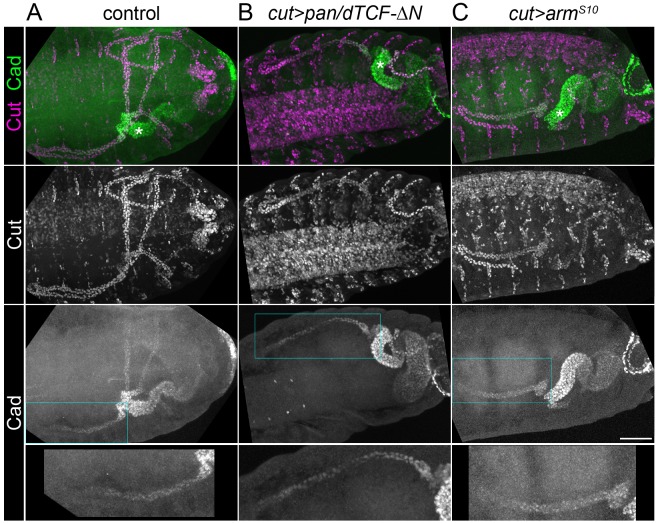
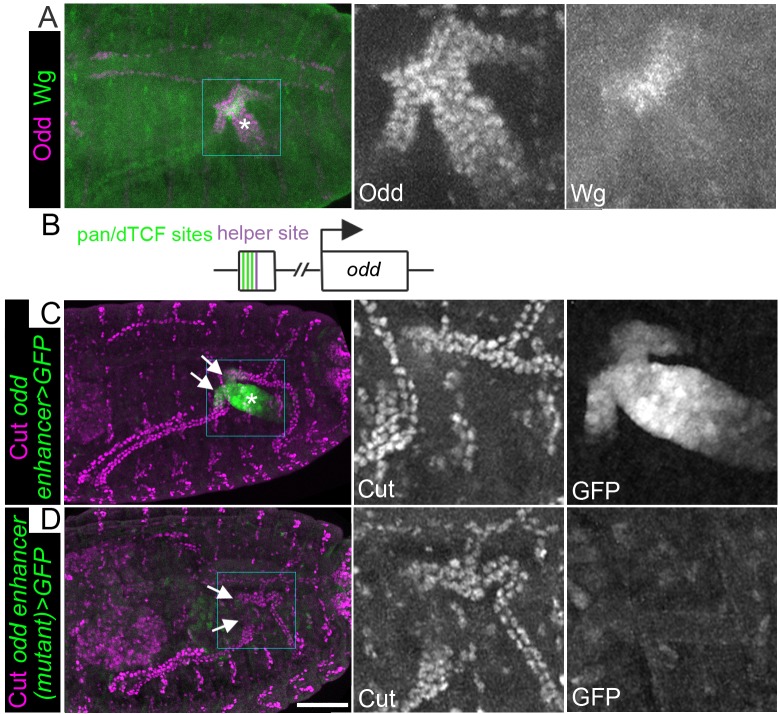
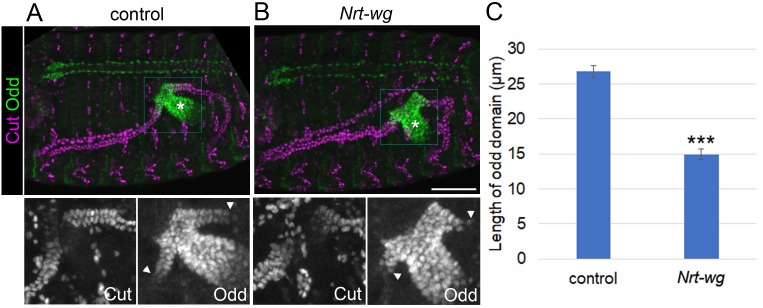
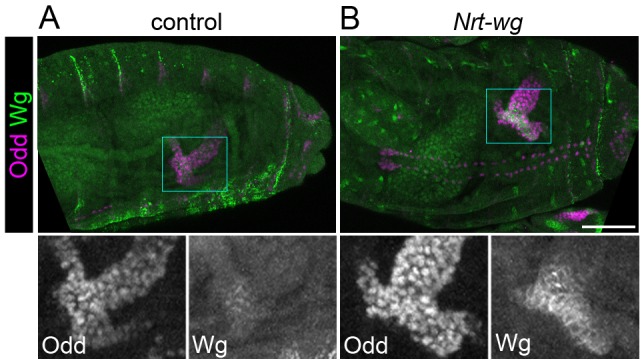
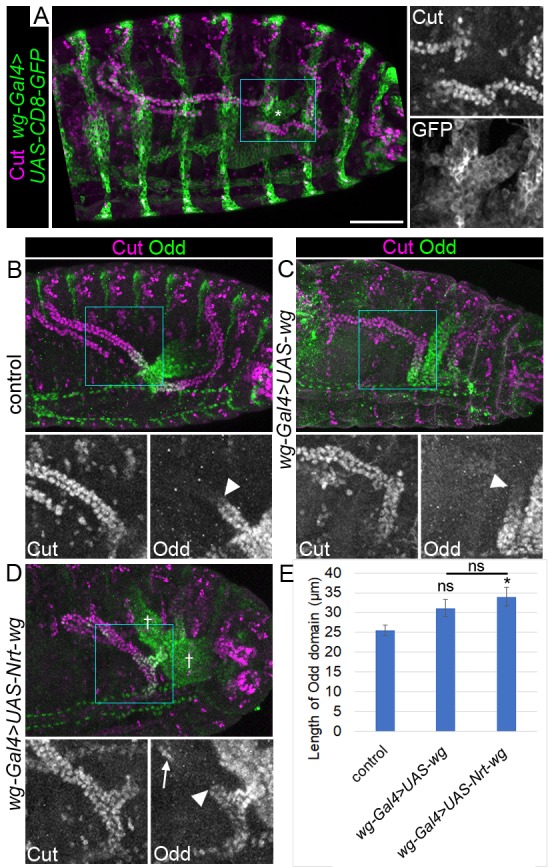
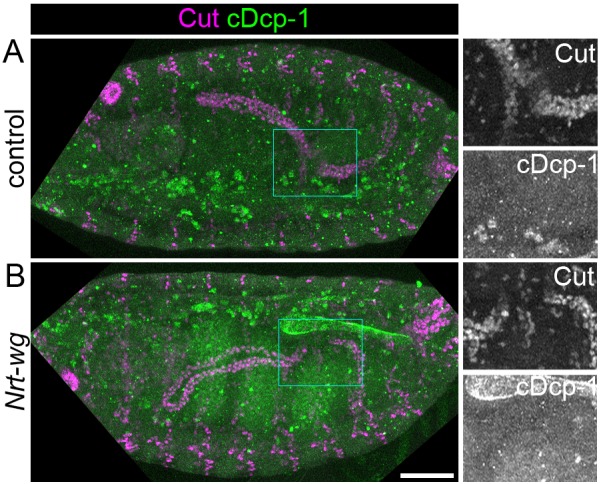
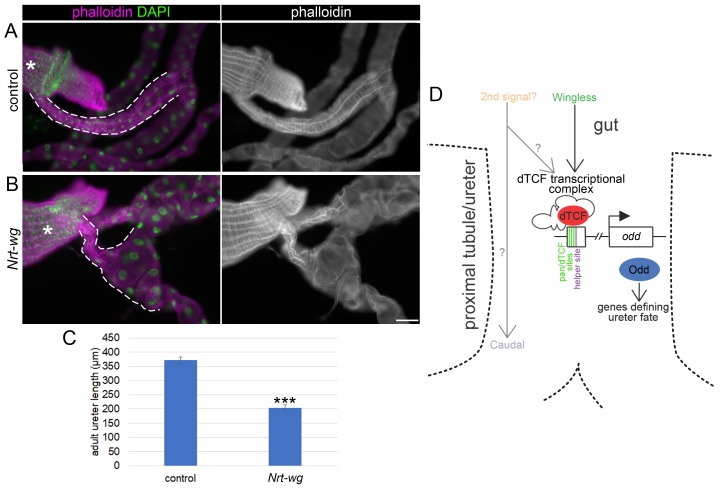
Wingless/Wnts are signalling molecules, traditionally considered to pattern tissues as long-range morphogens. However, more recently the spread of Wingless was shown to be dispensable in diverse developmental contexts in and vertebrates. Here we demonstrate that release and spread of Wingless is required to pattern the proximo-distal (P-D) axis of Malpighian tubules. Wingless signalling, emanating from the midgut, directly activates expression several cells distant in the proximal tubule. Replacing Wingless with a membrane-tethered version that is unable to diffuse from the Wingless producing cells results in aberrant patterning of the Malpighian tubule P-D axis and development of short, deformed ureters. This work directly demonstrates a patterning role for a released Wingless signal. As well as extending our understanding about the functional modes by which Wnts shape animal development, we anticipate this mechanism to be relevant to patterning epithelial tubes in other organs, such as the vertebrate kidney.
无翅型/Wnt 是信号分子,传统上被认为是作为长程形态发生素来塑造组织的。然而,最近的研究表明,无翅型在和脊椎动物的多种发育背景中的扩散是可有可无的。在这里,我们证明无翅型的释放和扩散对于模式化 马尔皮基氏管的近-远(P-D)轴是必需的。无翅型信号从中肠发出,直接激活近端小管中几个远离的 表达。用一种不能从产生无翅型的细胞中扩散的膜束缚版本取代无翅型,会导致马尔皮基氏管 P-D 轴的异常模式化,并导致输尿管变短和畸形。这项工作直接证明了释放的无翅型信号在模式形成中的作用。除了扩展我们对 Wnt 塑造动物发育的功能模式的理解之外,我们预计这种机制与其他器官中上皮管的模式形成有关,如脊椎动物的肾脏。