College of Plant Science and Technology, Beijing Key Laboratory for Agricultural Application and New Technique, Beijing University of Agriculture, Beijing, 102206, China.
BMC Plant Biol. 2018 Aug 10;18(1):162. doi: 10.1186/s12870-018-1377-3.
Ripening of fleshy fruits has been classically defined as climacteric or non-climacteric. Both types of ripening are controlled by plant hormones, notably by ethylene in climacteric ripening and by abscisic acid (ABA) in non-climacteric ripening. In pepper (Capsicum), fruit ripening has been widely classified as non-climacteric, but the ripening of the hot pepper fruit appears to be climacteric. To date, how to regulate the hot pepper fruit ripening through ethylene and ABA remains unclear.
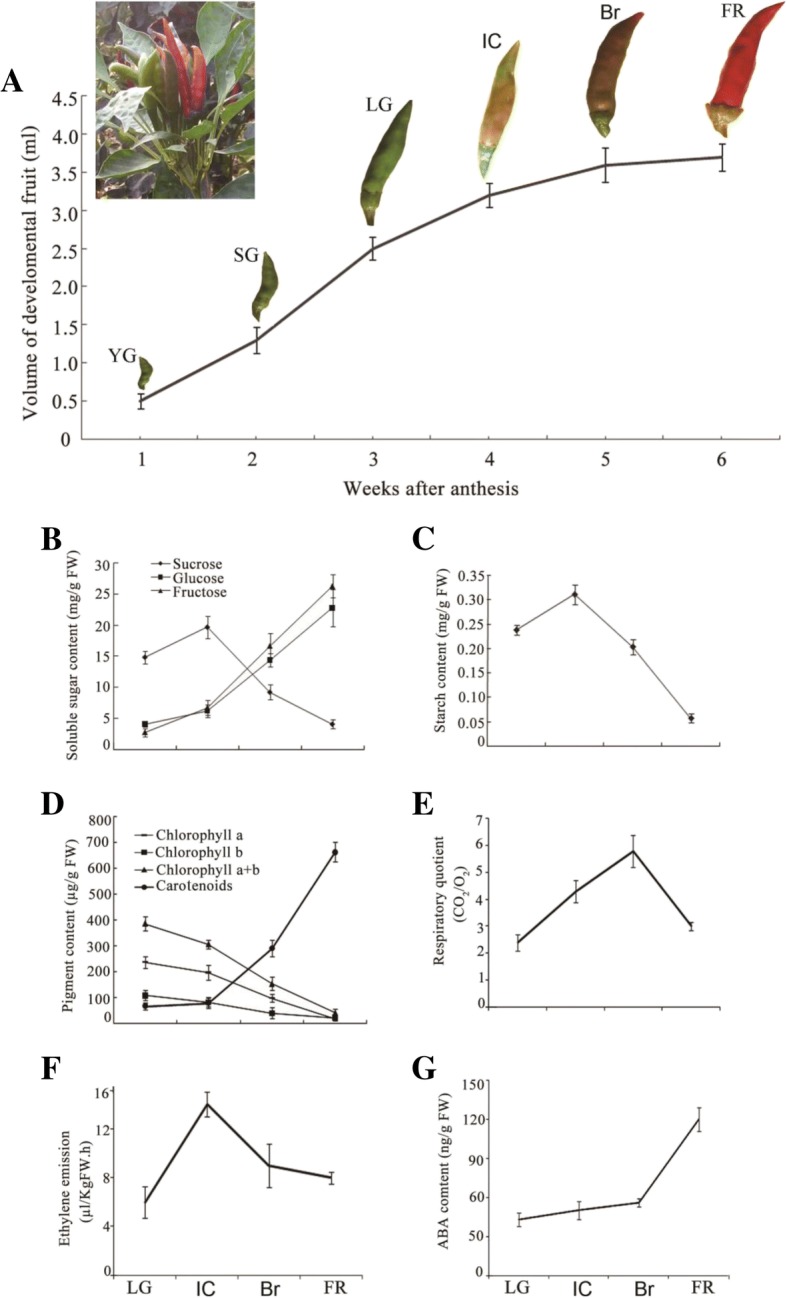
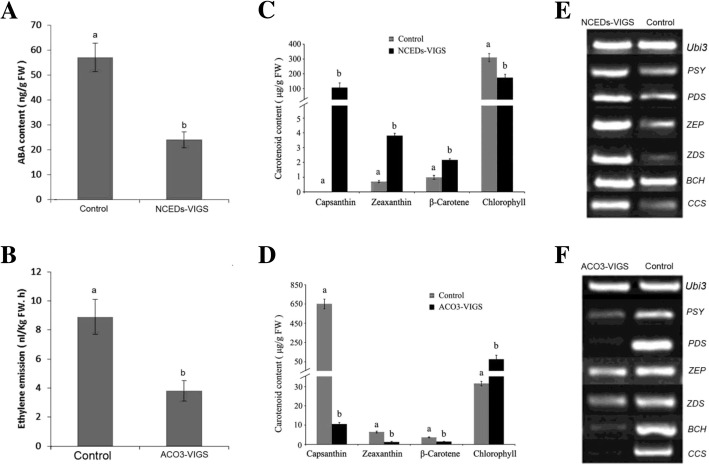
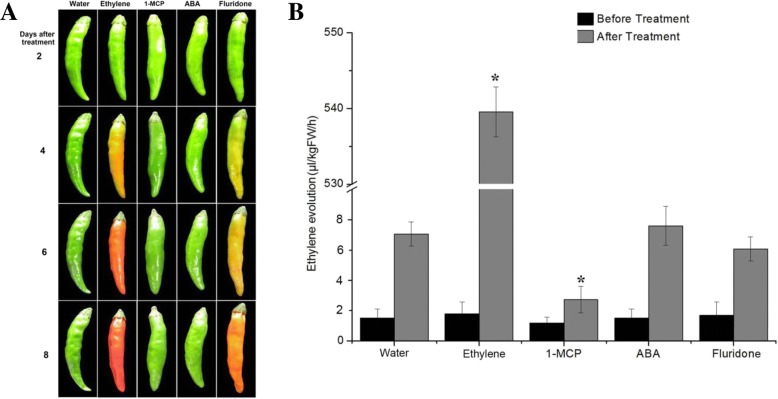
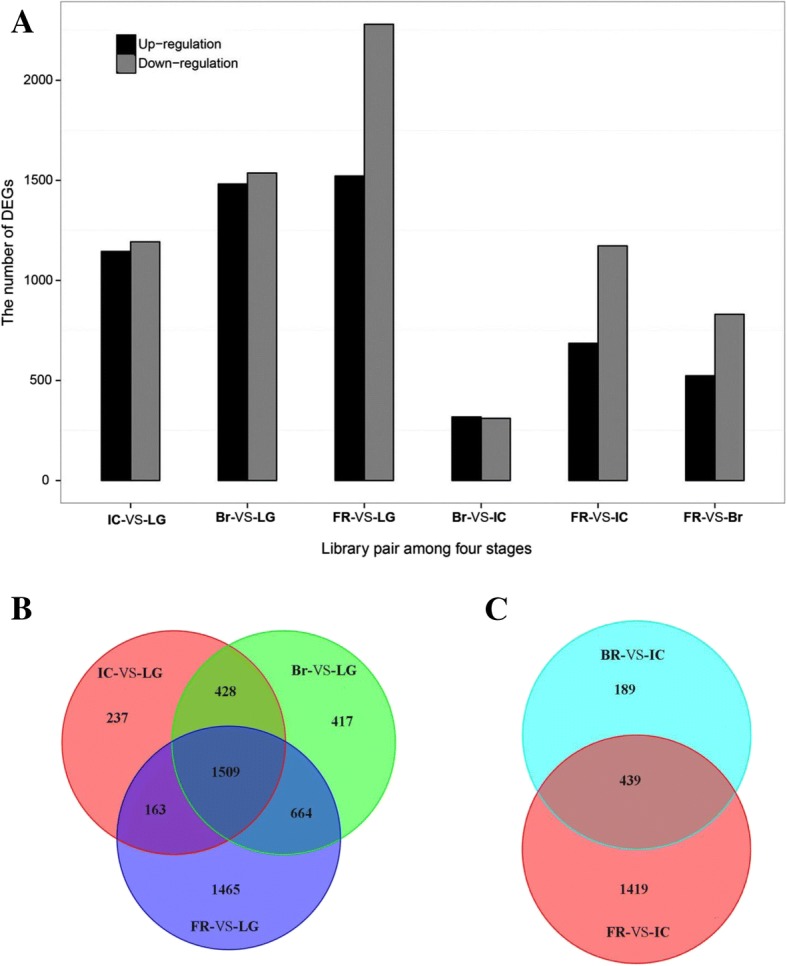
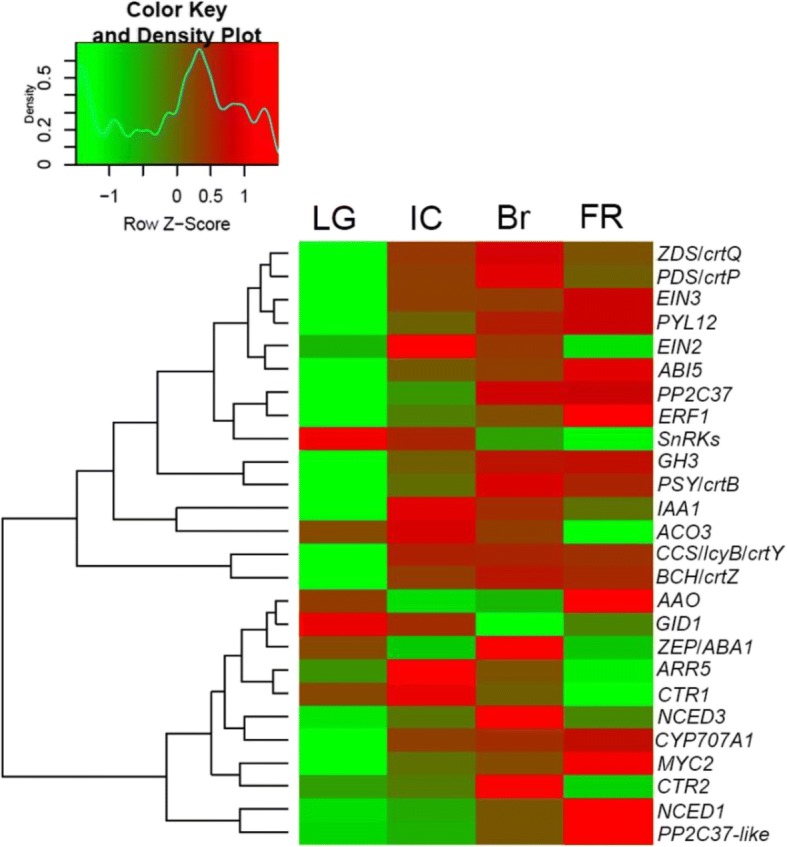
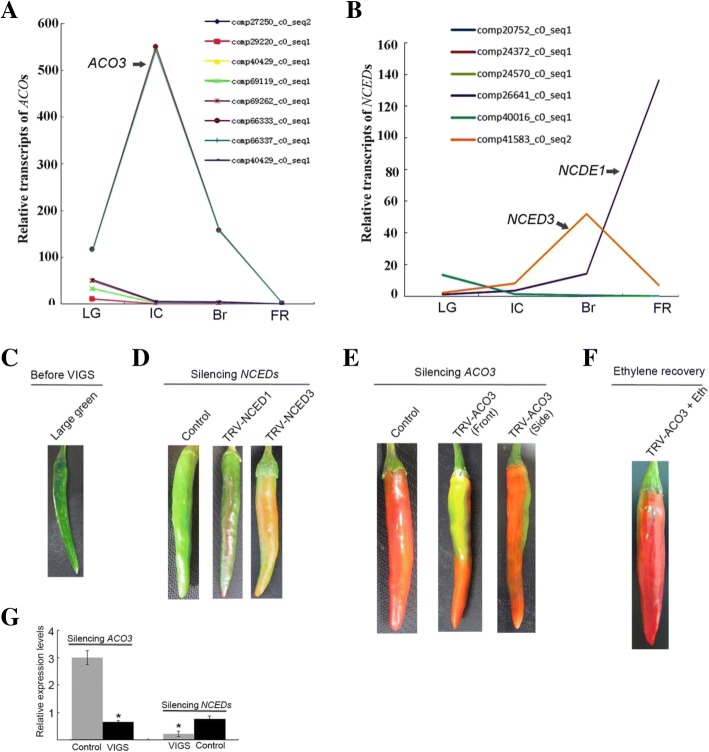
Here, we examined ripening of the hot pepper (Capsicum frutescens) fruit during large green (LG), initial colouring (IC), brown (Br), and full red (FR) stages. We found a peak of ethylene emission at the IC stage, followed by a peak respiratory quotient at the Br stage. By contrast, ABA levels increased slowly before the Br stage, then increased sharply and reached a maximum level at the FR stage. Exogenous ethylene promoted colouration, but exogenous ABA did not. Unexpectedly, fluridone, an inhibitor of ABA biosynthesis, promoted colouration. RNA-sequencing data obtained from the four stages around ripening showed that ACO3 and NCED1/3 gene expression determined ethylene and ABA levels, respectively. Downregulation of ACO3 and NCED1/3 expression by virus-induced gene silencing (VIGS) inhibited and promoted colouration, respectively, as evidenced by changes in carotenoid, ABA, and ethylene levels, as well as carotenoid biosynthesis-related gene expression. Importantly, the retarded colouration in ACO3-VIGS fruits was rescued by exogenous ethylene.
Ethylene positively regulates the hot pepper fruit colouration, while inhibition of ABA biosynthesis promotes colouration, suggesting a role of ABA in de-greening. Our findings provide new insights into processes of fleshy fruit ripening regulated by ABA and ethylene, focusing on ethylene in carotenoid biosynthesis and ABA in chlorophyll degradation.
肉质果实的成熟过程通常被定义为呼吸跃变型或非呼吸跃变型。这两种成熟类型均受植物激素的调控,在呼吸跃变型成熟中主要是乙烯,而非呼吸跃变型成熟中主要是脱落酸(ABA)。在辣椒(Capsicum)中,果实成熟已被广泛归类为非呼吸跃变型,但辣椒果实的成熟似乎是呼吸跃变型的。迄今为止,如何通过乙烯和 ABA 来调节辣椒果实的成熟仍不清楚。
本研究在大绿(LG)、初始着色(IC)、棕色(Br)和全红(FR)四个阶段检测了辣椒果实的成熟过程。结果发现,在 IC 阶段乙烯释放出现峰值,随后在 Br 阶段呼吸商出现峰值。相比之下,ABA 水平在 Br 阶段之前缓慢增加,然后急剧增加并在 FR 阶段达到最大值。外源乙烯促进了着色,但外源 ABA 没有。出乎意料的是,ABA 生物合成抑制剂 fluridone 促进了着色。在成熟过程中四个阶段获得的 RNA 测序数据表明,ACO3 和 NCED1/3 基因的表达分别决定了乙烯和 ABA 的水平。病毒诱导的基因沉默(VIGS)下调 ACO3 和 NCED1/3 的表达分别抑制和促进了着色,这表现在类胡萝卜素、ABA 和乙烯水平以及类胡萝卜素生物合成相关基因表达的变化上。重要的是,ACO3-VIGS 果实中延迟的着色可以通过外源乙烯得到挽救。
乙烯正向调节辣椒果实的着色,而抑制 ABA 生物合成促进了着色,这表明 ABA 在脱绿过程中起作用。我们的研究结果为 ABA 和乙烯调控肉质果实成熟的过程提供了新的见解,重点关注了乙烯在类胡萝卜素生物合成中的作用和 ABA 在叶绿素降解中的作用。