Li Xiao-Qiang, Bai Yin-Liang, Zhang De-Li, Jiao Hai-Sheng, He Rong-Xia
Pharmacy Department, Lanzhou University Second Hospital, Lanzhou 730030, China.
Department of Gynecology, Lanzhou University Second Hospital, Lanzhou 730030, China,
Onco Targets Ther. 2018 Jul 27;11:4395-4405. doi: 10.2147/OTT.S166018. eCollection 2018.
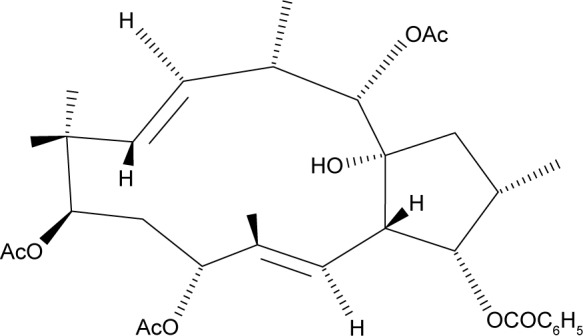
The plant L. has been used in traditional Chinese medicine for treating various disorders such as tuberculosis and edema. The aim of this study was to investigate the effect of euphornin, a bioactive compound isolated from , on proliferation of human cervical adenocarcinoma HeLa cells by analyzing cell viability, rate of apoptosis, and cell cycle progression.
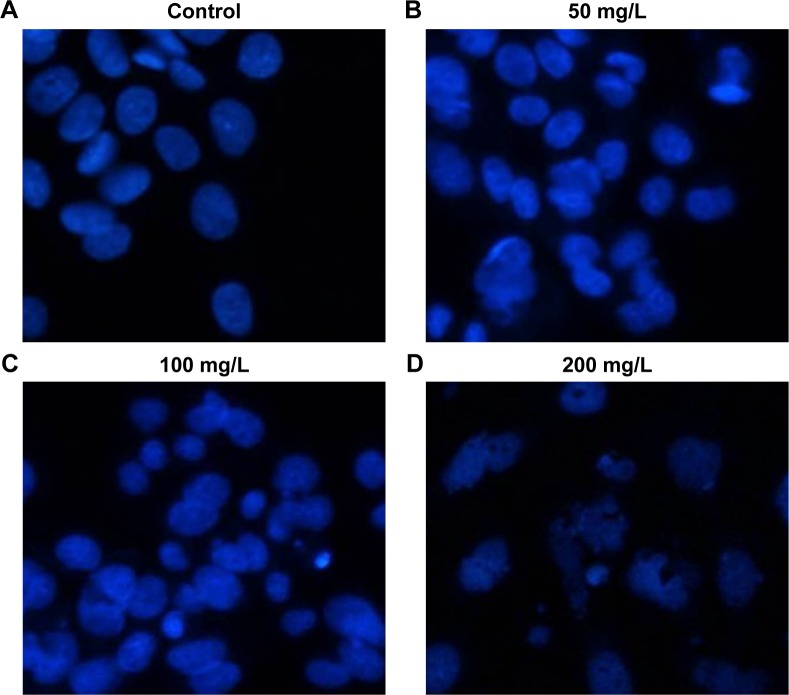
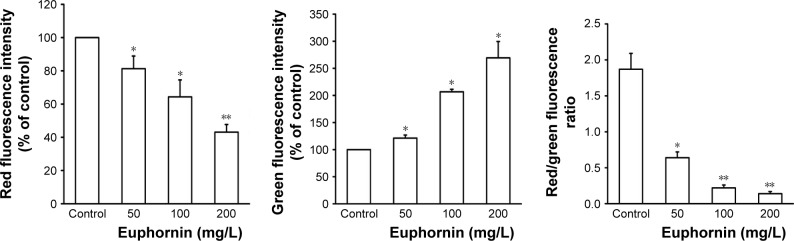
The sulforhodamine B assay was used to study the effect of euphornin on the proliferation of HeLa cells. Morphological changes to cell nuclei were identified after Hoechst 33342 staining. Mitochondrial membrane depolarization (MMP) was analyzed after staining with JC-1 dye. The influence of euphornin on the apoptosis rate was analyzed by Annexin V/propidium iodide double staining. Fluorescence-activated cell sorting was applied to investigate the influence of euphornin on cell cycle progression. Proteins were obtained from HeLa cells and analyzed by Western blots.
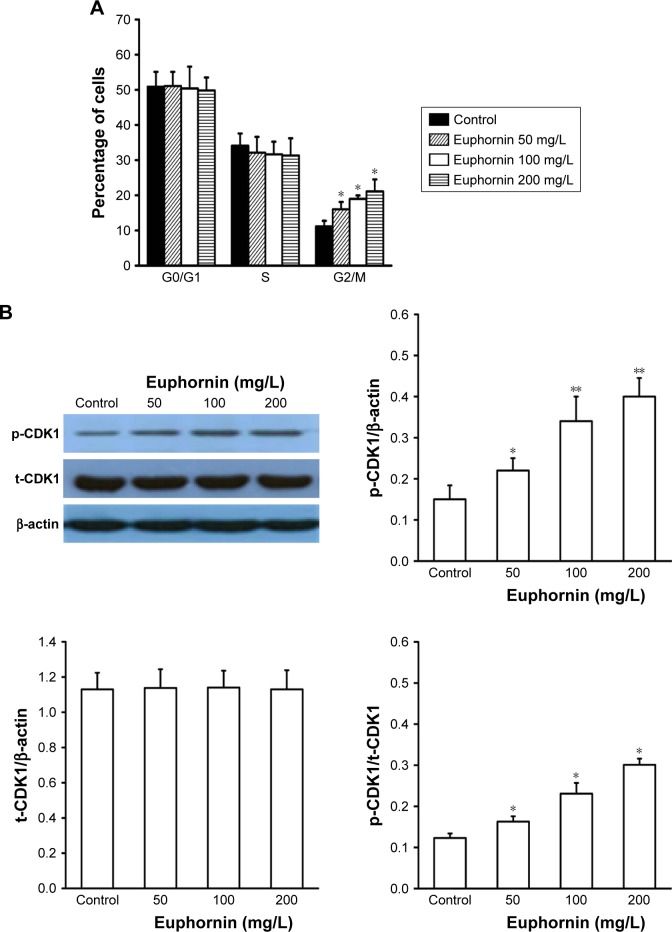
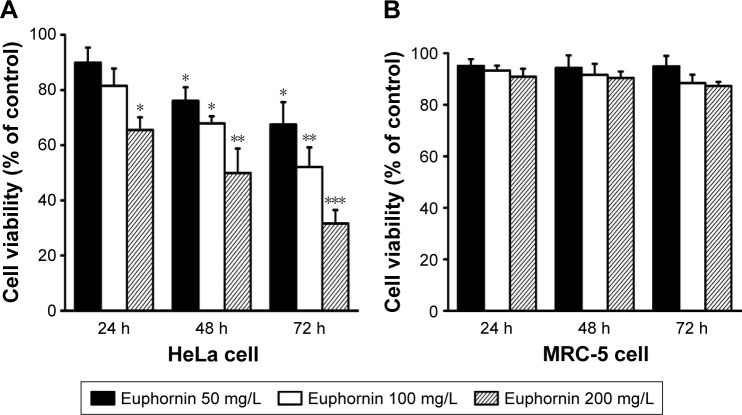
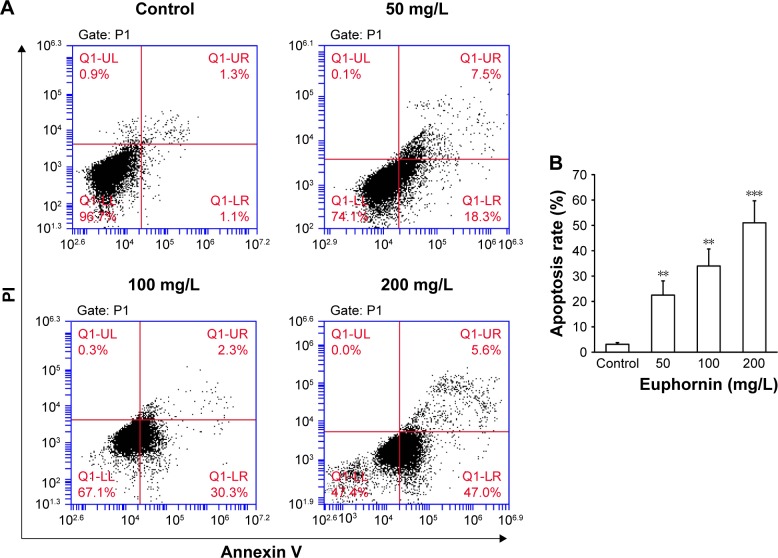
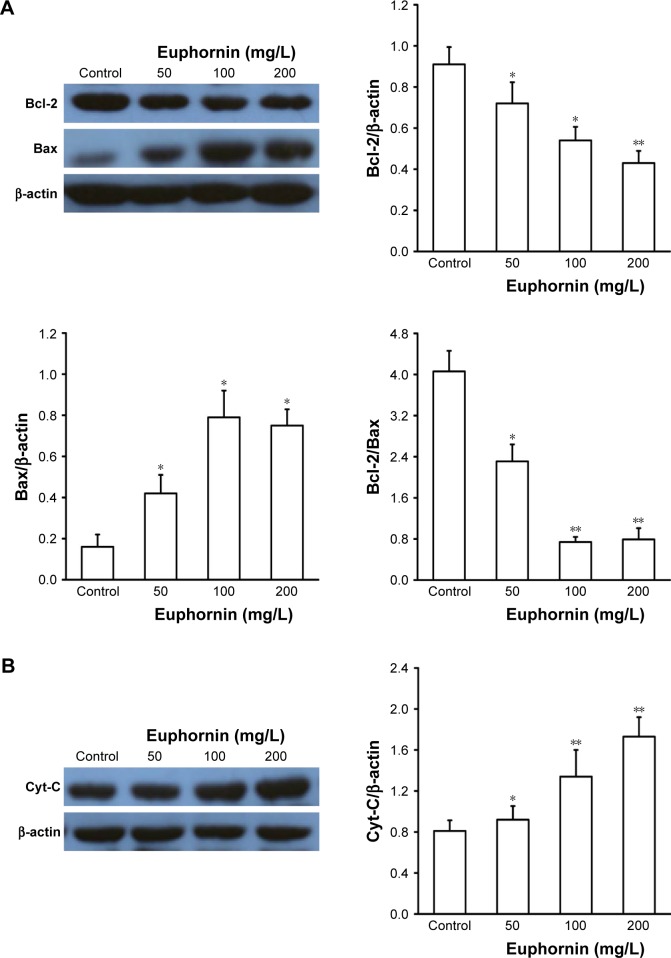
A cell viability assay showed that euphornin inhibited proliferation of HeLa cells in a dose-dependent and time-dependent manner. Euphornin also induced apoptosis in a concentration-dependent manner, with the rates of apoptosis ranging from 25.3% to 52.6%. A high concentration of euphornin was found to block HeLa cells at the G2/M stage. A Western blot analysis suggested that euphornin might exhibit antitumor activity by inducing apoptosis. Euphornin treatment altered the ratio of Bax/Bcl-2 in HeLa cells, which led to the release of cytochrome complex. The levels of cleaved caspase-3, caspase-8, caspase-9, and caspase-10 were also markedly increased by euphornin treatment. Analysis of cell cycles indicated that euphornin induced cell cycle arrest by increasing the level of the phospho-CDK1 (Tyr15) protein. The various assays demonstrated that euphornin treatment resulted in a significant suppression of cell growth accompanied by G2/M cell cycle arrest and increased rate of apoptosis via mitochondrial and caspase pathways.
Our findings suggest that euphornin has the potential to be used as a cancer therapeutic agent against human cervical adenocarcinoma.
植物L.已被用于传统中药治疗各种疾病,如肺结核和水肿。本研究的目的是通过分析细胞活力、凋亡率和细胞周期进程,研究从L.中分离出的生物活性化合物优福宁对人宫颈腺癌HeLa细胞增殖的影响。
采用磺酰罗丹明B法研究优福宁对HeLa细胞增殖的影响。用Hoechst 33342染色后鉴定细胞核的形态变化。用JC-1染料染色后分析线粒体膜去极化(MMP)。通过Annexin V/碘化丙啶双染分析优福宁对凋亡率的影响。应用荧光激活细胞分选技术研究优福宁对细胞周期进程的影响。从HeLa细胞中提取蛋白质并通过蛋白质印迹法进行分析。
细胞活力测定表明,优福宁以剂量依赖性和时间依赖性方式抑制HeLa细胞的增殖。优福宁还以浓度依赖性方式诱导凋亡,凋亡率为25.3%至52.6%。发现高浓度的优福宁可将HeLa细胞阻滞在G2/M期。蛋白质印迹分析表明,优福宁可能通过诱导凋亡发挥抗肿瘤活性。优福宁处理改变了HeLa细胞中Bax/Bcl-2的比例,导致细胞色素复合物的释放。优福宁处理还显著增加了裂解的caspase-3、caspase-8、caspase-9和caspase-10的水平。细胞周期分析表明,优福宁通过增加磷酸化CDK1(Tyr15)蛋白的水平诱导细胞周期停滞。各种试验表明,优福宁处理导致细胞生长显著抑制,伴有G2/M细胞周期停滞,并通过线粒体和caspase途径增加凋亡率。
我们的研究结果表明,优福宁有潜力用作抗人宫颈腺癌的癌症治疗药物。