Paulk Nicole K, Pekrun Katja, Charville Gregory W, Maguire-Nguyen Katie, Wosczyna Michael N, Xu Jianpeng, Zhang Yue, Lisowski Leszek, Yoo Bryan, Vilches-Moure Jose G, Lee Gordon K, Shrager Joseph B, Rando Thomas A, Kay Mark A
Departments of Pediatrics and Genetics, Stanford University, Stanford, CA 94305, USA.
Glenn Center for Biology of Aging and Department of Neurology & Neurological Sciences, Stanford University, Stanford, CA 94305, USA.
Mol Ther Methods Clin Dev. 2018 Jul 24;10:144-155. doi: 10.1016/j.omtm.2018.06.001. eCollection 2018 Sep 21.
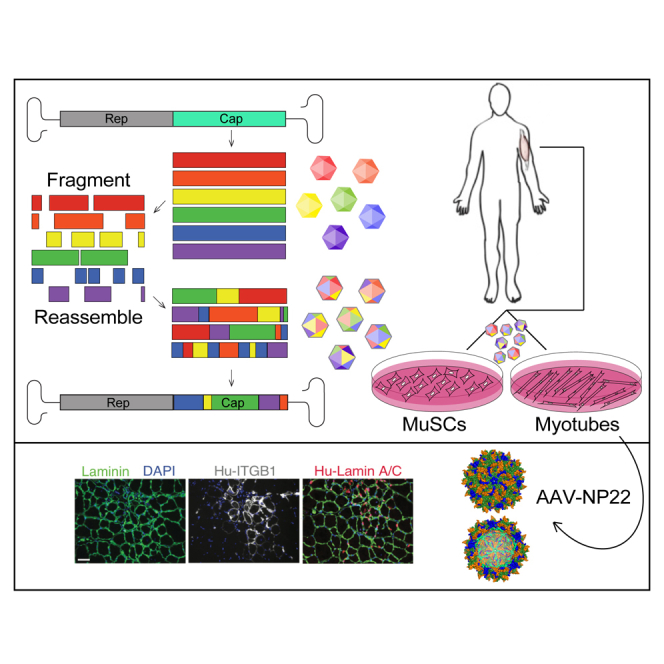
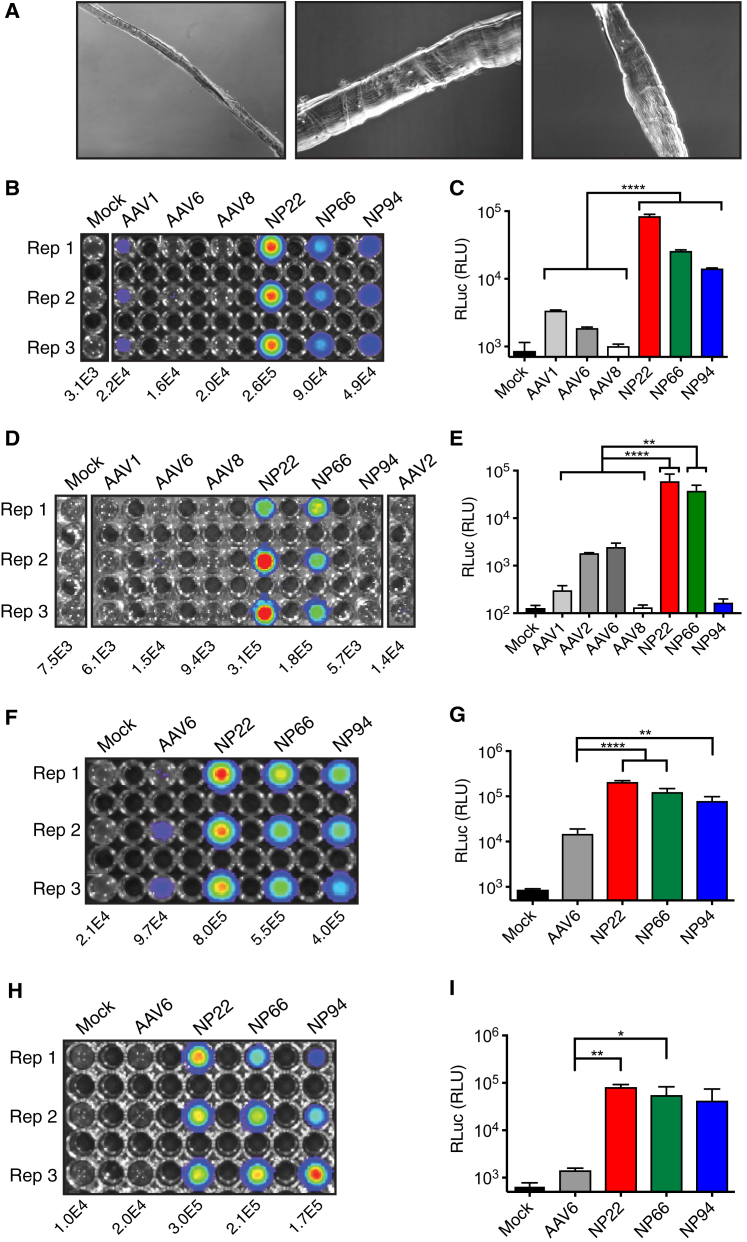
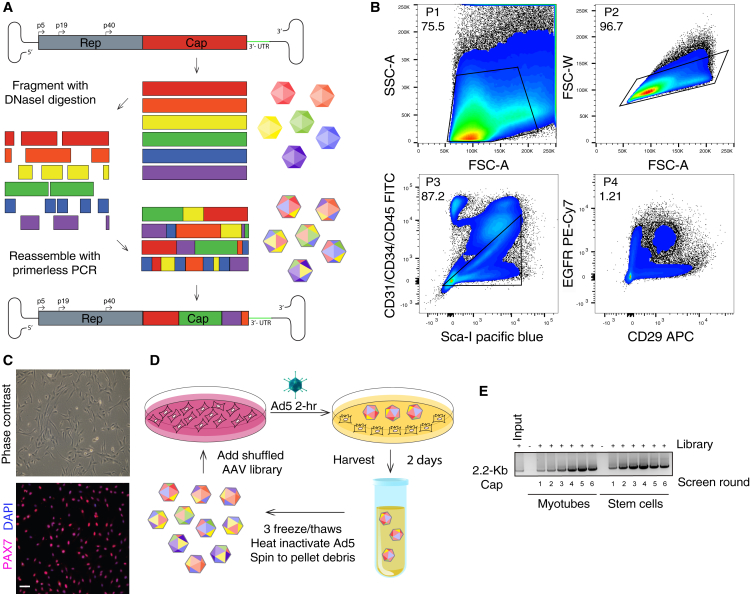
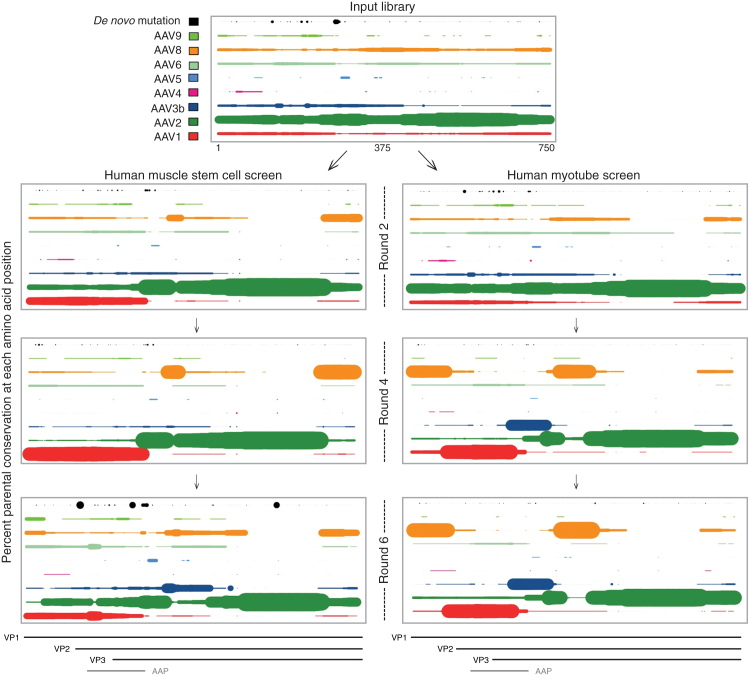
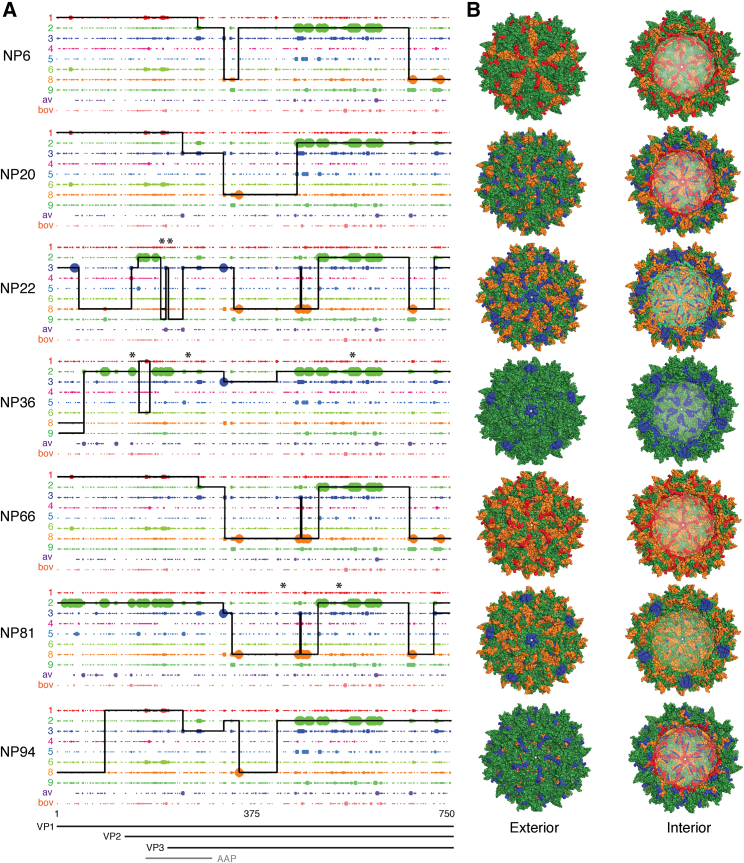
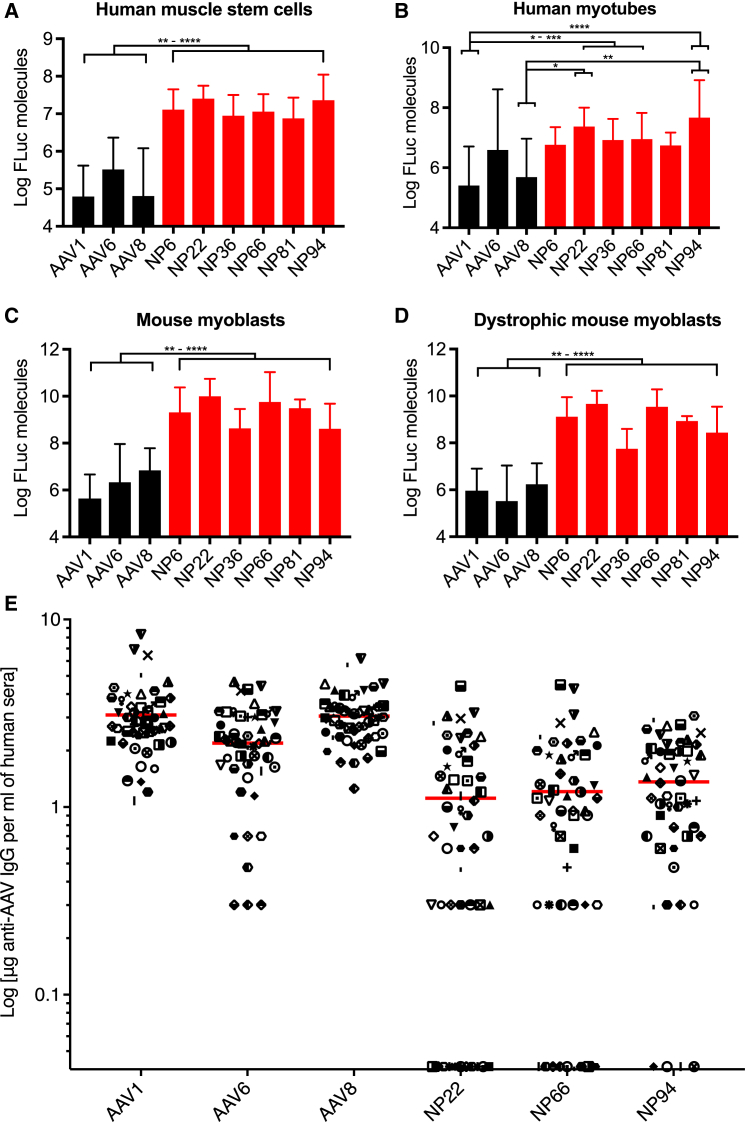
Skeletal muscle is ideal for passive vaccine administration as it is easily accessible by intramuscular injection. Recombinant adeno-associated virus (rAAV) vectors are in consideration for passive vaccination clinical trials for HIV and influenza. However, greater human skeletal muscle transduction is needed for therapeutic efficacy than is possible with existing serotypes. To bioengineer capsids with therapeutic levels of transduction, we utilized a directed evolution approach to screen libraries of shuffled AAV capsids in pools of surgically resected human skeletal muscle cells from five patients. Six rounds of evolution were performed in various muscle cell types, and evolved variants were validated against existing muscle-tropic serotypes rAAV1, 6, and 8. We found that evolved variants NP22 and NP66 had significantly increased primary human and rhesus skeletal muscle fiber transduction from surgical explants and in various primary and immortalized myogenic lines . Importantly, we demonstrated reduced seroreactivity compared to existing serotypes against normal human serum from 50 adult donors. These capsids represent powerful tools for human skeletal muscle expression and secretion of antibodies from passive vaccines.
骨骼肌是被动疫苗接种的理想部位,因为通过肌肉注射很容易到达。重组腺相关病毒(rAAV)载体正在考虑用于HIV和流感的被动疫苗临床试验。然而,为了达到治疗效果,需要比现有血清型实现更高的人类骨骼肌转导效率。为了构建具有治疗水平转导能力的衣壳,我们采用定向进化方法,在来自五名患者的手术切除的人类骨骼肌细胞池中筛选随机排列的AAV衣壳文库。在各种肌肉细胞类型中进行了六轮进化,并针对现有的嗜肌血清型rAAV1、6和8验证了进化后的变体。我们发现,进化后的变体NP22和NP66在手术外植体以及各种原代和永生化成肌细胞系中,显著提高了原代人类和恒河猴骨骼肌纤维的转导效率。重要的是,与现有血清型相比,我们证明它们对来自50名成年供体的正常人血清的血清反应性降低。这些衣壳是在人类骨骼肌中表达和分泌被动疫苗抗体的有力工具。