Tianjin University of Traditional Chinese Medicine, Tianjin 300193, China.
Tianjin State Key Laboratory of Modern Chinese Medicine, Tianjin 300193, China.
Curr Drug Metab. 2019;20(2):138-146. doi: 10.2174/1389200219666180813144114.
Due to the special nature of Chinese Herbal medicine and the complexity of its clinical use, it is difficult to identify and evaluate its toxicity and resulting herb induced liver injury (HILI).
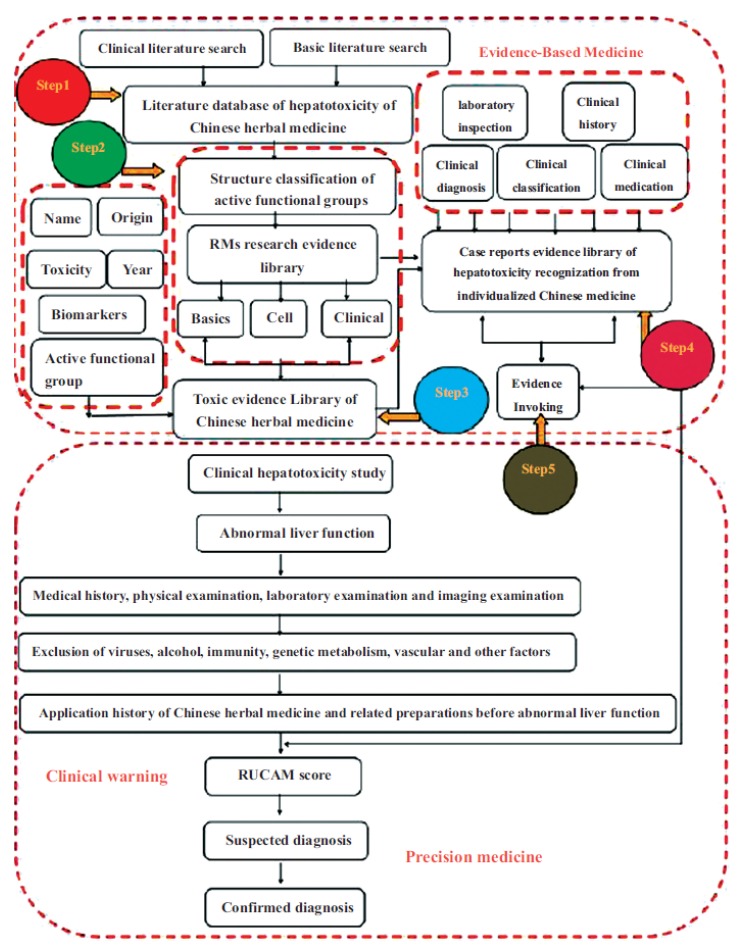
First, the database would provide full profile of HILI from the basic ingredients to clinical outcomes by the most advanced algorithms of artificial intelligence, and it is also possible that we can predict possibilities of HILI after patients taking Chinese herbs by individual patient evaluation and prediction. Second, the database would solve the chaos and lack of the relevant data faced by the current basic research and clinical practice of Chinese Herbal Medicine. Third, we can also screen the susceptible patients from the database and thus prevent the accidents of HILI from the very beginning.
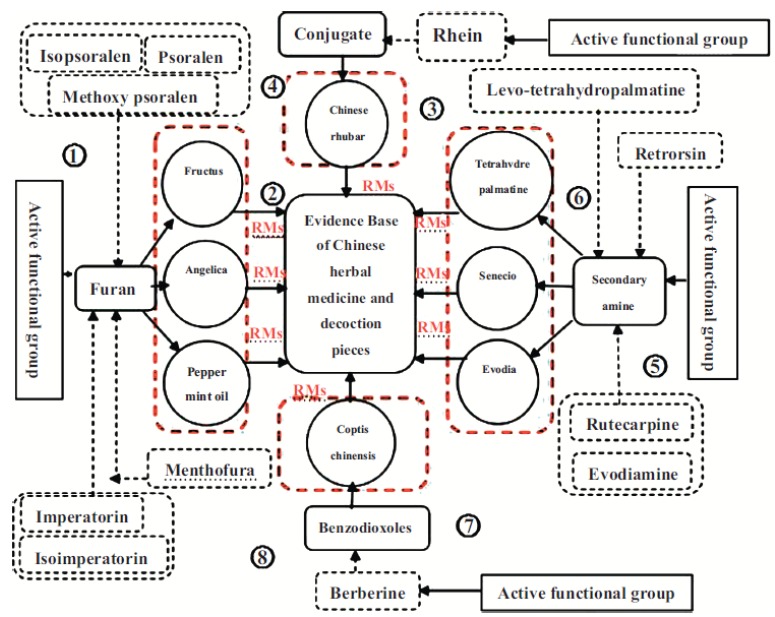
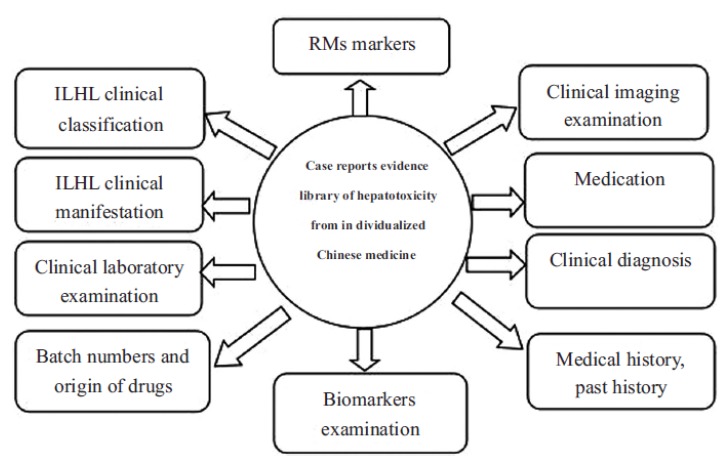
The Roussel Uclaf Causality Assessment Method (RUCAM) is the most accepted method to evaluate DILI, but at present before using the RUCAM evaluation method, data resource collection and analysis are yet to be perfected. Based on existing research on drug-metabolizing enzymes mediating reactive metabolites (RMs), the aim of this study is to explore the possibilities and methods of building multidimensional hierarchical database composing of RMs evidence library, Chinese herbal evidence library, and individualized reports evidence library of herb induced liver injury HILI.
The potential benefits lie in its ability to organize, use vast amounts of evidence and use big data mining techniques at the center for Chinese herbal medicine liver toxicity research, which is the most difficult key point of scientific research to be investigated in the next few years.
由于中草药的特殊性质和其临床应用的复杂性,难以识别和评估其毒性以及由此导致的草药性肝损伤(HILI)。
首先,该数据库将通过最先进的人工智能算法,提供 HILI 从基本成分到临床结果的全面概况,并且还可以通过对个体患者的评估和预测,预测患者服用中草药后发生 HILI 的可能性。其次,该数据库将解决当前中草药基础研究和临床实践所面临的混乱和缺乏相关数据的问题。第三,我们还可以从数据库中筛选出易感患者,从而从一开始就预防 HILI 事故的发生。
Roussel Uclaf Causality Assessment Method(RUCAM)是评估 DILI 最被接受的方法,但目前在使用 RUCAM 评估方法之前,数据资源的收集和分析尚待完善。基于现有关于代谢酶介导的反应性代谢物(RMs)的研究,本研究旨在探索建立多维分层数据库的可能性和方法,该数据库由 RMs 证据库、中草药证据库和中草药性肝损伤 HILI 的个体化报告证据库组成。
潜在的好处在于它能够在中草药肝毒性研究中心组织、使用大量证据,并运用大数据挖掘技术,这是未来几年科学研究中最具挑战性的关键点。