School of Chinese Medicine, The University of Hong Kong, 10 Sassoon Road, Pokfulam, Hong Kong, China.
Int J Mol Sci. 2018 Sep 13;19(9):2745. doi: 10.3390/ijms19092745.
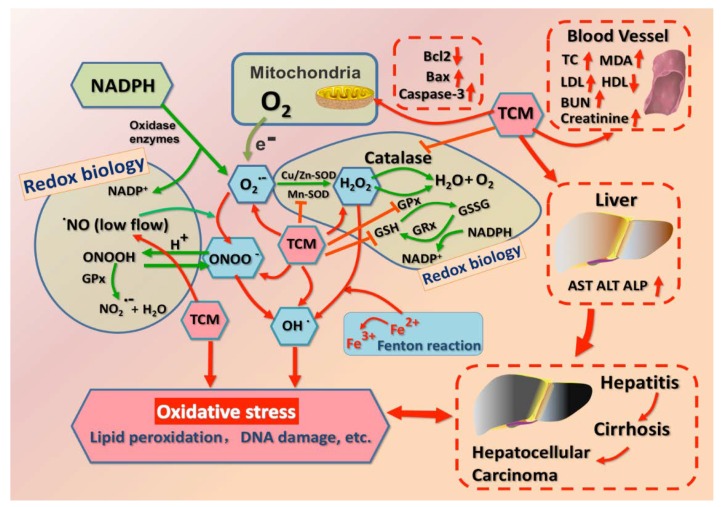
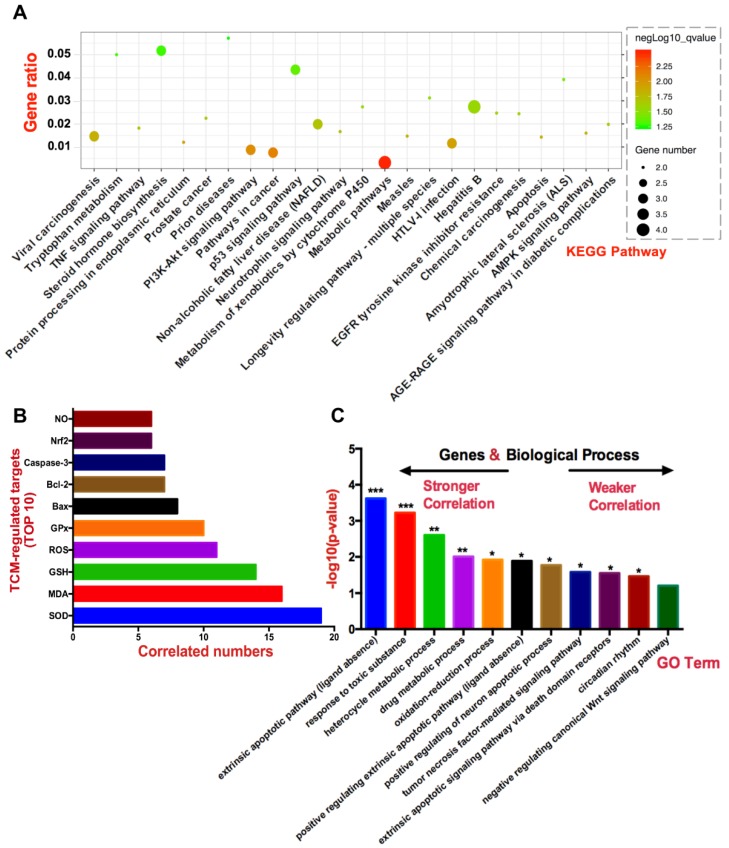
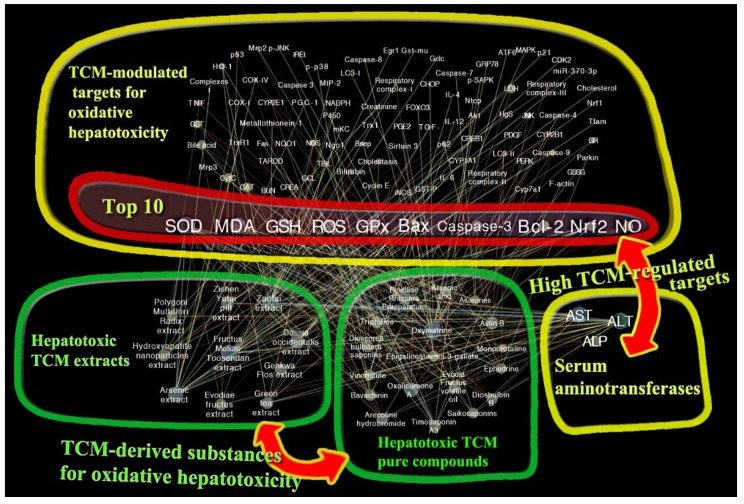
Oxidative stress, defined as a disequilibrium between pro-oxidants and antioxidants, can result in histopathological lesions with a broad spectrum, ranging from asymptomatic hepatitis to hepatocellular carcinoma in an orchestrated manner. Although cells are equipped with sophisticated strategies to maintain the redox biology under normal conditions, the abundance of redox-sensitive xenobiotics, such as medicinal ingredients originated from herbs or animals, can dramatically invoke oxidative stress. Growing evidence has documented that the hepatotoxicity can be triggered by traditional Chinese medicine (TCM) during treating various diseases. Meanwhile, TCM-dependent hepatic disorder represents a strong correlation with oxidative stress, especially the persistent accumulation of intracellular reactive oxygen species. Of note, since TCM-derived compounds with their modulated targets are greatly diversified among themselves, it is complicated to elaborate the potential pathological mechanism. In this regard, data mining approaches, including network pharmacology and bioinformatics enrichment analysis have been utilized to scientifically disclose the underlying pathogenesis. Herein, top 10 principal TCM-modulated targets for oxidative hepatotoxicity including superoxide dismutases (SOD), malondialdehyde (MDA), glutathione (GSH), reactive oxygen species (ROS), glutathione peroxidase (GPx), Bax, caspase-3, Bcl-2, nuclear factor (erythroid-derived 2)-like 2 (Nrf2), and nitric oxide (NO) have been identified. Furthermore, hepatic metabolic dysregulation may be the predominant pathological mechanism involved in TCM-induced hepatotoxic impairment.
氧化应激是指促氧化剂和抗氧化剂之间的失衡,它可以以协调的方式导致广泛的组织病理学损伤,从无症状性肝炎到肝细胞癌。尽管细胞配备了复杂的策略来维持正常条件下的氧化还原生物学,但大量的氧化还原敏感的外来物质,如草药或动物来源的药物成分,可以显著引发氧化应激。越来越多的证据表明,中药(TCM)在治疗各种疾病时可能会引发肝毒性。同时,TCM 依赖性肝紊乱与氧化应激密切相关,特别是细胞内活性氧的持续积累。值得注意的是,由于 TCM 衍生化合物及其调节的靶标在彼此之间存在很大的多样性,因此阐述潜在的病理机制很复杂。在这方面,数据挖掘方法,包括网络药理学和生物信息学富集分析,已被用于科学揭示潜在的发病机制。在此,确定了 10 种主要的 TCM 调节的氧化应激性肝毒性靶标,包括超氧化物歧化酶(SOD)、丙二醛(MDA)、谷胱甘肽(GSH)、活性氧(ROS)、谷胱甘肽过氧化物酶(GPx)、Bax、caspase-3、Bcl-2、核因子(红细胞衍生 2)样 2(Nrf2)和一氧化氮(NO)。此外,肝代谢失调可能是 TCM 诱导肝毒性损伤的主要病理机制。