Xiaoguang Wu, Jianjun Cheng, Qinying Cao, Hui Zhang, Lukun Yang, Yazhen Shang
Institute of Traditional Chinese Medicine, Chengde Medical College; Hebei Province Key Research Office of Traditional Chinese Medicine Against Dementia; Institute of Basic Medical Research of Basic Medical School.
Institute of Traditional Chinese Medicine, Chengde Medical College; Hebei Province Key Research Office of Traditional Chinese Medicine Against Dementia; Hebei Province Key Laboratory of Traditional Chinese Medicine Research and Development.
J Vis Exp. 2018 Jul 29(137):56157. doi: 10.3791/56157.
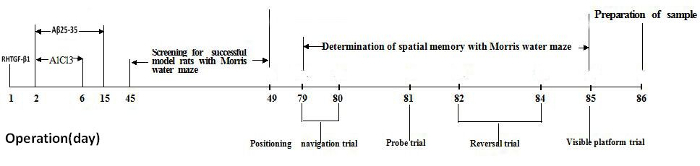
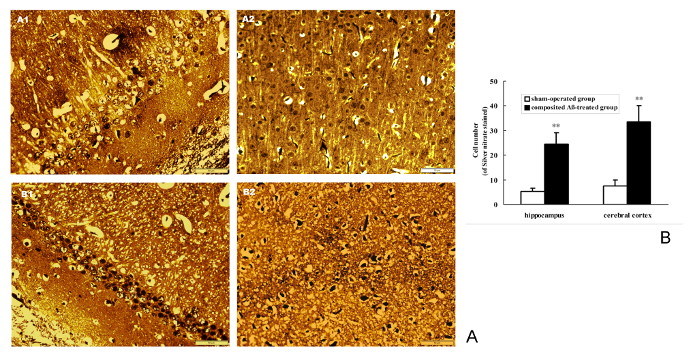
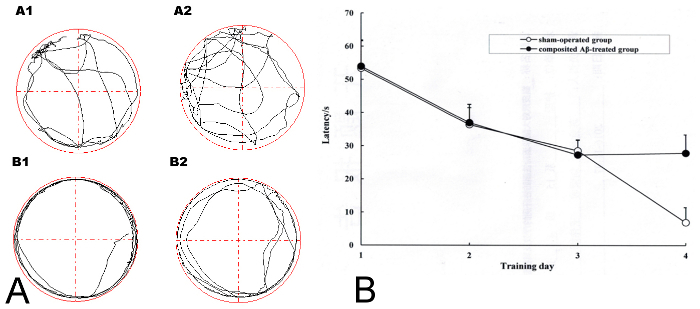
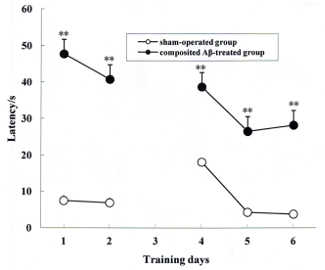
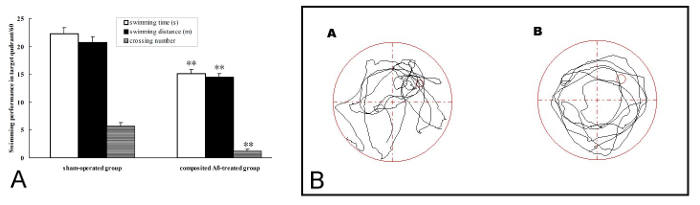
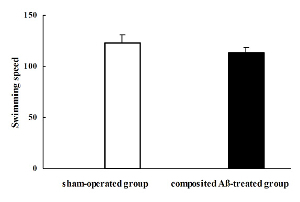
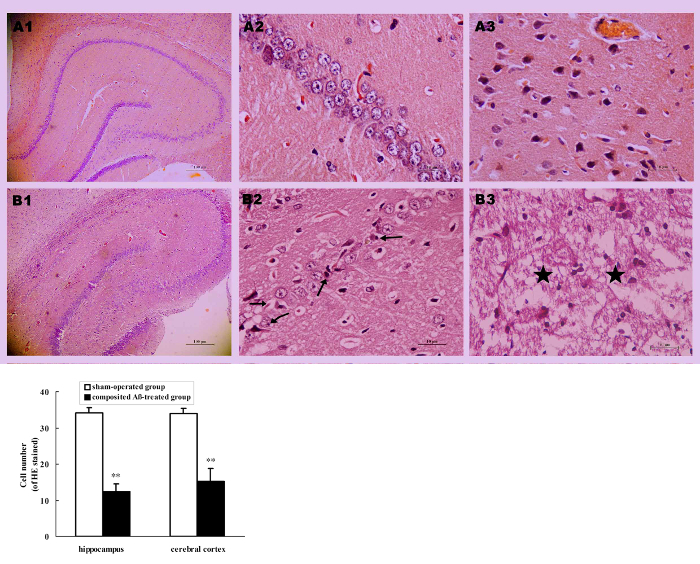
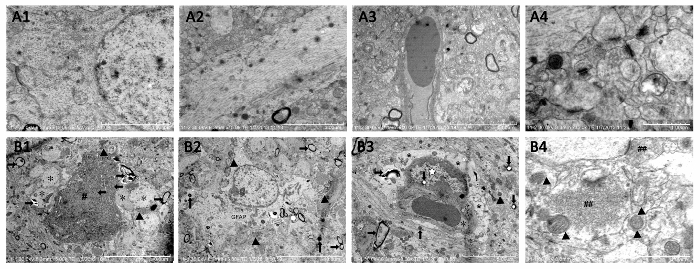
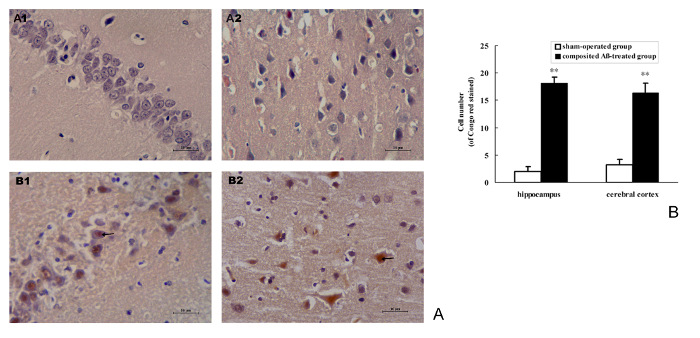
Alzheimer's disease (AD) is an irreversible, progressive brain disease that slowly destroys memory and is accompanied by neuron loss and structure change. With the increase of AD patients worldwide, the pathology and treatment of the disease has become a focus in the International Pharmaceutical Industry. Thus, the establishment of the animal model to mimic AD in the laboratory is of great importance. Here, we describe a detailed protocol for establishing a mimic of AD in a rat animal model though intracerebroventricular injection of amyloid beta protein 25-35 (Aβ25-35) combined with aluminum trichloride (AlCl3) and anterodorsal thalamic nucleus injection of recombinant human transforming growth factor-β1 (RHTGF-β1) to rats. The related markers of AD were measured, including: spatial memory, neuronal structure and substructure, neuronal Aβ, and neurofibrillary tangles (NFT) production. This rat model demonstrates spatial memory impairment, neuronal structure and substructure pathological changes, neuron intracellular Aβ burden, and NFT aggregation, and provides a close mimic of the neuronal structure and function disorder to that of clinical AD patients. Thus, the presented AD rat modelprovides a valuable in vivo tool for exploring neuronal function, neuronal pathology, and drug screening of AD.
阿尔茨海默病(AD)是一种不可逆的进行性脑部疾病,它会缓慢破坏记忆,并伴有神经元丧失和结构改变。随着全球AD患者数量的增加,该疾病的病理学和治疗方法已成为国际制药行业的关注焦点。因此,在实验室中建立模拟AD的动物模型具有重要意义。在此,我们描述了一种详细的方案,通过向大鼠脑室内注射β淀粉样蛋白25-35(Aβ25-35)并联合三氯化铝(AlCl3),以及向大鼠丘脑前背核注射重组人转化生长因子-β1(RHTGF-β1),在大鼠动物模型中建立AD模拟模型。对AD的相关标志物进行了测量,包括:空间记忆、神经元结构和亚结构、神经元Aβ以及神经原纤维缠结(NFT)的产生。该大鼠模型表现出空间记忆受损、神经元结构和亚结构的病理变化、神经元细胞内Aβ负荷以及NFT聚集,并与临床AD患者的神经元结构和功能紊乱极为相似。因此,所呈现的AD大鼠模型为探索AD的神经元功能、神经元病理学及药物筛选提供了一种有价值的体内工具。