Department of Animal Dairy and Veterinary Sciences, College of Agriculture and Applied Sciences, Utah State University, Logan, UT 84322, USA.
Institute for Antiviral Research, Utah State University, Logan, UT 84322, USA.
Viruses. 2018 Aug 11;10(8):422. doi: 10.3390/v10080422.
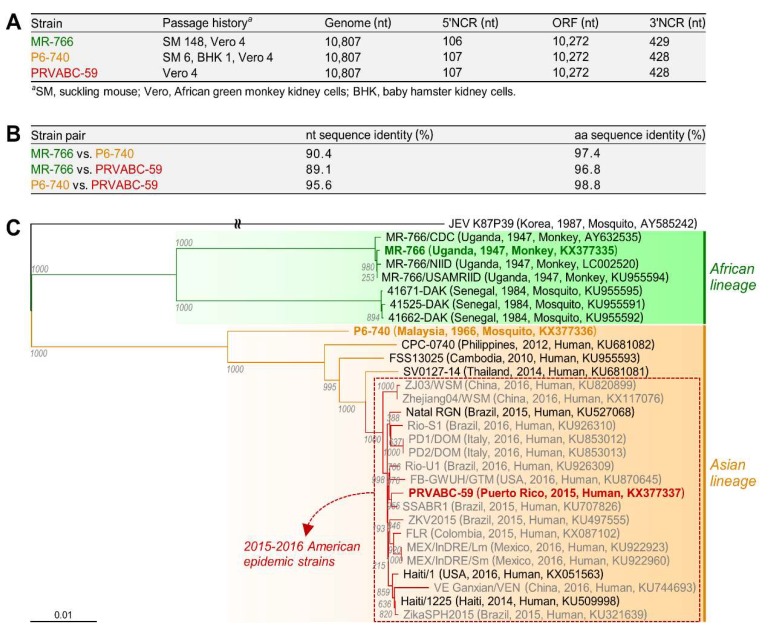
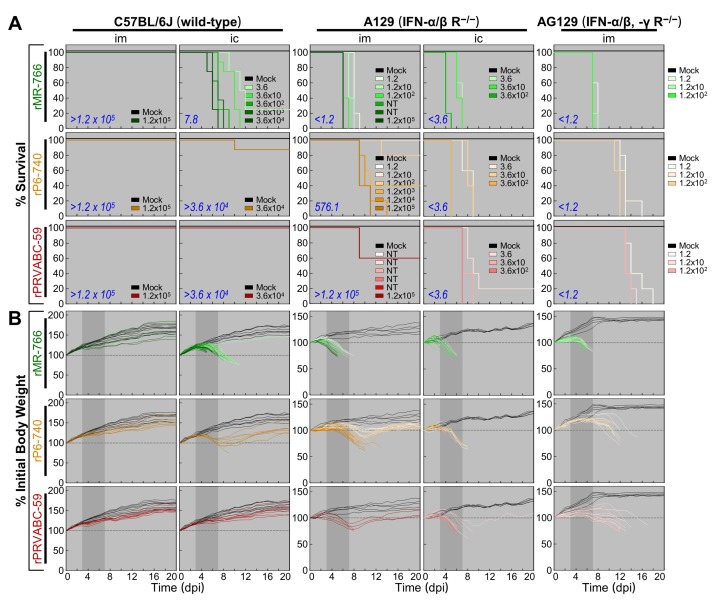
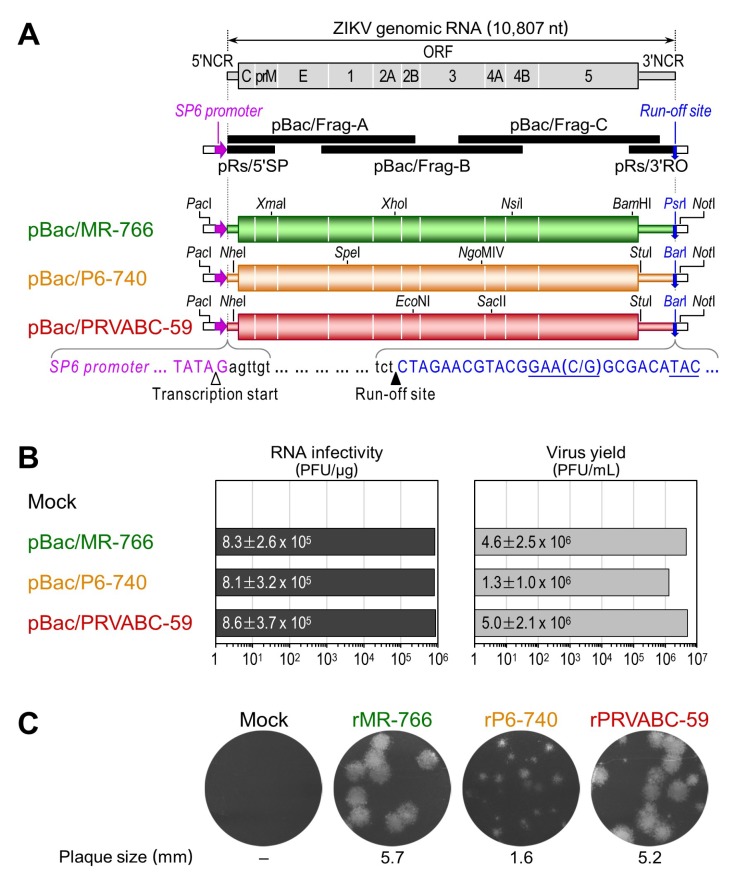
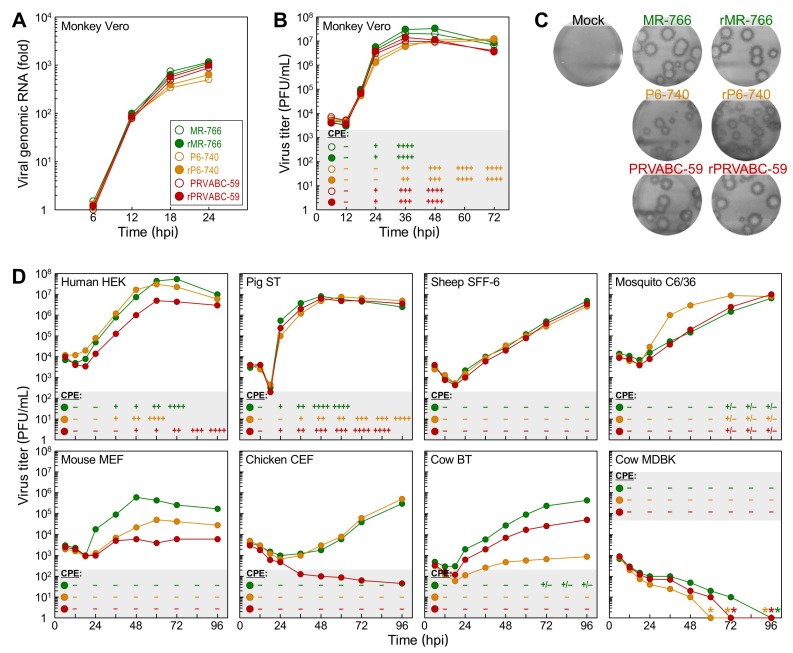
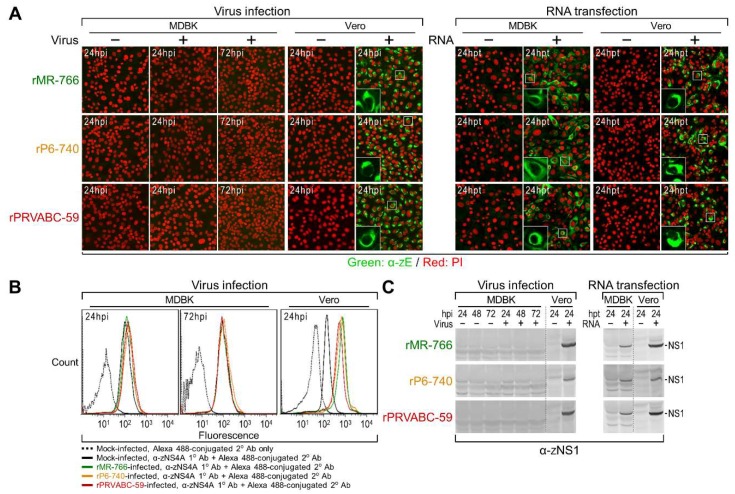
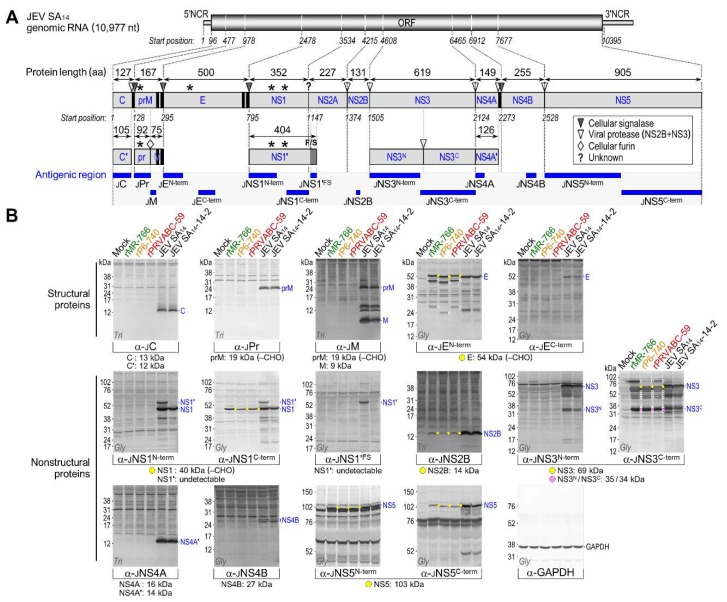
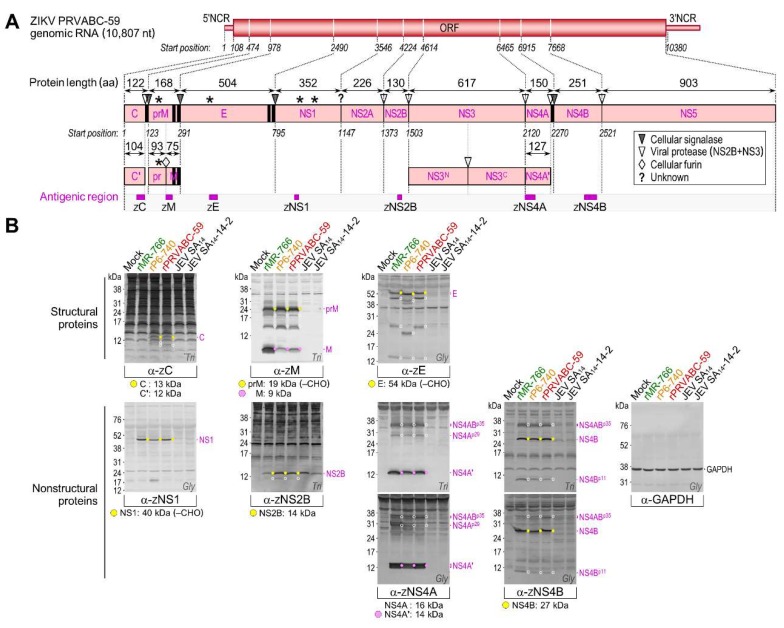
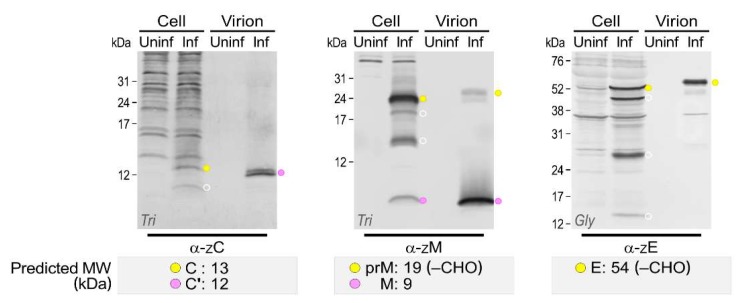
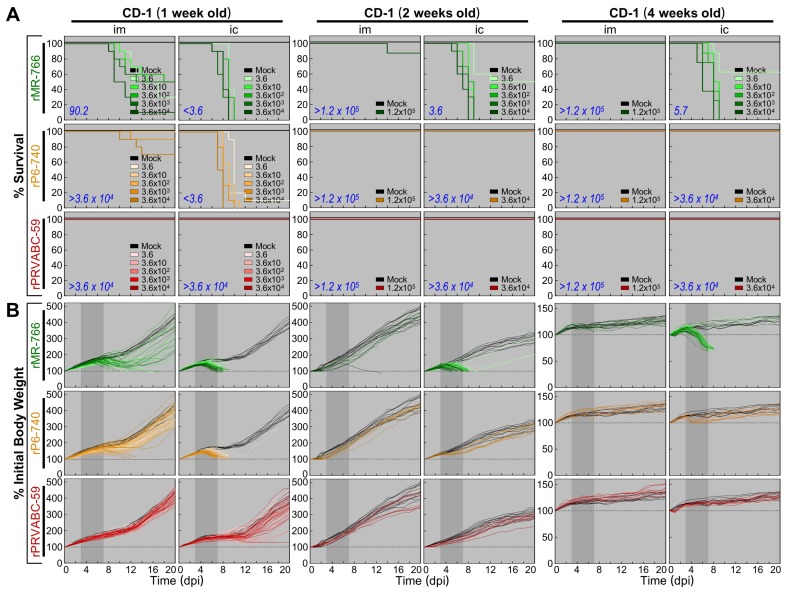
Zika virus (ZIKV) causes no-to-mild symptoms or severe neurological disorders. To investigate the importance of viral and host genetic variations in determining ZIKV infection outcomes, we created three full-length infectious cDNA clones as bacterial artificial chromosomes for each of three spatiotemporally distinct and genetically divergent ZIKVs: MR-766 (Uganda, 1947), P6-740 (Malaysia, 1966), and PRVABC-59 (Puerto Rico, 2015). Using the three molecularly cloned ZIKVs, together with 13 ZIKV region-specific polyclonal antibodies covering nearly the entire viral protein-coding region, we made three conceptual advances: (i) We created a comprehensive genome-wide portrait of ZIKV gene products and their related species, with several previously undescribed gene products identified in the case of all three molecularly cloned ZIKVs. (ii) We found that ZIKV has a broad cell tropism in vitro, being capable of establishing productive infection in 16 of 17 animal cell lines from 12 different species, although its growth kinetics varied depending on both the specific virus strain and host cell line. More importantly, we identified one ZIKV-non-susceptible bovine cell line that has a block in viral entry but fully supports the subsequent post-entry steps. (iii) We showed that in mice, the three molecularly cloned ZIKVs differ in their neuropathogenicity, depending on the particular combination of viral and host genetic backgrounds, as well as in the presence or absence of type I/II interferon signaling. Overall, our findings demonstrate the impact of viral and host genetic variations on the replication kinetics and neuropathogenicity of ZIKV and provide multiple avenues for developing and testing medical countermeasures against ZIKV.
寨卡病毒(ZIKV)可引起无症状或严重的神经紊乱。为了研究病毒和宿主遗传变异在决定寨卡病毒感染结果中的重要性,我们针对三种在时空上具有明显差异且遗传上存在分歧的寨卡病毒:MR-766(乌干达,1947 年)、P6-740(马来西亚,1966 年)和 PRVABC-59(波多黎各,2015 年),构建了三个全长传染性 cDNA 克隆,作为三种细菌人工染色体。使用这三种分子克隆的寨卡病毒,以及 13 种针对寨卡病毒特定区域的多克隆抗体,覆盖了几乎整个病毒蛋白编码区,我们取得了三个概念上的进展:(i)我们创建了寨卡病毒基因产物及其相关种属的全面基因组图谱,在三种分子克隆的寨卡病毒中都鉴定出了几种以前未描述的基因产物。(ii)我们发现寨卡病毒在体外具有广泛的细胞嗜性,能够在来自 12 个不同物种的 17 种动物细胞系中的 16 种中建立有效的感染,尽管其生长动力学取决于特定的病毒株和宿主细胞系。更重要的是,我们鉴定出一种对寨卡病毒无抗性的牛细胞系,该细胞系在病毒进入过程中存在阻断,但完全支持随后的进入后步骤。(iii)我们表明,在小鼠中,这三种分子克隆的寨卡病毒在神经致病性方面存在差异,这取决于特定的病毒和宿主遗传背景组合,以及是否存在 I/II 型干扰素信号。总体而言,我们的研究结果表明病毒和宿主遗传变异对寨卡病毒的复制动力学和神经致病性的影响,并为开发和测试针对寨卡病毒的医疗对策提供了多种途径。