National Agriculture and Food Research Organization, Institute of Fruit and Tea Tree Science, Shimizu, Shizuoka, 424-0292, Japan.
Faculty of Agriculture, Shizuoka University, Suruga, Shizuoka, 422-8529, Japan.
BMC Plant Biol. 2018 Aug 13;18(1):166. doi: 10.1186/s12870-018-1369-3.
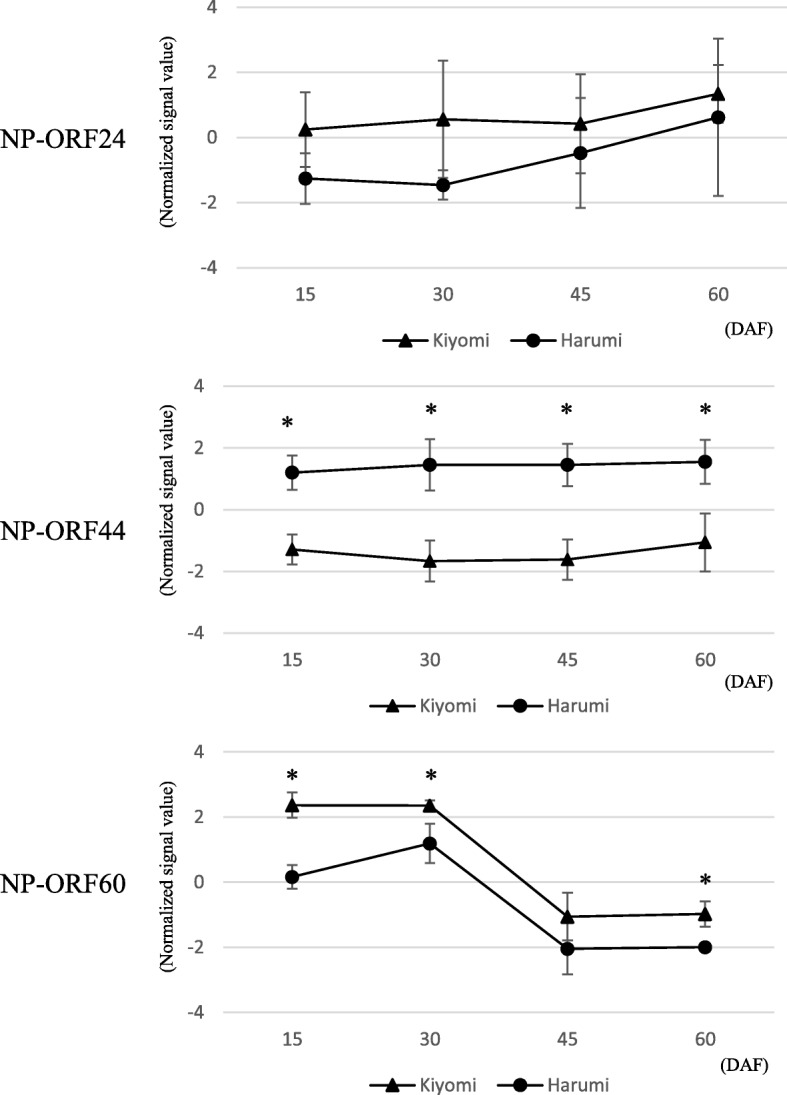
Somatic embryogenesis in nucellar tissues is widely recognized to induce polyembryony in major citrus varieties such as sweet oranges, satsuma mandarins and lemons. This capability for apomixis is attractive in agricultural production systems using hybrid seeds, and many studies have been performed to elucidate the molecular mechanisms of various types of apomixis. To identify the gene responsible for somatic embryogenesis in citrus, a custom oligo-DNA microarray including predicted genes in the citrus polyembryonic locus was used to compare the expression profiles in reproductive tissues between monoembryonic and polyembryonic varieties. The full length of CitRKD1, which was identified as a candidate gene responsible for citrus somatic embryogenesis, was isolated from satsuma mandarin and its molecular function was investigated using transgenic 'Hamlin' sweet orange by antisense-overexpression.
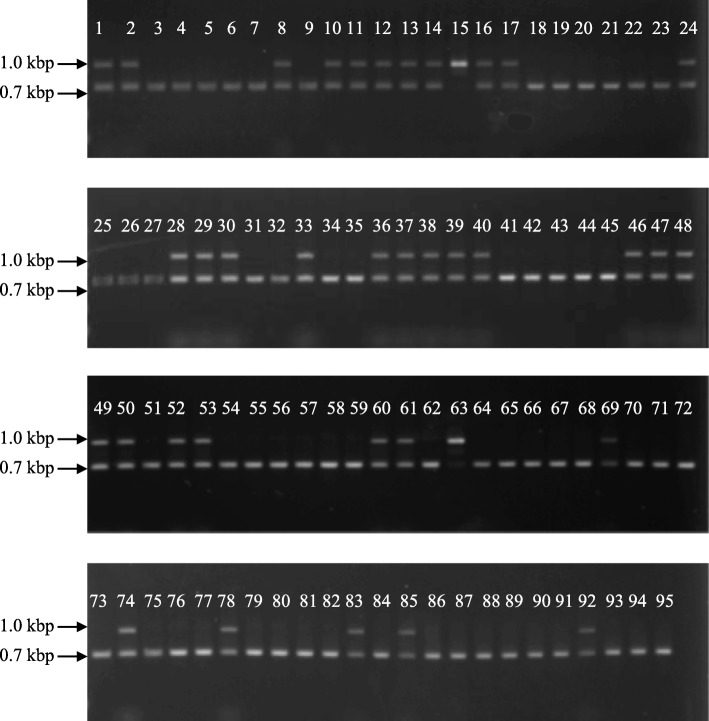
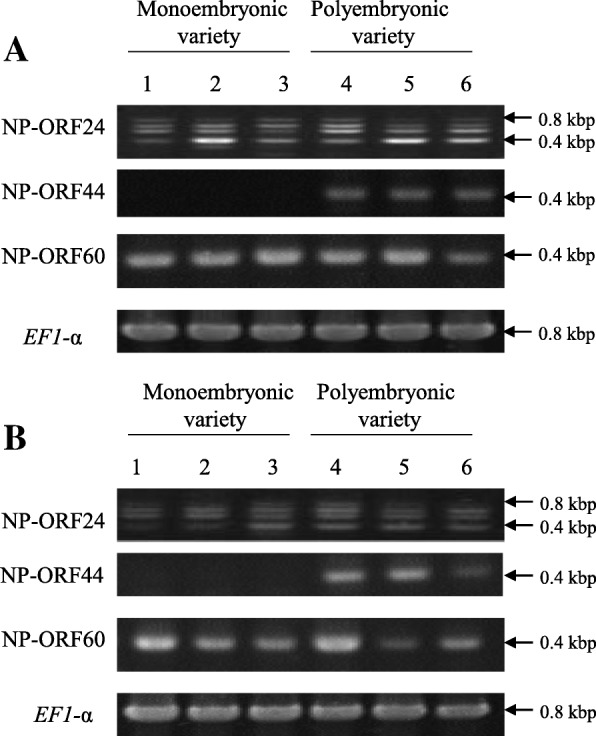
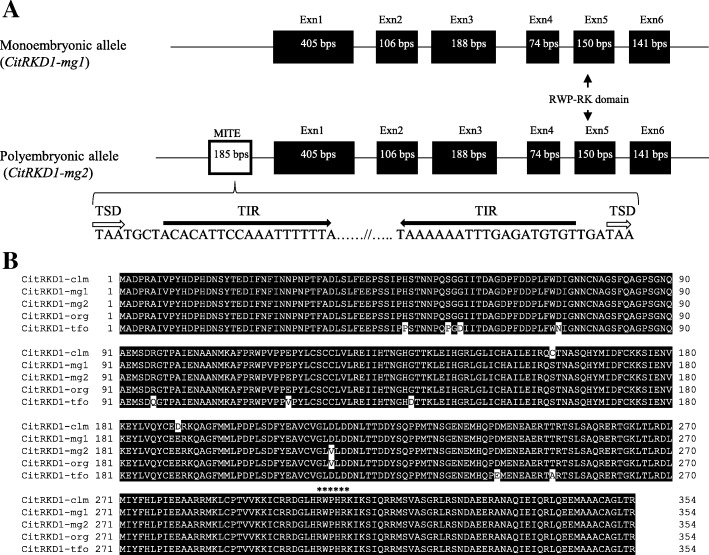
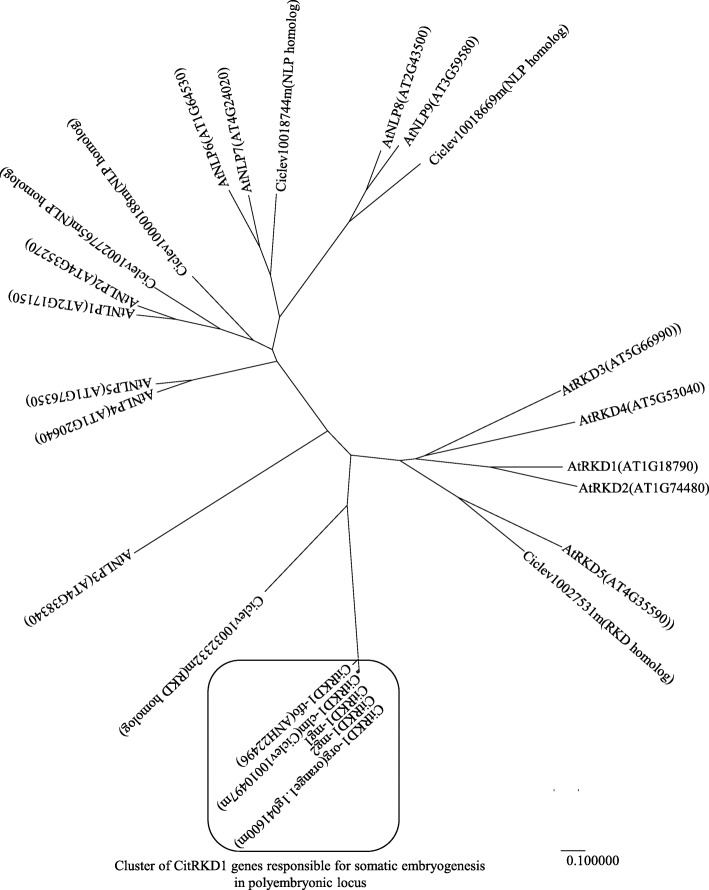
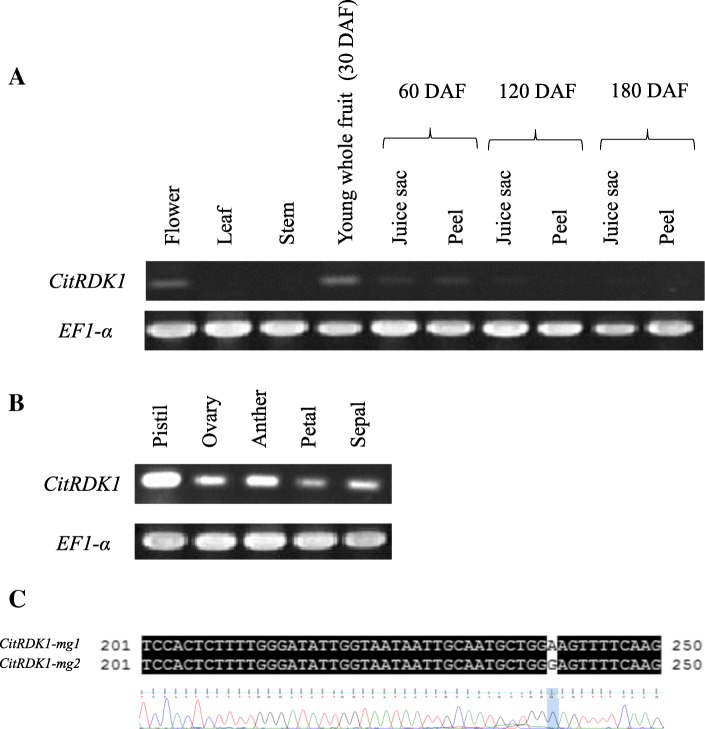
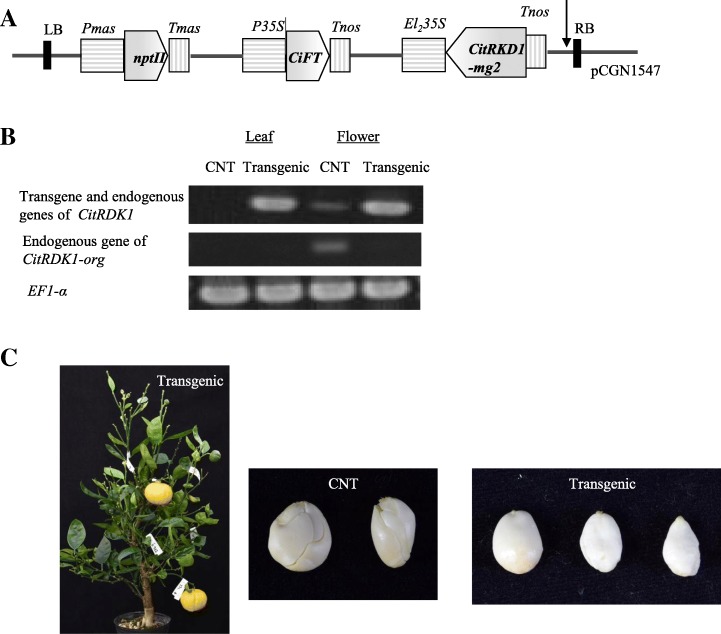
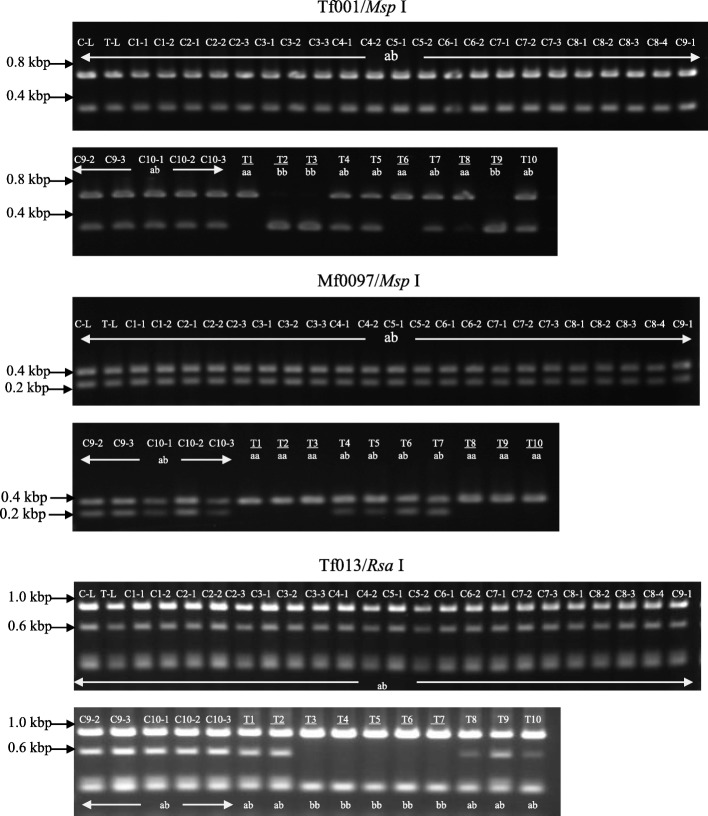
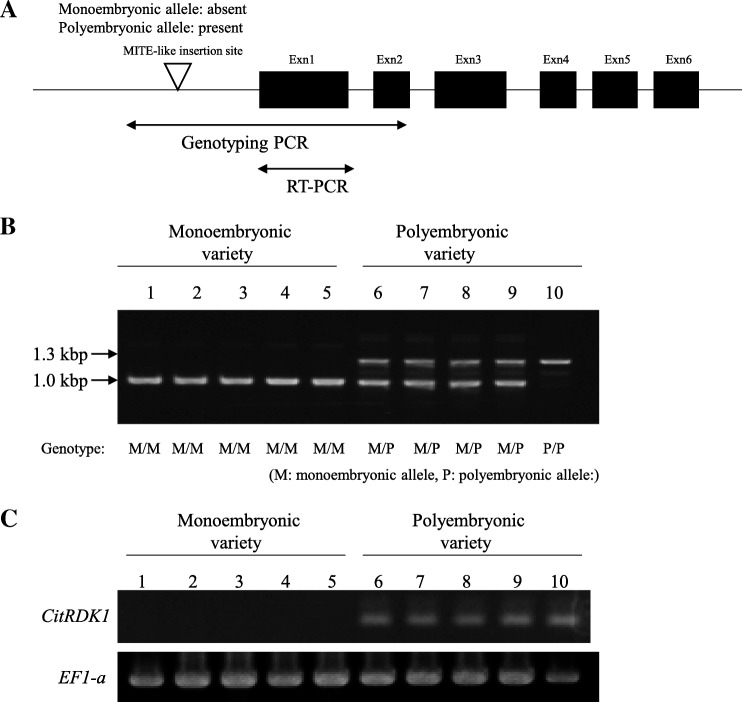
The candidate gene CitRKD1, predominantly transcribed in reproductive tissues of polyembryonic varieties, is a member of the plant RWP-RK domain-containing protein. CitRKD1 of satsuma mandarin comprised two alleles (CitRKD1-mg1 and CitRKD1-mg2) at the polyembryonic locus controlling embryonic type (mono/polyembryony) that were structurally divided into two types with or without a miniature inverted-repeat transposable element (MITE)-like insertion in the upstream region. CitRKD1-mg2 with the MITE insertion was the predominant transcript in flowers and young fruits where somatic embryogenesis of nucellar cells occurred. Loss of CitRKD1 function by antisense-overexpression abolished somatic embryogenesis in transgenic sweet orange and the transgenic T plants were confirmed to derive from zygotic embryos produced by self-pollination by DNA diagnosis. Genotyping PCR analysis of 95 citrus traditional and breeding varieties revealed that the CitRKD1 allele with the MITE insertion (polyembryonic allele) was dominant and major citrus varieties with the polyembryonic allele produced polyembryonic seeds.
CitRKD1 at the polyembryonic locus plays a principal role in regulating citrus somatic embryogenesis. CitRKD1 comprised multiple alleles that were divided into two types, polyembryonic alleles with a MITE insertion in the upstream region and monoembryonic alleles without it. CitRKD1 was transcribed in reproductive tissues of polyembryonic varieties with the polyembryonic allele. The MITE insertion in the upstream region of CitRKD1 might be involved in regulating the transcription of CitRKD1.
在核细胞组织中的体细胞胚胎发生被广泛认为会诱导甜橙、温州蜜柑和柠檬等主要柑橘品种的多胚性。在使用杂交种子的农业生产系统中,这种无融合生殖的能力很有吸引力,因此已经进行了许多研究来阐明各种类型无融合生殖的分子机制。为了鉴定柑橘体细胞胚胎发生的相关基因,我们使用了一个包含柑橘多胚性基因座中预测基因的定制寡聚 DNA 微阵列,比较了单胚性和多胚性品种生殖组织之间的表达谱。从温州蜜柑中分离出一个候选基因 CitRKD1,该基因被鉴定为负责柑橘体细胞胚胎发生的候选基因,其全长序列被分离出来,并通过反义过表达在转基因‘哈姆林’甜橙中对其分子功能进行了研究。
候选基因 CitRKD1 在多胚性品种的生殖组织中大量转录,是植物 RWP-RK 结构域蛋白的一个成员。温州蜜柑的 CitRKD1 等位基因(CitRKD1-mg1 和 CitRKD1-mg2)在控制胚胎类型(单/多胚性)的多胚性基因座上,其结构分为两种类型,上游区域有或没有微型反向重复转座元件(MITE)样插入。CitRKD1-mg2 带有 MITE 插入,是核细胞体细胞胚胎发生发生的花和幼果中主要的转录本。反义过表达导致 CitRKD1 功能丧失,从而使转基因甜橙丧失体细胞胚胎发生能力,通过 DNA 诊断证实转基因 T 植株是由自花授粉产生的合子胚胎发育而来。95 个柑橘传统品种和杂交品种的基因型 PCR 分析显示,带有 MITE 插入(多胚性等位基因)的 CitRKD1 等位基因是显性的,带有多胚性等位基因的主要柑橘品种产生多胚性种子。
多胚性基因座上的 CitRKD1 在调控柑橘体细胞胚胎发生中起主要作用。CitRKD1 由多个等位基因组成,分为两种类型,上游区域有 MITE 插入的多胚性等位基因和没有 MITE 插入的单胚性等位基因。多胚性品种的生殖组织中转录 CitRKD1。CitRKD1 上游区域的 MITE 插入可能参与调控 CitRKD1 的转录。