Teufel Ashley I, Ritchie Andrew M, Wilke Claus O, Liberles David A
Department of Integrative Biology, Institute for Cellular and Molecular Biology, and Center for Computational Biology and Bioinformatics, The University of Texas at Austin, Austin, TX 78712, USA.
Department of Biology and Center for Computational Genetics and Genomics, Temple University, Philadelphia, PA 19122, USA.
Genes (Basel). 2018 Aug 13;9(8):409. doi: 10.3390/genes9080409.
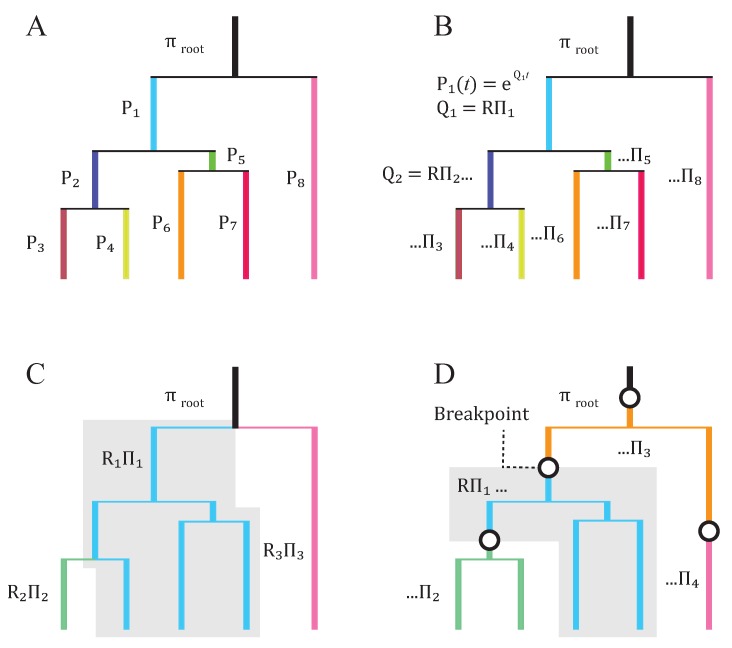
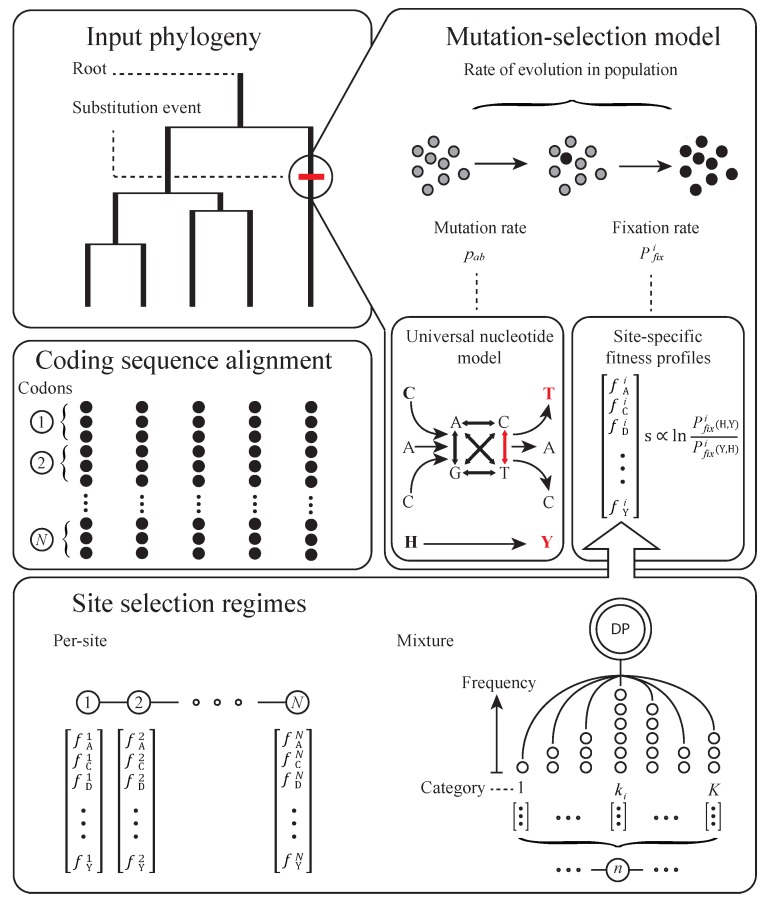
When mutational pressure is weak, the generative process of protein evolution involves explicit probabilities of mutations of different types coupled to their conditional probabilities of fixation dependent on selection. Establishing this mechanistic modeling framework for the detection of selection has been a goal in the field of molecular evolution. Building on a mathematical framework proposed more than a decade ago, numerous methods have been introduced in an attempt to detect and measure selection on protein sequences. In this review, we discuss the structure of the original model, subsequent advances, and the series of assumptions that these models operate under.
当突变压力较弱时,蛋白质进化的生成过程涉及不同类型突变的明确概率及其依赖于选择的固定条件概率。建立这种用于检测选择的机制建模框架一直是分子进化领域的一个目标。基于十多年前提出的数学框架,人们引入了许多方法来检测和衡量对蛋白质序列的选择。在这篇综述中,我们讨论了原始模型的结构、后续进展以及这些模型所基于的一系列假设。