Biomedical Data Science, Geisel School of Medicine at Dartmouth, Hanover, 03750, NH, USA.
Department of Molecular Medicine, Laval University, Québec, G1V 4G5, Canada.
Nat Commun. 2018 Aug 13;9(1):3221. doi: 10.1038/s41467-018-05074-y.
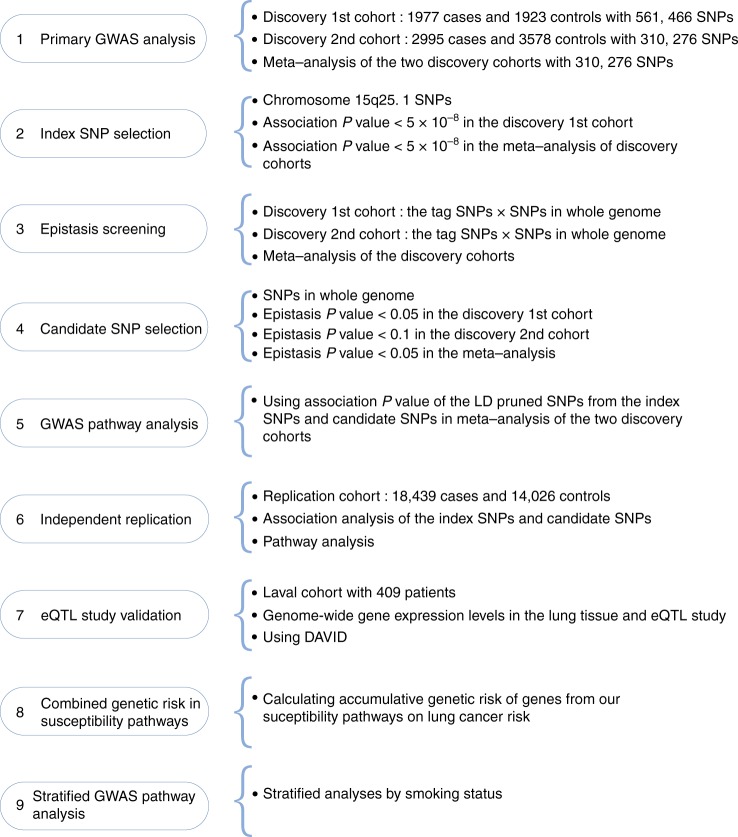
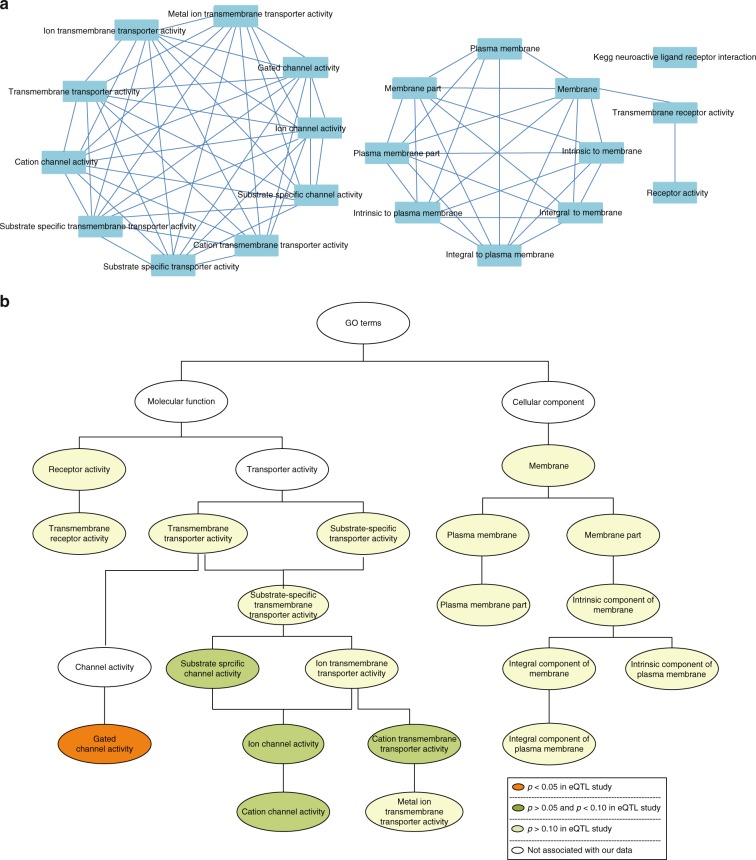
Genome-wide association studies (GWAS) identified the chromosome 15q25.1 locus as a leading susceptibility region for lung cancer. However, the pathogenic pathways, through which susceptibility SNPs within chromosome 15q25.1 affects lung cancer risk, have not been explored. We analyzed three cohorts with GWAS data consisting 42,901 individuals and lung expression quantitative trait loci (eQTL) data on 409 individuals to identify and validate the underlying pathways and to investigate the combined effect of genes from the identified susceptibility pathways. The KEGG neuroactive ligand receptor interaction pathway, two Reactome pathways, and 22 Gene Ontology terms were identified and replicated to be significantly associated with lung cancer risk, with P values less than 0.05 and FDR less than 0.1. Functional annotation of eQTL analysis results showed that the neuroactive ligand receptor interaction pathway and gated channel activity were involved in lung cancer risk. These pathways provide important insights for the etiology of lung cancer.
全基因组关联研究(GWAS)确定了染色体 15q25.1 位点是肺癌的主要易感区域。然而,通过染色体 15q25.1 内的易感 SNP 影响肺癌风险的致病途径尚未得到探索。我们分析了三个包含 42901 个人的 GWAS 数据和 409 个人的肺表达定量性状基因座(eQTL)数据,以确定和验证潜在的途径,并研究从鉴定出的易感性途径中基因的联合效应。KEGG 神经活性配体受体相互作用途径、两个 Reactome 途径和 22 个基因本体论术语被确定并复制与肺癌风险显著相关,P 值小于 0.05,FDR 小于 0.1。eQTL 分析结果的功能注释表明,神经活性配体受体相互作用途径和门控通道活性与肺癌风险有关。这些途径为肺癌的病因学提供了重要的见解。