Laboratory Animal Facilities & Services, Preeminent Medical Photonics Education & Research Center, Hamamatsu University School of Medicine, 1-20-1 Handayama, Higashi-ku, Hamamatsu, Shizuoka, 431-3192, Japan.
Department of Biochemistry, Hamamatsu University School of Medicine, 1-20-1 Handayama, Higashi-ku, Hamamatsu, Shizuoka, 431-3192, Japan.
Sci Rep. 2018 Aug 13;8(1):12059. doi: 10.1038/s41598-018-30137-x.
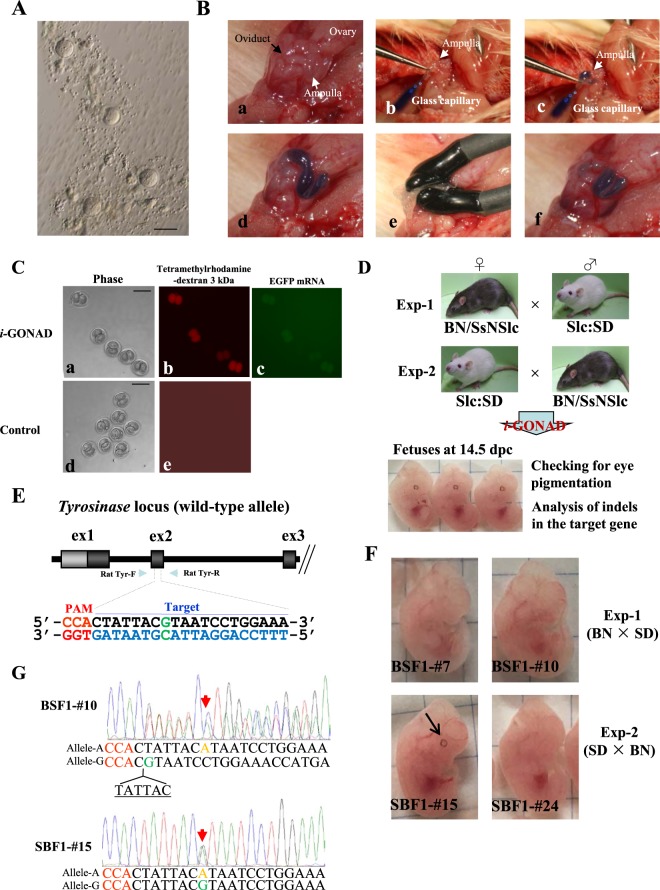
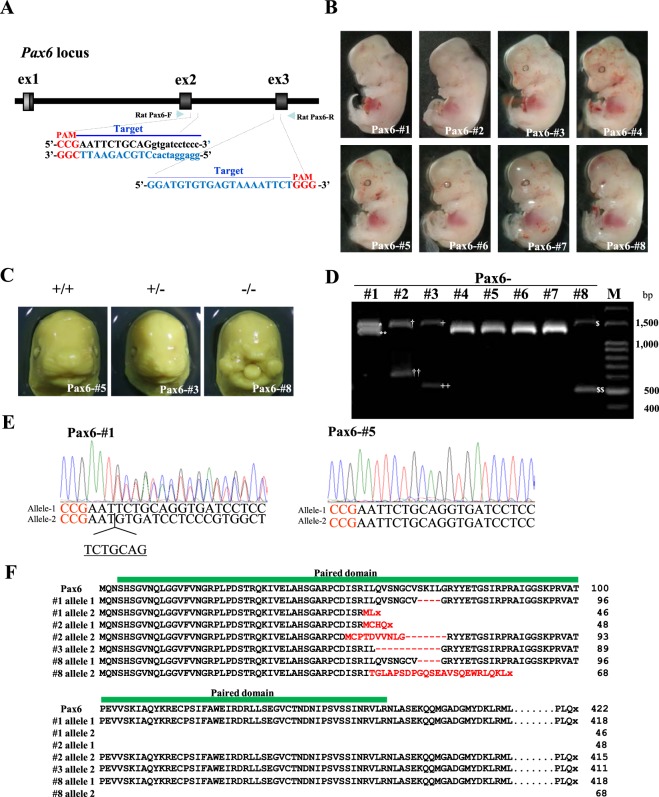
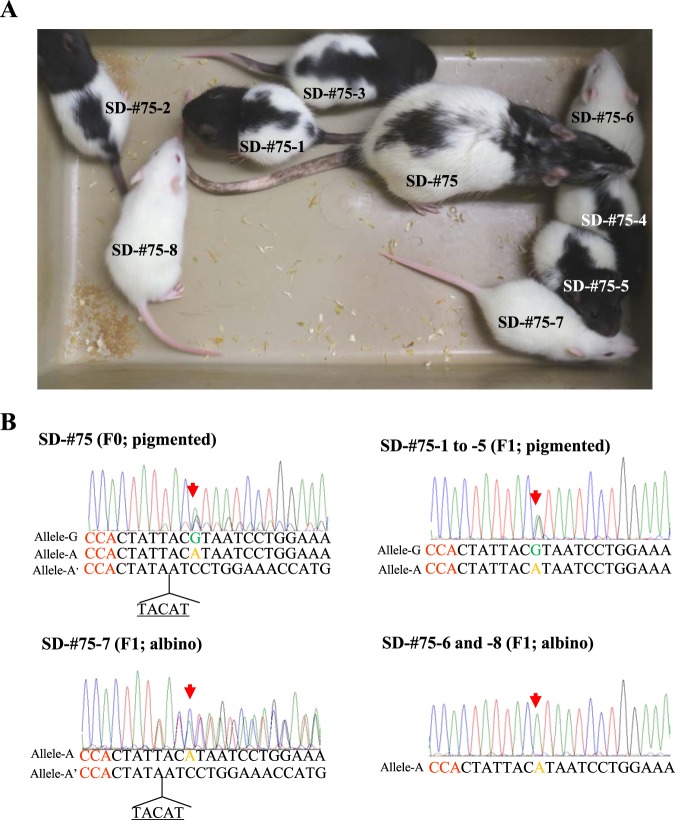
Zygote-microinjection or in vitro electroporation of isolated zygotes are now widely used methods to produce genome-edited mice. However, these technologies require laborious and time-consuming ex vivo handling of fertilized eggs, including zygote isolation, gene delivery into zygotes and embryo transfer into recipients. We recently developed an alternative method called improved genome-editing via oviductal nucleic acids delivery (i-GONAD), which does not require the above-mentioned ex vivo handing of zygotes, but instead involves intraoviductal instillation of genome-editing components, Cas9 protein and synthetic gRNAs, into the oviducts of pregnant females at the late 1-cell embryo stage under a dissecting microscope and subsequent electroporation. With this method, we succeeded in generating genome-edited mice at relatively high efficiencies (for example, knockout alleles were produced at ~97% efficiency). Here, we extended this improved technology to rats, and found that i-GONAD can create genome-edited rats in various strains, including Sprague Dawley and Lewis, and F1 hybrids (between Sprague Dawley and Brown Norway), with efficiencies of ~62% for indel mutations and ~9% for knock-ins. Thus, i-GONAD will be especially useful for the production of genome-edited rats in small laboratories where expensive micromanipulator systems and highly skilled personnel for embryo manipulation are unavailable.
胚胎显微注射或体外电穿孔技术已被广泛用于制备基因编辑小鼠。然而,这些技术需要繁琐且耗时的体外操作受精胚胎,包括胚胎分离、基因转染到胚胎以及胚胎移植到受体。我们最近开发了一种称为通过输卵管核酸传递进行改良的基因组编辑(i-GONAD)的替代方法,该方法不需要上述对胚胎的体外处理,而是涉及在解剖显微镜下将基因组编辑组件 Cas9 蛋白和合成 gRNA 直接注入输卵管,在 1 细胞胚胎晚期将其递送到处于妊娠状态的雌性体内,然后进行电穿孔。使用这种方法,我们成功地以相对较高的效率(例如,产生的敲除等位基因效率约为 97%)生成了基因编辑小鼠。在这里,我们将这种改良技术扩展到大鼠,并发现 i-GONAD 可用于各种品系(包括 Sprague Dawley 和 Lewis 大鼠以及 F1 杂交种(Sprague Dawley 和 Brown Norway 之间的杂交种))的基因编辑大鼠的产生,其插入缺失突变的效率约为 62%,基因敲入的效率约为 9%。因此,i-GONAD 将特别适用于在没有昂贵的微操作系统和胚胎操作高技能人员的小型实验室中制备基因编辑大鼠。