Department of Immunology and Infectious Disease, The John Curtin School of Medical Research, The Australian National University, Canberra, Australia.
Genome Biol. 2018 Feb 28;19(1):27. doi: 10.1186/s13059-018-1409-1.
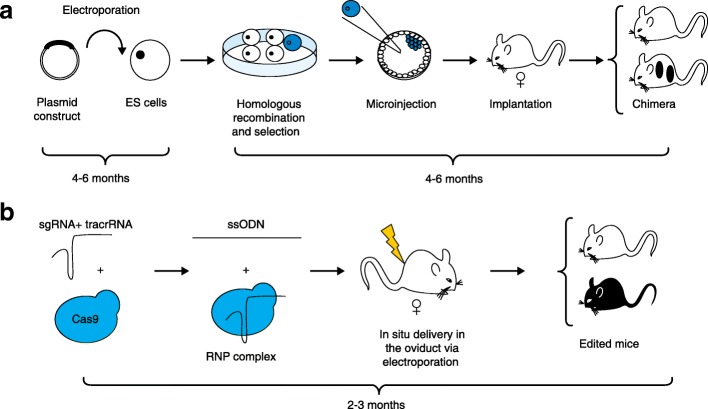
The generation of genetically modified alleles in mice using conventional transgenesis technologies is a long and inefficient process. A new study shows that the in situ delivery of CRISPR/Cas9 reagents into pregnant mice results in a high efficiency of editing, and enables the rapid generation of both simple and complex alleles.
利用传统的转基因技术在小鼠中产生基因修饰等位基因是一个漫长而低效的过程。一项新的研究表明,将 CRISPR/Cas9 试剂原位递送至怀孕小鼠中可实现高效率的编辑,从而快速产生简单和复杂的等位基因。