Xue Yanshi, Yang Lin, Li Junzun, Yan Yilin, Jiang Qinghui, Shen Lan, Yang Shuai, Shen Bing, Huang Ruimin, Yan Jun, Guo Hongqian
Department of Urology, Nanjing Drum Tower Hospital, Clinical College of Nanjing Medical University, Nanjing, China,
Department of Urology, Nanjing Drum Tower Hospital, Nanjing University Medical School, Institute of Urology, Nanjing University, Nanjing, China.
Onco Targets Ther. 2018 Jul 30;11:4413-4429. doi: 10.2147/OTT.S162255. eCollection 2018.
Cisplatin-based chemotherapy is mainstay treatment in urinary bladder cancer (UBC). However, tumor recurrence frequently occurs with the acquisition of cisplatin resistance. We explored the potential effect of a polyherbal preparation, Zyflamend, on UBC cells resistant to cisplatin treatment.
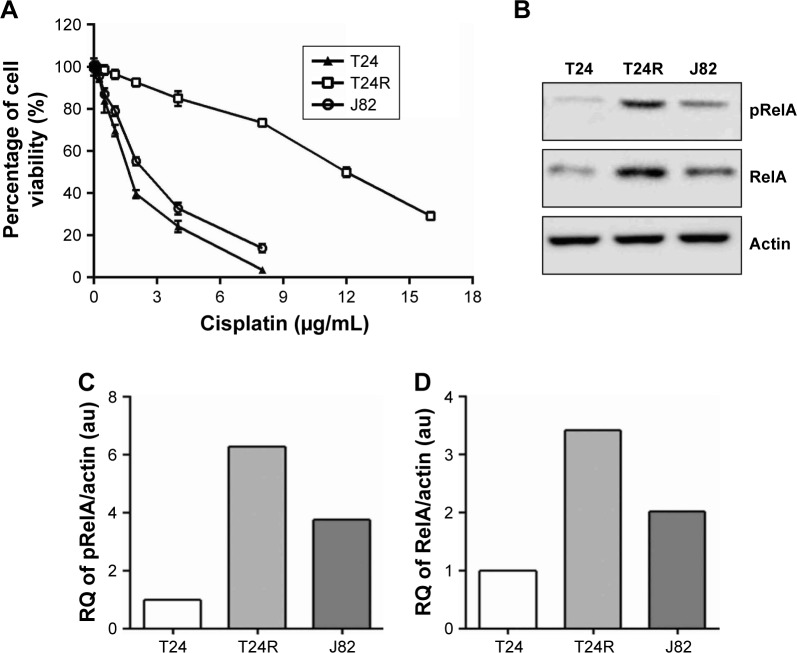
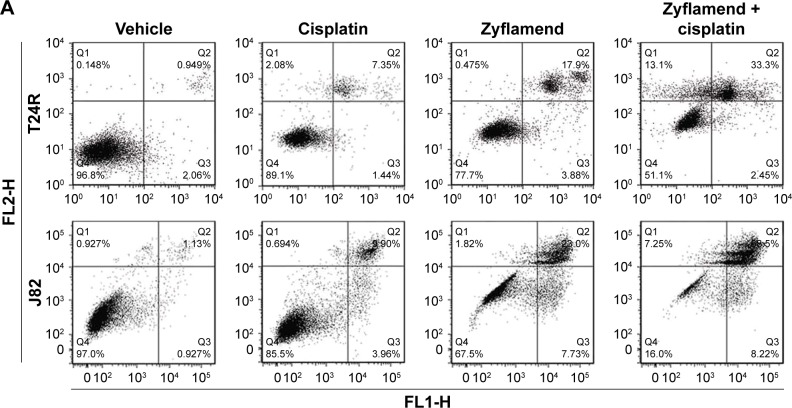
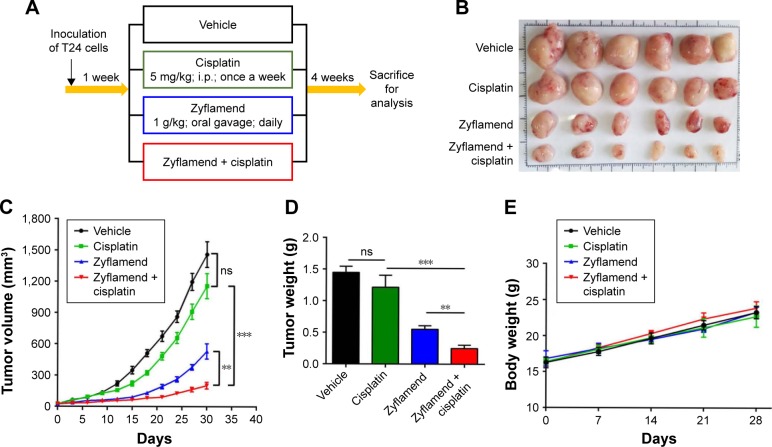
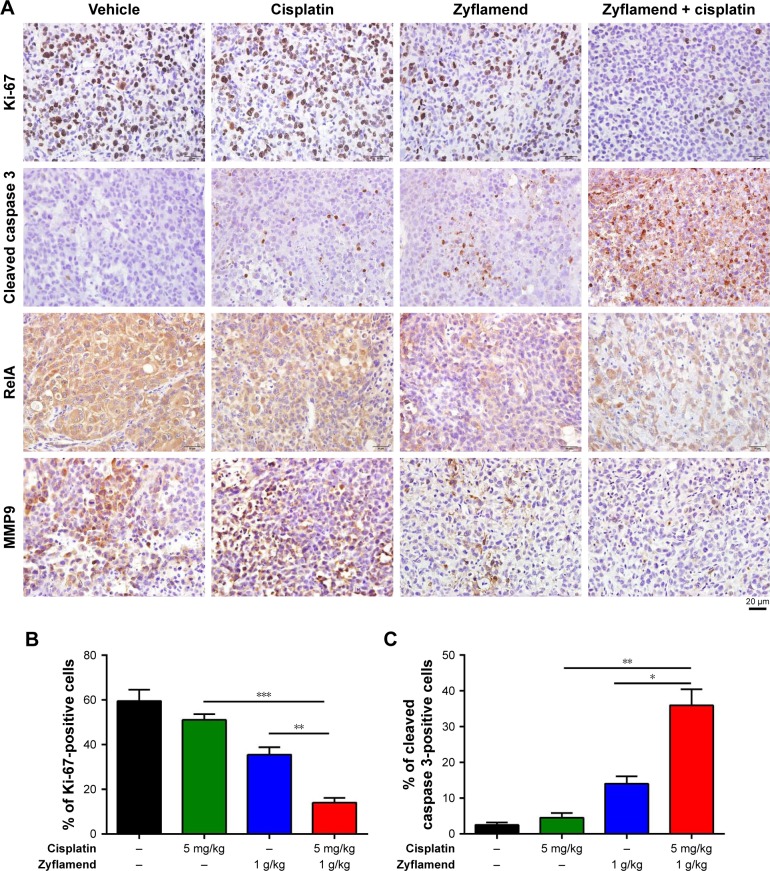
To establish a cisplatin-resistant human bladder cancer cell line, T24 cells were cultured in increasing concentrations of cisplatin for more than 10 months. These cells (T24R) were then treated with different concentrations of Zyflamend, and both proliferation and activity of nuclear factor kappaB (NFκB) signaling pathway were examined. To test the synergistic effect between Zyflamend and cisplatin, we treated T24R cells either with Zyflamend or cisplatin alone, or in combination. Apoptotic effect was evaluated by Annexin V/propidium iodide double staining, and the levels of the proteins involved in cell cycle and anti-apoptosis were examined by Western blotting. Finally, mice with palpable xenograft were treated either with cisplatin and Zyflamend alone or in combination for 28 days before they were sacrificed for measuring the sizes and weights of the tumor tissues. In addition, proliferation and apoptosis markers were examined by immunohistochemistry.
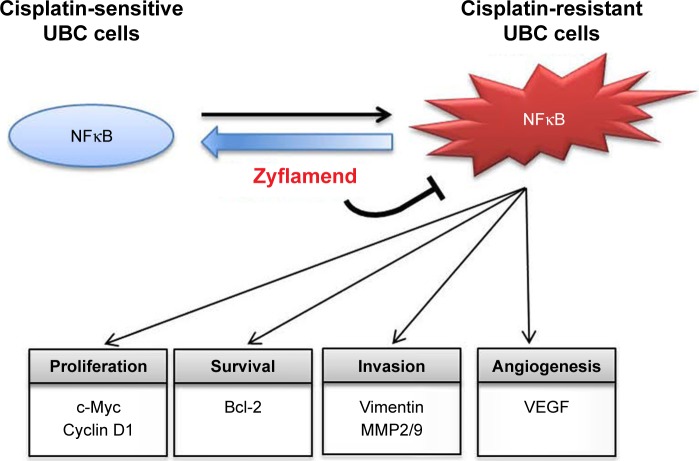
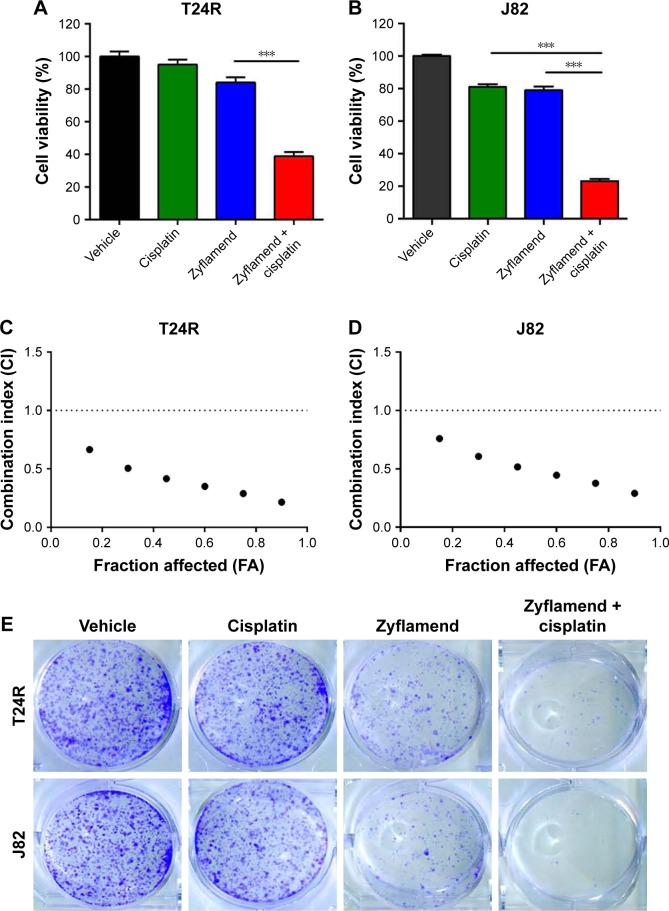
Comparing to that in the parental T24 cells, NFκB is constitutively active in cisplatin-resistant T24R cells. Zyflamend is capable of inhibiting the growth of T24, T24R, as well as another UBC cell line J82 in a concentration-dependent manner. Mechanistically, Zyflamend suppresses NFκB-mediated cell proliferation, survival, and invasion/angiogenesis and induces apoptosis. In addition, Zyflamend significantly increased the sensitivity of T24R and J82 cells to cisplatin treatment and these findings were confirmed in T24R xenograft model with reduced proliferation index and decreased expression of RelA and its downstream target MMP9.
Zyflamend is capable of counteracting bladder cancer resistance to cisplatin by repressing proliferation and inducing apoptosis through targeting NFκB signaling pathway.
基于顺铂的化疗是膀胱癌(UBC)的主要治疗方法。然而,随着顺铂耐药性的产生,肿瘤复发频繁发生。我们探讨了一种多草药制剂Zyflamend对顺铂治疗耐药的UBC细胞的潜在作用。
为建立顺铂耐药的人膀胱癌细胞系,将T24细胞在浓度递增的顺铂中培养10多个月。然后用不同浓度的Zyflamend处理这些细胞(T24R),并检测核因子κB(NFκB)信号通路的增殖和活性。为测试Zyflamend与顺铂之间的协同作用,我们单独或联合用Zyflamend或顺铂处理T24R细胞。通过膜联蛋白V/碘化丙啶双染色评估凋亡效应,并通过蛋白质印迹法检测参与细胞周期和抗凋亡的蛋白质水平。最后,对可触及异种移植瘤的小鼠单独或联合用顺铂和Zyflamend处理28天,然后处死以测量肿瘤组织的大小和重量。此外,通过免疫组织化学检测增殖和凋亡标志物。
与亲本T24细胞相比,NFκB在顺铂耐药的T24R细胞中组成性激活。Zyflamend能够以浓度依赖的方式抑制T24、T24R以及另一种UBC细胞系J82的生长。从机制上讲,Zyflamend抑制NFκB介导的细胞增殖、存活和侵袭/血管生成并诱导凋亡。此外,Zyflamend显著增加了T24R和J82细胞对顺铂治疗的敏感性,并且这些发现在用增殖指数降低以及RelA及其下游靶标MMP9表达降低的T24R异种移植模型中得到证实。
Zyflamend能够通过靶向NFκB信号通路抑制增殖并诱导凋亡来对抗膀胱癌对顺铂的耐药性。