Turner Emily, Erwin Megan, Atigh Marzieh, Christians Uwe, Saul Justin M, Yazdani Saami K
Department of Mechanical Engineering, University of South Alabama, Mobile, AL, United States.
Department of Anesthesiology, iC42 Clinical Research and Development, University of Colorado, Aurora, CO, United States.
Front Pharmacol. 2018 Jul 30;9:808. doi: 10.3389/fphar.2018.00808. eCollection 2018.
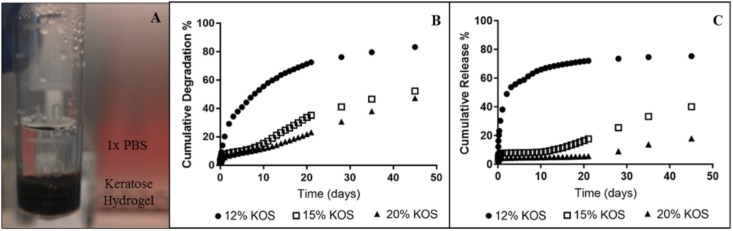
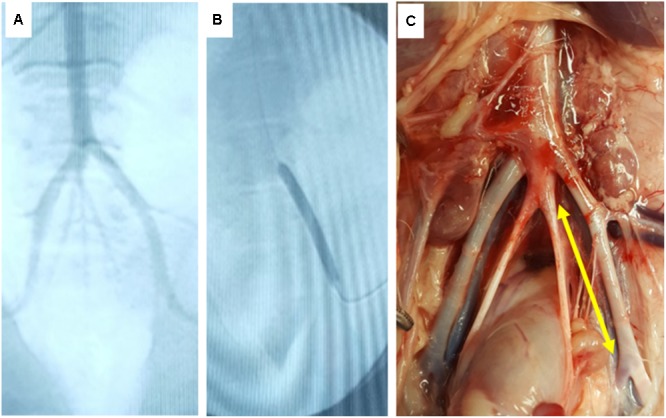
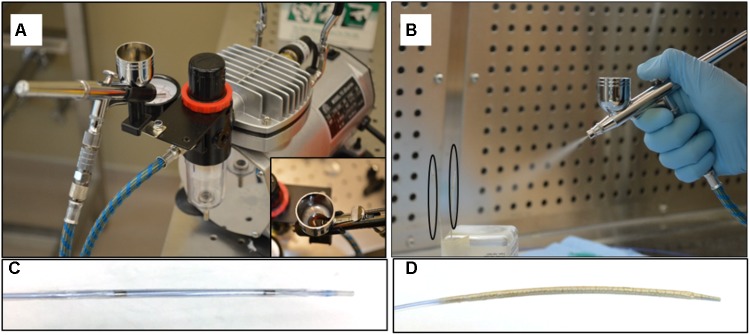
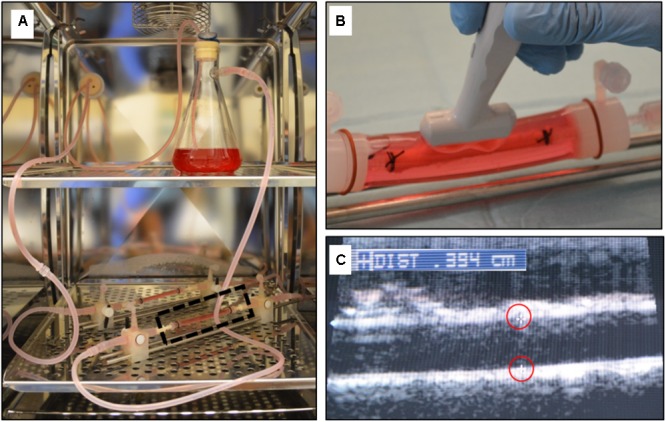
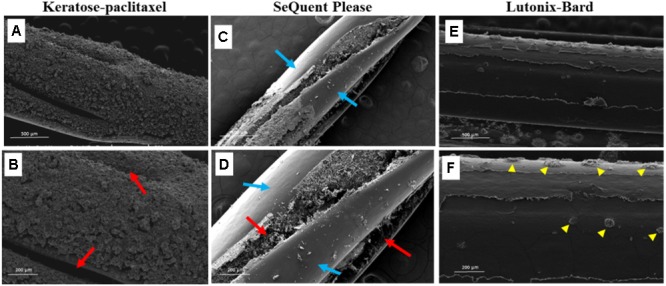
Drug coated balloons (DCB) are continually improving due to advances in coating techniques and more effective excipients. Paclitaxel, the current drug choice of DCB, is a microtubule-stabilizing chemotherapeutic agent that inhibits smooth muscle cell proliferation. Excipients work to promote coating stability and facilitate paclitaxel transfer and retention at the target lesion, although current excipients lack sustained, long-term paclitaxel retention. Keratose, a naturally derived protein, has exhibited unique properties allowing for tuned release of various therapeutic agents. However, little is known regarding its ability to support delivery of anti-proliferative agents such as paclitaxel. The goal of this project was to thus demonstrate the feasibility of keratose as a DCB-coating excipient to promote the release and delivery of paclitaxel. Keratose was combined with paclitaxel and the release kinetics of paclitaxel and keratose were evaluated through high performance liquid chromatograph-mass spectroscopy (HPLC-MS) and spectrophotometry, respectively. A custom coating method was developed to deposit keratose and paclitaxel on commercially available angioplasty balloons via an air spraying method. Coatings were then visualized under scanning electron microscopy and drug load quantified by HPLC-MS. Acute arterial transfer of paclitaxel at 1 h was assessed using a novel model and further evaluated in a porcine ilio-femoral injury model. Keratose demonstrated tunable release of paclitaxel as a function of keratose concentration . DCB coated via air spraying yielded consistent drug loading of 4.0 ± 0.70 μg/mm. Under scanning electron microscopy, the keratose-paclitaxel DCB showed uniform coverage with a consistent, textured appearance. The acute drug transfer of the keratose-paclitaxel DCB was 43.60 ± 14.8 ng/mg at 1 h . These measurements were further confirmed as the acute 1 h arterial paclitaxel levels were 56.60 ± 66.4 ng/mg. The keratose-paclitaxel coated DCB exhibited paclitaxel uptake and achieved acute therapeutic arterial tissue levels, confirming the feasibility of keratose as a novel excipient for DCB.
由于涂层技术的进步和更有效的辅料,药物涂层球囊(DCB)在不断改进。紫杉醇是目前DCB的药物选择,它是一种微管稳定化疗药物,可抑制平滑肌细胞增殖。辅料有助于提高涂层稳定性,并促进紫杉醇在靶病变处的转移和滞留,不过目前的辅料缺乏持续、长期的紫杉醇滞留效果。角蛋白是一种天然来源的蛋白质,已展现出独特的性质,能够实现各种治疗药物的缓释。然而,对于其支持递送抗增殖药物(如紫杉醇)的能力却知之甚少。因此,本项目的目标是证明角蛋白作为DCB涂层辅料以促进紫杉醇释放和递送的可行性。将角蛋白与紫杉醇结合,并分别通过高效液相色谱 - 质谱联用仪(HPLC-MS)和分光光度法评估紫杉醇和角蛋白的释放动力学。开发了一种定制涂层方法,通过空气喷涂法将角蛋白和紫杉醇沉积在市售血管成形术球囊上。然后在扫描电子显微镜下观察涂层,并通过HPLC-MS对药物负载量进行定量。使用一种新型模型评估了1小时时紫杉醇的急性动脉转移情况,并在猪髂股损伤模型中进一步评估。角蛋白显示出紫杉醇的释放可随角蛋白浓度调节。通过空气喷涂法涂覆的DCB产生了4.0±0.70μg/mm的一致药物负载量。在扫描电子显微镜下,角蛋白 - 紫杉醇DCB显示出均匀覆盖,外观一致且有纹理。角蛋白 - 紫杉醇DCB在1小时时的急性药物转移量为43.60±14.8 ng/mg。这些测量结果得到了进一步证实,因为1小时时动脉内紫杉醇的急性水平为56.60±66.4 ng/mg。角蛋白 - 紫杉醇涂层的DCB表现出对紫杉醇的摄取,并达到了急性治疗性动脉组织水平,证实了角蛋白作为DCB新型辅料的可行性。