Department of Clinical Medicine, Faculty of Health Sciences, UiT the Arctic University of Norway, Tromsø, Norway.
Institute of Cancer Sciences, Beatson West of Scotland Cancer Centre, University of Glasgow, Glasgow, United Kingdom.
Front Immunol. 2018 Jul 26;9:1679. doi: 10.3389/fimmu.2018.01679. eCollection 2018.
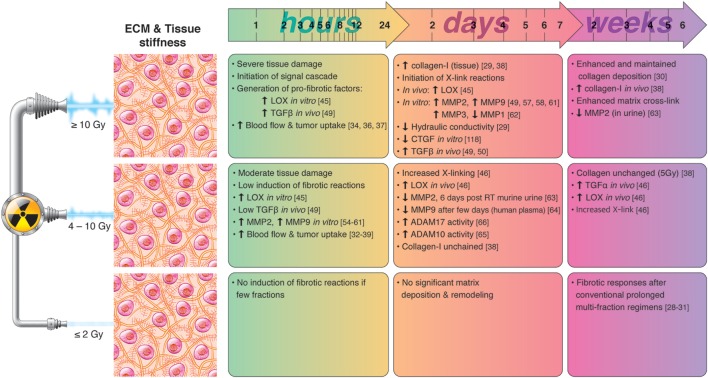
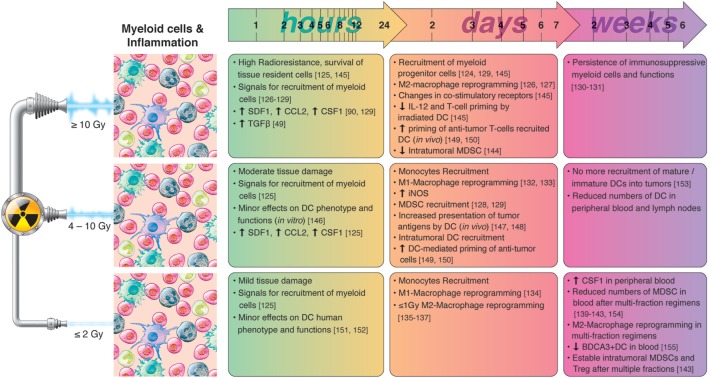
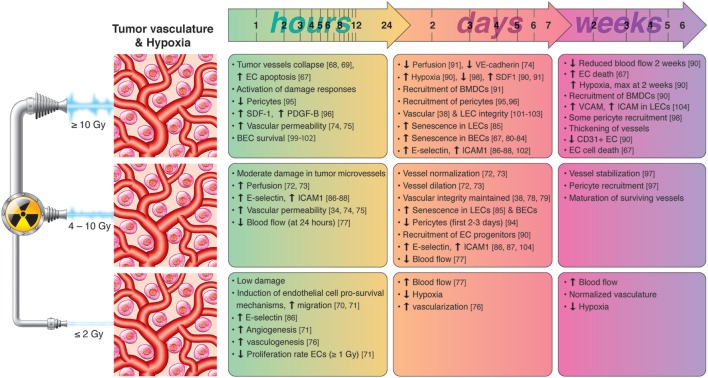
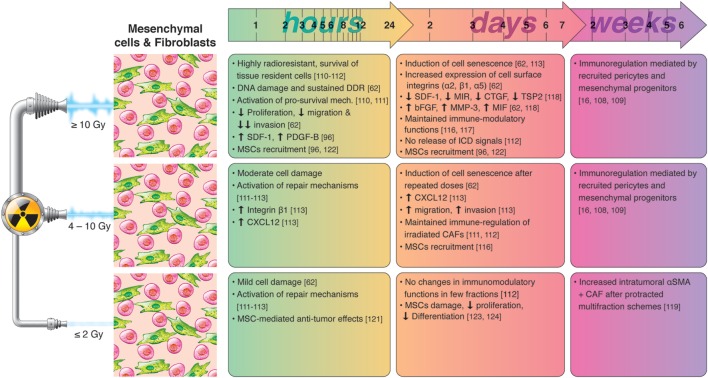
The implementation of novel cancer immunotherapies in the form of immune checkpoint blockers represents a major advancement in the treatment of cancer, and has renewed enthusiasm for identifying new ways to induce antitumor immune responses in patients. Despite the proven efficacy of neutralizing antibodies that target immune checkpoints in some refractory cancers, many patients do not experience therapeutic benefit, possibly owing to a lack of antitumor immune recognition, or to the presence of dominant immunosuppressive mechanisms in the tumor microenvironment (TME). Recent developments in this field have revealed that local radiotherapy (RT) can transform tumors into vaccines, and may help to overcome some of the barriers to tumor-specific immune rejection. RT has the potential to ignite tumor immune recognition by generating immunogenic signals and releasing neoantigens, but the multiple immunosuppressive forces in the TME continue to represent important barriers to successful tumor rejection. In this article, we review the radiation-induced changes in the stromal compartments of tumors that could have an impact on tumor immune attack. Since different RT regimens are known to mediate strikingly different effects on the multifarious elements of the tumor stroma, special emphasis is given to different RT schedules, and the time after treatment at which the effects are measured. A better understanding of TME remodeling following specific RT regimens and the window of opportunity offered by RT will enable optimization of the design of novel treatment combinations.
新型癌症免疫疗法以免疫检查点抑制剂的形式实施,代表了癌症治疗的重大进展,并重新激发了人们寻找新方法来诱导患者产生抗肿瘤免疫反应的热情。尽管针对某些难治性癌症的免疫检查点的中和抗体已被证明具有疗效,但许多患者并未从中受益,这可能是由于缺乏抗肿瘤免疫识别,或者肿瘤微环境(TME)中存在占主导地位的免疫抑制机制。该领域的最新进展表明,局部放射治疗(RT)可以将肿瘤转化为疫苗,并可能有助于克服肿瘤特异性免疫排斥的一些障碍。RT 具有通过产生免疫原性信号和释放新抗原来引发肿瘤免疫识别的潜力,但 TME 中的多种免疫抑制力量仍然是成功肿瘤排斥的重要障碍。在本文中,我们综述了 RT 诱导的肿瘤基质成分变化,这些变化可能会影响肿瘤免疫攻击。由于不同的 RT 方案已知会对肿瘤基质的多种成分产生显著不同的影响,因此特别强调了不同的 RT 方案以及在治疗后测量效果的时间。更好地了解特定 RT 方案后的 TME 重塑以及 RT 提供的机会窗口,将能够优化新型治疗组合的设计。