Schausberger Peter
Department of Behavioural Biology, University of Vienna, Vienna, Austria.
Sugadaira Research Station, Mountain Science Center, University of Tsukuba, Ueda, Japan.
Front Plant Sci. 2018 Jul 30;9:1107. doi: 10.3389/fpls.2018.01107. eCollection 2018.
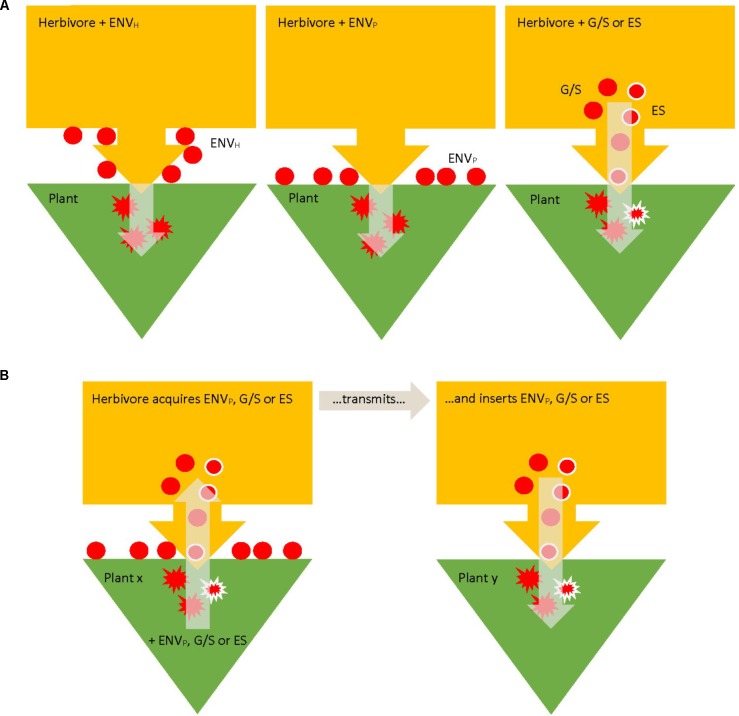
Induced plant defense, comprising contact with exogenous stimuli, production of endogenous signals alerting the plant, associated biochemical cascades, and local and/or systemic expression of the defense mechanisms, critically depends on the nature of the inducing agents. At large, bio-trophic pathogenic microorganisms and viruses usually trigger the salicylate (SA)-mediated pathway, whereas necro-trophic pathogens and herbivores usually trigger the jasmonate (JA)-mediated pathway in plants. The SA- and JA-mediated pathways do not operate independently but commonly interfere with each other. Several recent studies revealed abnormal plant responses upon herbivore attack in diverse plant-herbivore systems. Observed abnormalities range from suppression of the common JA-pathway, induction of the SA-pathway to no response, yet the underlying proximate causes and ultimate consequences of these variations are elusive. Strikingly, some studies provide compelling evidence that anti-herbivore plant responses may decisively depend on bacteria associated with the herbivore attacking the plant (HAB for herbivore-associated bacteria). HAB may influence herbivore recognition by the plant and alter the biochemical cascades inside plants. Here, I report cases in point of HAB manipulating induced anti-herbivore plant responses, suggest spatial and temporal categorization of HAB, and point at proximate and ultimate aspects of plant defense manipulation by HAB. Following, I overview the diversity of HAB of spider mites and herbivorous thrips, argue that, considering recently reported phenomena of abnormal plant responses upon spider mite attack, some of these HAB could represent important, but hitherto largely neglected, mediators/modifiers of induced plant defense against spider mites and thrips, and conclude with suggestions for future research.
诱导植物防御包括与外源刺激接触、产生提醒植物的内源信号、相关的生化级联反应以及防御机制的局部和/或系统表达,这严重依赖于诱导剂的性质。总体而言,活体营养型致病微生物和病毒通常触发水杨酸(SA)介导的途径,而死体营养型病原体和食草动物通常触发茉莉酸(JA)介导的植物途径。SA和JA介导的途径并非独立运行,而是通常相互干扰。最近的几项研究揭示了在不同的植物-食草动物系统中,食草动物攻击后植物的异常反应。观察到的异常情况从常见JA途径的抑制、SA途径的诱导到无反应,然而这些变化的潜在直接原因和最终后果却难以捉摸。引人注目的是,一些研究提供了令人信服的证据,表明植物的抗食草动物反应可能决定性地取决于与攻击植物的食草动物相关的细菌(食草动物相关细菌,简称HAB)。HAB可能影响植物对食草动物的识别,并改变植物内部的生化级联反应。在这里,我报告了HAB操纵诱导的植物抗食草动物反应的实例,提出了HAB的时空分类,并指出了HAB对植物防御操纵的直接和最终方面。接下来,我概述了叶螨和草食性蓟马的HAB多样性,认为考虑到最近报道的叶螨攻击后植物异常反应的现象,其中一些HAB可能代表了诱导植物对叶螨和蓟马防御的重要但迄今基本被忽视的介质/调节剂,并最后提出了未来研究的建议。